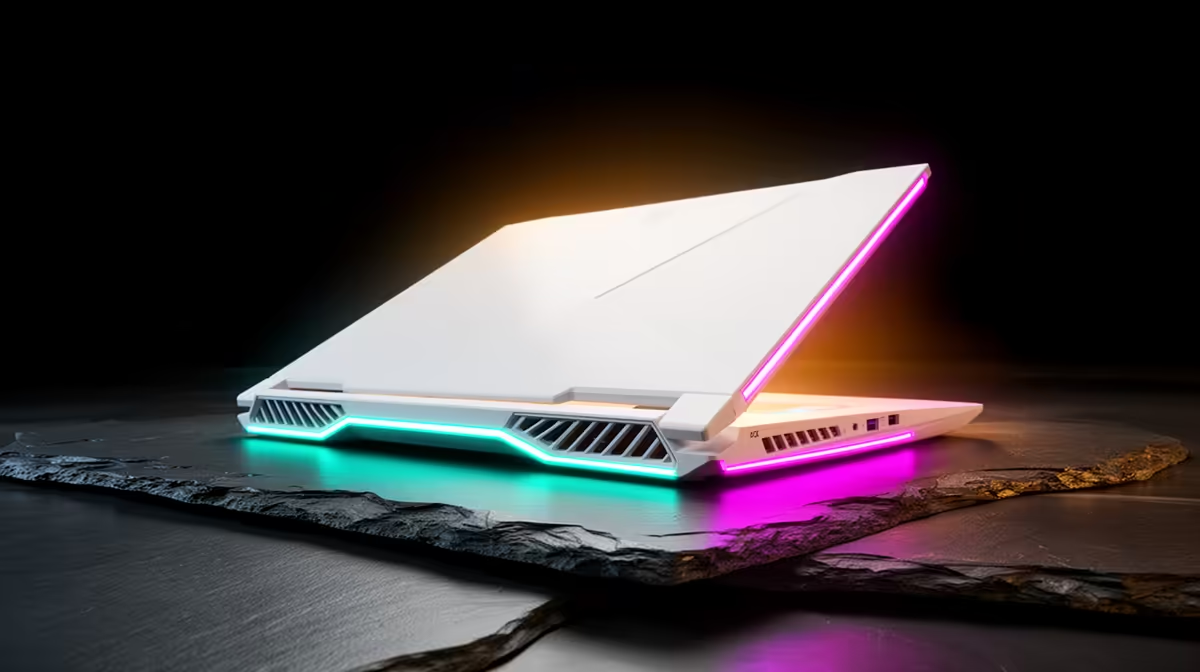
A new class of AI-accelerated Windows devices is taking shape, and the first names on the list carry real weight. The RTX Spark wave kicks off with Microsoft's Surface Laptop Ultra and an ASUS ProArt model, the opening entries in a launch lineup said to span more than 30 laptops and over 10 desktops from major manufacturers. It is less a single product and more a coordinated push to put serious on-device AI capability into mainstream machines.
Quick Answer
The first announced RTX Spark devices are Microsoft's Surface Laptop Ultra and an ASUS ProArt model, leading a launch lineup of 30-plus laptops and 10-plus desktops from major OEMs. The wave centres on machines built to run AI workloads locally rather than leaning entirely on the cloud.
The First Named Devices
Two devices anchor the announcement, and the pairing is telling. Microsoft's Surface Laptop Ultra signals that the platform is being aimed at the premium mainstream, the kind of machine professionals and serious students actually carry day to day. An ASUS ProArt model points at the creator and content-production crowd, where local AI acceleration speeds up tasks like image and video work.
Between them, those two cover a wide slice of buyers: one general-purpose flagship and one creator-focused workstation-class laptop. They set the tone for what the rest of the wave is likely to target. Anyone weighing where this fits can look at the AI PCs currently stocked at Evetech to see how the category is already shaping up locally.
A Lineup, Not a Launch
The number that matters is the breadth. More than 30 laptops and over 10 desktops across major OEMs is not a niche release; it is an industry-wide commitment. When the big manufacturers all ship into a new category at once, it usually means the underlying platform is intended to become a standard fixture rather than a one-off experiment.
For buyers, that breadth is good news. A large lineup means competition on price, configuration and form factor, from thin-and-light laptops to full desktops. It also means the technology will not be confined to a single flagship; it will filter across price points over time. South African availability, as with any global hardware wave, will follow the international rollout, with local stock and pricing arriving once distribution settles. Keeping an eye on the GPU best sellers is a useful way to track how AI-capable graphics hardware is priced in the meantime.
What It Means for You
If you are buying right now, the RTX Spark wave is a reason to understand the category, not necessarily to wait for it. Early devices in a new lineup tend to launch at premium prices and thin availability, with broader, better-value options arriving as the wave fills out. For most people, the practical move is to know what these machines offer, watch how the SA lineup develops, and buy when the configuration and price line up with your actual needs.
Frequently Asked Questions
What are the first RTX Spark devices?
The first announced devices are Microsoft's Surface Laptop Ultra and an ASUS ProArt model. They lead a much larger lineup of more than 30 laptops and over 10 desktops from major manufacturers.
How big is the RTX Spark lineup?
The launch lineup is reported to span over 30 laptops and more than 10 desktops across major OEMs. That breadth signals an industry-wide push rather than a single niche release.
When will RTX Spark devices reach South Africa?
Local availability typically follows the global rollout by some months, once distribution and pricing settle. Early models tend to launch at premium prices with limited stock before broader options arrive.
Should I wait for RTX Spark before buying?
For most buyers, no. It is worth understanding the category, but early devices are usually pricey and scarce. Buying a capable machine now and reassessing as the lineup broadens is the more practical path.
Want to see where AI-ready machines already stand for South African buyers? Explore the AI PC range at Evetech and match the right configuration to what you actually do.