Quick Answer
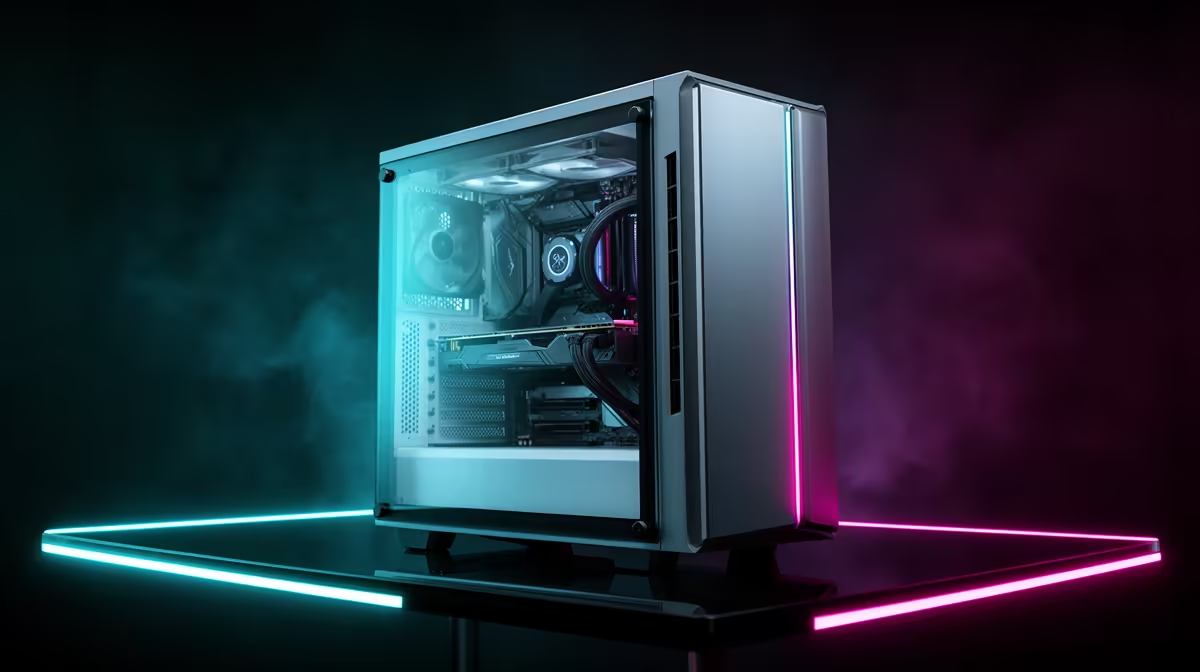
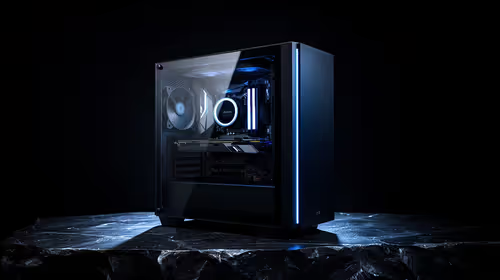
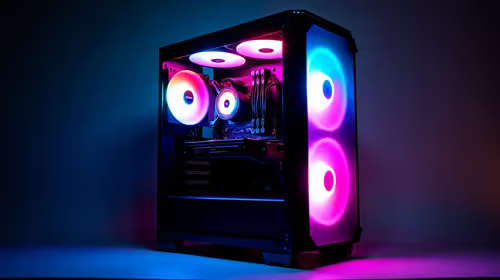
Mesh cases cool better, tempered glass cases look better. For a gaming build where thermal performance matters, a front mesh panel case with optional tempered glass side panel is the best of both, and that is exactly what most modern mid-tower cases now offer.
Tempered Glass Cases: Visibility vs Airflow 🖥️
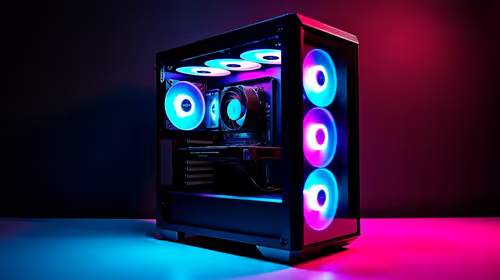
Tempered glass front panels became popular as RGB lighting took hold, and they do deliver a stunning visual if the build inside justifies it. The problem is physics: glass does not pass air.
Mesh Cases: Airflow Without Compromise 💨
Mesh front panels allow fans to pull ambient air directly into the case without restriction, typically reducing GPU and CPU temperatures by 5 to 10 degrees Celsius compared to a glass-front equivalent. Cases like the Lian Li Lancool, Fractal Design Meshify, or NZXT H-series mesh variants offer full-coverage mesh fronts paired with tempered glass side panels, giving you airflow performance without sacrificing the visual impact of seeing your components lit up inside. The trade-off with mesh is increased noise transmission: fans pulling air through mesh are not muffled, so a mesh case will be audibly louder at the same fan RPM than a glass-front case with its natural sound dampening. For a competitive gaming setup in a dedicated room, this is acceptable. For a shared living space, a hybrid design with a partially perforated front and some sound absorption is worth considering.
Making the Right Choice for Your SA Build 🔧
If your PC sits on a desk in a visible position and you have invested in ARGB components, choose a case with a mesh or perforated front panel and a tempered glass side panel. This gives you airflow where it counts (the intake) and visibility where you want it (the side). If your build sits under a desk or inside a cabinet, thermal performance matters more than appearance, and a full-mesh case with no glass at all is the most efficient option. Budget for R900 to R2,000 for a quality mid-tower in either category from brands stocked at Evetech.
Test Thermals Before Sealing the Build ⚡
After completing your build, run a GPU stress test with the side panel off and then again with it on. If GPU temperatures rise more than 5 degrees Celsius with the panel closed, your case intake airflow is insufficient. Consider removing a front dust filter (if fitted) or adding an intake fan to compensate before permanently sealing the build.
FAQ
Is tempered glass heavier than mesh panels?
Yes. A 4mm tempered glass side panel adds approximately 800g to 1.2kg compared to a steel mesh panel. For desktop cases that stay in place, this is irrelevant. The weight only matters if you frequently transport the PC, in which case mesh panels reduce total system weight meaningfully.
Can a tempered glass front panel case still cool a high-end GPU adequately?
It depends on the case design. Many tempered glass front cases compensate with side vents, bottom intakes, or PSU shroud gaps. Check the case airflow test results before buying. Some glass-front cases perform within 2 to 3 degrees Celsius of mesh cases when vented effectively, though they are rare in the sub-R2,000 segment.
Do tempered glass panels crack easily during normal use?
Tempered glass is significantly stronger than standard glass and resists everyday bumps well. It is designed to shatter into blunt fragments rather than sharp shards if it does break. The risk of cracking under normal desktop use is low. The risk increases when transporting the PC without removing the panel first, particularly when the case is laid on its side for transport.
Glass look or mesh performance? You can have both.
Browse mid-tower cases at Evetech with mesh fronts and tempered glass sides, combining airflow where it matters with visibility where you want it.