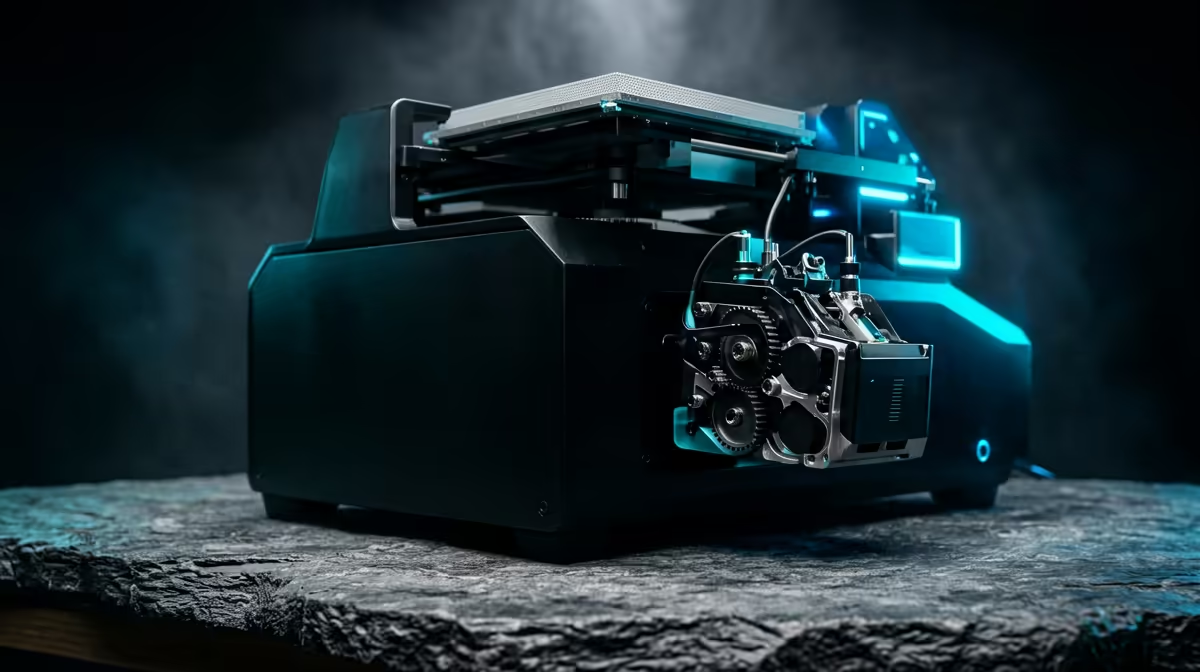
The fastest way to waste money on your first machine is to chase the most expensive printer on the shelf. The biggest mistakes to avoid before buying your first 3D printer almost always trace back to one thing: buying for a use-case you do not actually have yet. An R17,900 flagship like the Creality K2 looks tempting, but for a beginner an R5,499 Bambu Lab A1 Mini prints the same first hundred models just as cleanly, and leaves real budget for filament and learning.
Quick Answer
Do not spend R17,900 on a top-tier printer for your first machine. A R5,499 class printer covers virtually every beginner need, and the money you save belongs in filament, a spare nozzle, and the inevitable trial-and-error. Match the printer to what you will genuinely print in the first six months, not to maximum spec.
Buying On Spec Sheet Instead Of Use-Case
The most expensive error is treating a printer like a GPU benchmark, where bigger numbers always win. A 600mm-per-second print speed and a 350mm build volume mean nothing if everything you make is a 40mm keychain or a desk organiser. Beginners rarely fill a large bed, and they almost never run at headline speeds because surface quality drops when you push hard.
Start by listing what you actually want to print. Cosplay props and helmets need a large enclosed printer. Miniatures and tabletop pieces are better served by resin. General hobby parts, brackets, replacement clips, and toys fit comfortably on a compact bed-slinger. The printer follows the use-case, not the other way around.
Ignoring The Running Costs
The sticker price is the smaller half of the story. Filament is the recurring cost, and a frugal first month of practice can chew through two or three R350 spools before your settings settle. If a printer locks you into a proprietary filament system, your ongoing spend climbs sharply compared with a machine that happily runs any standard 1.75mm PLA from any brand.
Spare parts matter too. Nozzles wear, build plates scratch, and PTFE tubing degrades. Budget a small buffer for consumables rather than assuming the box has everything you will ever need. A printer that costs less up front but eats expensive proprietary refills can work out dearer over a year than a slightly pricier open machine.
Forgetting About Filament Storage In SA Humidity
Coastal SA homes, Durban and the Cape especially, are humid enough to ruin PLA and PETG if spools sit open. Damp filament prints with popping, stringing, and weak layers. A sealed box with silica gel is a few hundred Rand and saves far more in wasted prints. New buyers routinely overlook this and then blame the printer for moisture problems.
Skipping The Auto-Levelling And Assembly Questions
Manual bed levelling is the single biggest reason beginners give up. A first print that fails because one corner is 0.1mm too high feels like the hobby is broken. Printers with automatic bed levelling and a self-test routine remove that frustration entirely, and at the entry tier this feature is now common rather than premium.
Assembly is the other quiet trap. Some kits arrive as a box of rails and screws that take an afternoon to build and tune. Others are running within fifteen minutes. If you are new and want to print rather than tinker, a near-assembled machine is worth more than a marginally cheaper kit. The 3D printer range at Evetech makes it easy to compare which models ship ready to run versus which expect a build.
Buying Without The Right Surrounding Gear
A printer alone is half a setup. A scraper, a set of spare nozzles, a roll of masking surface or a textured PEI plate, and a basic deburring tool turn a frustrating first week into a smooth one. None of it is expensive, and skipping it means a stalled hobby while you wait on a part you could have bought day one. It is worth browsing the wider 3D printing extras and tools, like the picks in the accessories best sellers, so your first session is not blocked by a missing R80 item.
Choosing Resin When You Meant FDM (Or The Reverse)
FDM printers melt plastic filament and suit functional parts, larger models, and low-mess work. Resin printers cure liquid with UV light and produce stunning fine detail for miniatures, but they involve gloves, isopropyl alcohol, post-curing, and careful disposal. Buying a resin machine because the sample prints looked sharper, then discovering you hate the cleanup, is a classic mismatch. Decide which technology fits your tolerance for mess and your subject matter before you spend.
The Ventilation Mistake Resin Buyers Make
Resin gives off fumes, and the smell is not something you want filling a small flat or a res room. New resin owners often set up on a desk in a closed bedroom and regret it within a session. If you go the resin route, plan for a ventilated space, a window or extraction, and somewhere to safely handle the alcohol wash. None of this is a deal-breaker, but discovering it after the purchase sours the experience. FDM sidesteps all of it, which is part of why it is the safer first-printer choice for most people.
Underestimating The Learning Curve And Support
The final mistake is treating the printer as a finished appliance. Even the friendliest machine asks you to learn slicing software, dial in temperatures for each filament, and recognise common print failures like warping, stringing, and poor bed adhesion. The first week involves more failed prints than finished ones, and that is normal. Buyers who expect flawless results out of the box give up early.
Buying from a supplier with proper local support and warranty backing matters more than most first-timers realise. A printer bought from an unknown source with no after-sales help becomes an expensive paperweight the moment a part fails. Sticking to established SA retail channels means spares, advice, and warranty cover are actually reachable when something goes wrong, which it eventually will on any machine. That support is worth paying a small premium for on a first printer.
Why Community And Documentation Beat A Slightly Cheaper Model
A printer with a large user base, plentiful online tutorials, and active forums is far easier to learn on than an obscure model that saved you a few hundred Rand. When a print fails at 2am, the difference between a quick forum search and a dead end is the difference between staying in the hobby and abandoning it. Popularity is a feature for beginners, not a vanity metric.
Frequently Asked Questions
What is the most common first-printer mistake in South Africa?
Overspending. Beginners buy a flagship machine when a R5,499 class printer covers nearly every starter project. The saved budget is far better spent on filament, spare nozzles, and learning time.
Should my first printer be FDM or resin?
FDM for general hobby parts, functional pieces, and larger models with minimal mess. Resin only if you are committed to highly detailed miniatures and accept the gloves, alcohol washing, and UV post-curing that come with it.
How much should I budget beyond the printer itself?
Set aside a few hundred Rand for filament, a sealed storage box with silica gel, and a small toolkit. These extras are cheap individually but essential to a smooth start.
Is automatic bed levelling worth paying for?
Yes, for a first printer it is one of the best value features. It removes the manual fiddling that causes most early failed prints and most beginner frustration.
Does filament humidity really matter in SA?
In humid coastal areas it matters a great deal. Damp PLA and PETG print poorly, with stringing and weak layers. Sealed storage with desiccant solves it for very little money.
Ready to start without the rookie spend? Browse the beginner-friendly machines in the Evetech 3D printer range and pair your pick with a few essentials from the accessories best sellers so your first print succeeds.