Quick Answer
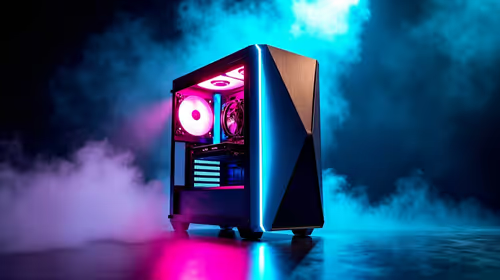
Mid-tower ATX cases are the correct choice for 95% of gaming and creator PC builds in South Africa. They support ATX, mATX, and ITX motherboards, accommodate GPUs up to 420mm long, house 360mm AIO radiators, and cost R700 to R4,500 depending on feature set. The trade-off versus full towers is slightly less internal workspace, not performance.
Anatomy of a Mid-Tower ATX Case 🔧
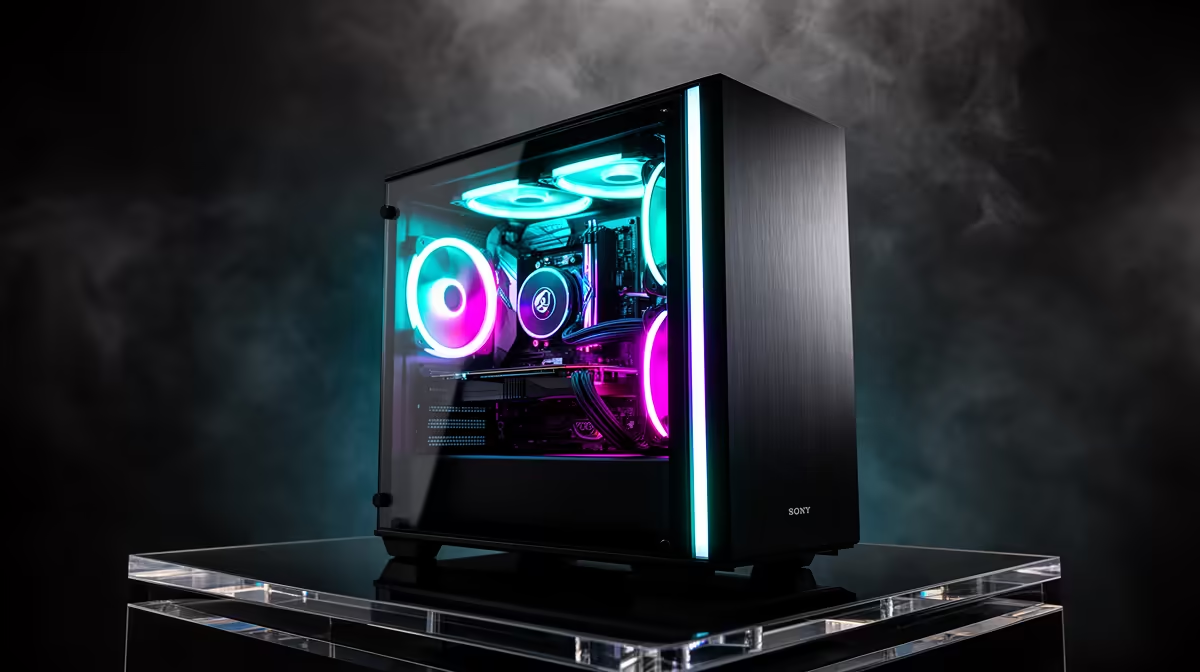
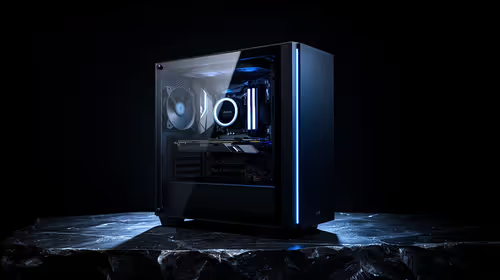
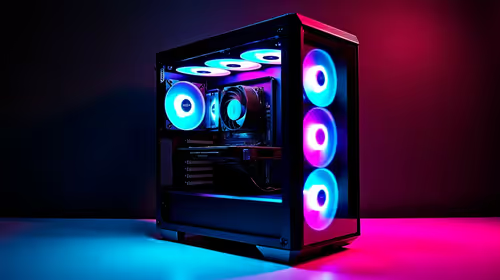
A mid-tower ATX case typically measures 450mm to 500mm tall, 200mm to 240mm wide, and 400mm to 500mm deep. The motherboard tray fits standard ATX boards (305mm x 244mm) and smaller. The PSU mounts in a bottom shroud that hides cables and separates the PSU airflow from the main chamber. Front panel connectors include USB 3.0, USB 3.2 Gen 2 Type-C, and audio jacks on most current models. Drive bays accommodate two to four 3.5-inch HDDs and two to three 2.5-inch SSDs, with some cases prioritising SSD-only mounting to maximise GPU and radiator clearance. The side panel is either tempered glass or solid steel, with tempered glass dominant across mid-tower cases in the R1,200 to R4,000 range stocked at Evetech.
Airflow Configurations for Gaming vs Creator Workloads 🖥️
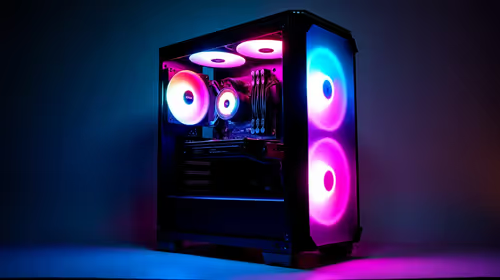
Gaming builds need aggressive GPU cooling: front-intake mesh panels and at least two exhaust points (rear and top). A three-front-intake, one-rear-exhaust configuration with positive pressure works well for most RTX 5070 to RTX 5090 builds. Creator builds running sustained CPU workloads (Blender rendering, 4K video export, code compilation) benefit from additional top exhaust to remove the heat spike generated during all-core CPU workloads. For a Ryzen 9 9950X running Blender at 170W TDP sustained, a 360mm AIO plus two top exhaust fans keeps the case interior under 45 degrees Celsius even in SA summer ambient temperatures of 28 to 32 degrees.
Choosing Between Budget, Mid-Range, and Premium Cases 💰
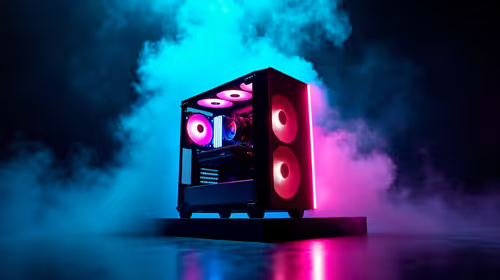
Budget cases at R700 to R1,200 use thinner steel, limited cable management channels, and basic fans, but fit the same components as premium cases. Mid-range cases at R1,500 to R2,500 add tempered glass, ARGB fans, dedicated GPU support brackets, and improved cable management cutouts. Premium cases above R3,000 contribute noise dampening, tool-less panel removal, integrated fan hubs, and modular interior layouts. For a creator PC running extended render sessions, the build quality and internal workspace of a R2,000 to R3,000 case simplifies maintenance and upgrades over time.
Prioritise Cable Management Channels ⚡
Before buying, confirm the case has a rear cable management zone of at least 25mm depth and multiple velcro strap points. Clean cable routing behind the motherboard tray dramatically improves airflow and makes future upgrades less frustrating, particularly when replacing a GPU or adding an M.2 drive later.
FAQ
Can a mid-tower ATX case hold multiple NVMe SSDs?
Yes. Most current mid-towers support two to four M.2 slots via the motherboard directly, without needing any case mounting. Additional 2.5-inch SATA SSDs mount on case brackets. NVMe drives are the dominant storage choice for new builds, reducing the need for traditional drive bay count.
Do I need a full tower for an extreme overclocking or workstation build?
Only if you use an EATX motherboard (larger than 305mm x 244mm) or a custom water loop with multiple 420mm radiators. Standard ATX overclocking builds with a 360mm AIO fit comfortably in a mid-tower.
Are mid-tower cases suitable for quiet builds?
Yes. Sound-dampened mid-towers with acoustic foam panels and sealed vents are available in the R2,500 to R4,500 range. These trade some airflow for noise reduction and suit bedroom or office environments where PC noise is a concern.
Building a gaming or creator PC and need the right chassis?
Evetech stocks mid-tower ATX cases across all budgets with local warranty and delivery across South Africa.