Quick Answer
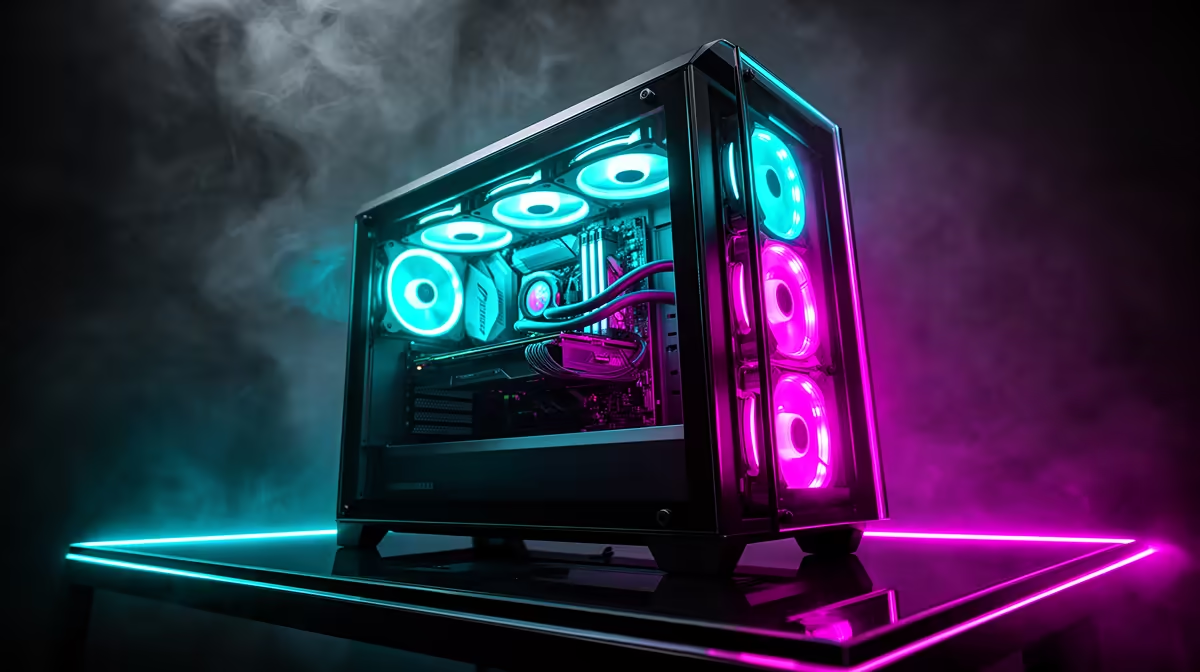
A panoramic ATX case uses three or four tempered glass panels to display the full interior of a PC build from multiple viewing angles. For a showcase build, choose a panoramic case with front or top 360mm radiator support, 400mm-plus GPU clearance, a dual-chamber layout for cable hiding, and included ARGB fans. Budget R3,000 to R6,500 for a genuine panoramic design; below R2,000 the glass coverage is usually a single side panel only.
What Defines a True Panoramic Case Design 🖥️
The term "panoramic" in PC case marketing refers to cases with glass coverage on at least three sides, typically the front, side, and top or the front, left side, and right side. This distinguishes them from standard cases with a single side-panel glass window. Panoramic cases are designed from the ground up to display their interior, so they incorporate features like white or RGB-illuminated internal frames, wire-hiding compartments, integrated fan controllers, and carefully positioned mounting structures that remain clean-looking from all visible angles. In South Africa these cases sit in the R3,000 to R6,500 retail range, with the most visually impressive designs clustering around R4,000 to R5,500.
Building for Display: Component Selection for Panoramic Cases 🎨
A panoramic case demands that every component inside it contributes to the visual result because all components are visible. This affects purchasing decisions beyond the case itself. ARGB RAM modules with diffused lighting bars are visible from the front glass and add a vertical lighting column that complements the AIO radiator fans. A GPU with a lit logo and ARGB shroud creates a horizontal lighting strip at the bottom of the main chamber. The AIO pump head ARGB or AMOLED display provides a centrepiece focal point. Cable management must be near-perfect because all four visible sides of the chamber reveal cables that the builder has not managed. Budget an additional R800 to R1,500 for sleeved cables, velcro ties, and cable combs beyond the component costs.
Thermal Management in a Panoramic Layout 🌡️
Panoramic cases trade some thermal efficiency for visual coverage, as previously noted in the glass-versus-mesh discussion. In a well-configured panoramic build, a 360mm AIO at the front intake handles CPU cooling with enough static pressure from the radiator fans to push adequate air through the partially restricted glass-frame intake. GPU cooling relies on positive case pressure directing conditioned air across the GPU heatsink from the front radiator fans. In SA summer conditions, setting fan curves slightly higher than defaults (adding 100 to 150 RPM at gaming temperatures) compensates for the reduced intake efficiency of the glass panels compared to a full-mesh front. The result is a build that looks exceptional and performs within acceptable thermal parameters with this minor configuration adjustment.
{{TipBox title:"Dim the Lights to Check for Cable Visibility ⚡" , After completing a panoramic build, dim the room lights and turn on only the ARGB lighting with no overhead illumination.
FAQ
Can a panoramic ATX case support the same hardware as a traditional mid-tower?
Yes, panoramic cases use standard ATX motherboard mounting, standard ATX PSU formats, and support the same GPU lengths and cooling hardware as equivalent traditional mid-towers.
Are panoramic cases harder to transport to LAN events?
Slightly, because glass panels on multiple sides increase the risk of cracking from impact or pressure during transport.
How much should I budget for a panoramic case in South Africa?
A quality panoramic or dual-chamber case stocked at Evetech generally runs from around R1,800 to R4,000 depending on size and glass coverage. Budget for a few extra ARGB fans too, since the wraparound glass puts the whole build on display.
Planning a showcase panoramic build?
Evetech stocks panoramic ATX cases with full glass coverage and the ARGB components to fill them, browse the case and cooling ranges to put your showcase build together.