Quick Answer
For a home lab server, the three-tier case-fan plan is simple: budget Arctic P12 PWM (around R150 each), balanced Noctua NF-P12 redux (around R300), or premium Noctua NF-A12x25 (around R750). All move steady air quietly so a 24/7 lab box stays cool without sounding like a workshop.
Budget, Balanced And Premium Tiers
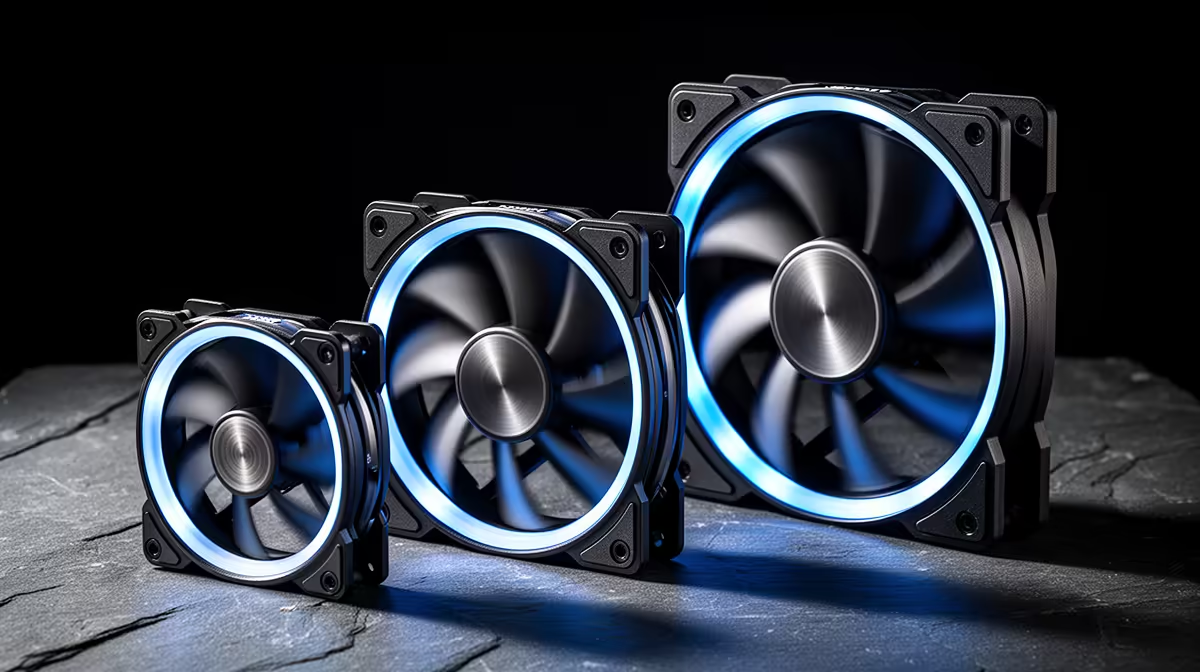
A home lab runs all day, so reliability and noise matter more than peak airflow. The budget tier is the Arctic P12 PWM at roughly R150 each: honest specs, quiet, and ideal for a rack of cheap nodes. The balanced tier, a Noctua NF-P12 redux around R300, adds better bearings and lower noise for a box that sits in your home office. The premium tier, the Noctua NF-A12x25 near R750 each (about R2,000 for three), gives the lowest noise and longest bearing life for a server you never want to think about again. Each fan draws only around 2W, which matters on an always-on box.
Layout For An Always-On Lab
Servers generate heat from drives, NICs and CPUs running continuously, so plan steady airflow rather than burst cooling. Use positive pressure, intakes through filters and a rear exhaust, to keep dust off the boards over months of uptime. PWM lets you set a flat, quiet curve since lab loads are constant rather than spiky. Whichever tier you choose, prioritise bearing life and consistent low noise, because a home lab's fans run far more hours than a gaming PC's ever will.
FAQ
What case fans suit a 24/7 home lab?
Fans with long-life bearings and low noise, since they run continuously. The Arctic P12 (budget), Noctua NF-P12 redux (balanced) and NF-A12x25 (premium) all fit, scaling by bearing quality and quietness.
Do home lab servers need high-airflow fans?
Not usually. Lab heat is steady rather than spiky, so consistent moderate airflow with a flat quiet curve works better than high-RPM bursts. Prioritise reliability and low noise over peak CFM.
How do I keep dust out of an always-on server?
Run positive pressure with filtered intakes and a rear exhaust, so air enters through filters rather than gaps. Clean the filters periodically, which matters more on a box that runs months at a time.
flat, quiet PWM curve for steady lab loads and run filtered positive pressure so months of uptime do not coat the boards in dust.