


PCIe 5.0 vs PCIe 4.0 for Video editing in 4k in SA
PCIe 5.0 vs PCIe 4.0 for video editing in 4k is mainly about fit, features, compatibility, cost, and upgrade path, not one automatic winner. SA buyers should match the choice to the setup.
Read moreWebcam buying order for data science should be shortlisted around the job it must do. South African buyers should compare fit, performance, compatibility, and upgrade room, warranty path, and upgrade room before treating any pick as best.
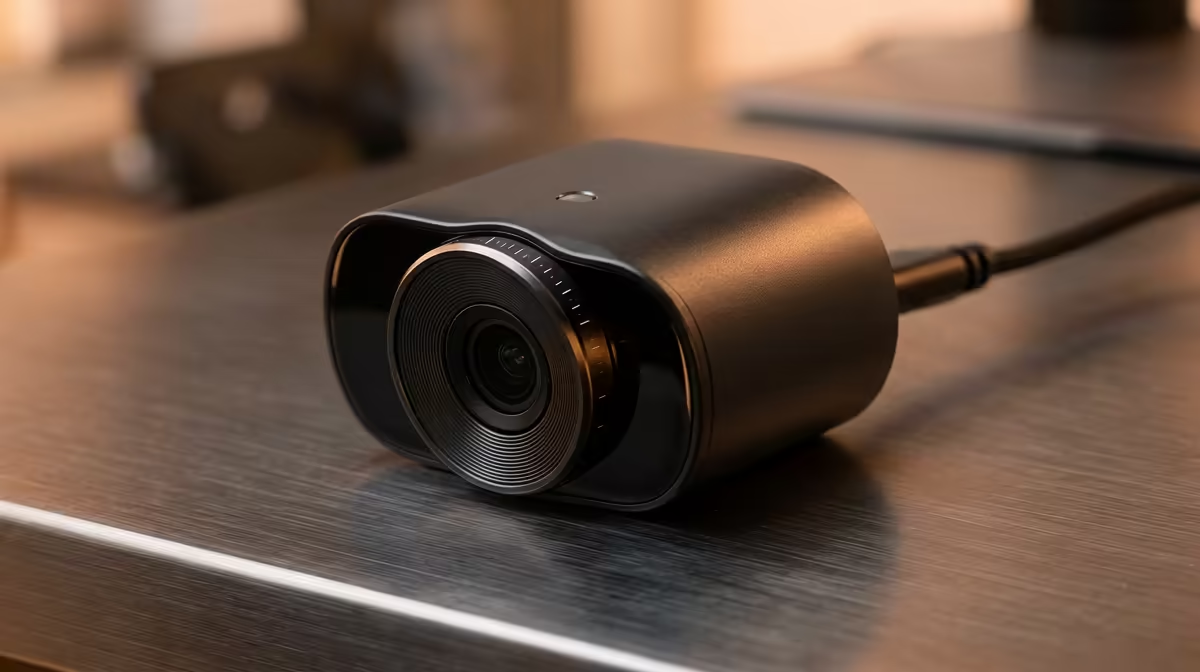
The buying order is simple: secure compatibility and the spec floor first, add comfort or speed second, and skip cosmetic extras until the basics are solved. For a webcam, compare Logitech C920, Razer Kiyo X, and A4Tech 1080p webcams in the R450-R2,400 band before stretching higher. Data science coursework often mixes Python notebooks, Teams calls, browser tabs, and long typing sessions.
Start by matching the webcam to the actual job, not the longest feature list. The useful baseline is 1080p 30 fps, a stable mount, decent mic pickup, and software exposure control. That baseline keeps the purchase practical for data science coursework and avoids paying for a feature that will not be noticed after the first week.
Price also needs context. A broad R450-R2,400 band is realistic for this category, but the right point in that band changes with build quality, warranty, and whether the part solves a real bottleneck. Compare named options such as Logitech C920, Razer Kiyo X, and A4Tech 1080p webcams so the decision is tied to actual hardware rather than vague labels.
The numbers that matter are 1080p at 30 fps, USB plug-and-play, autofocus or fixed-focus lens options, and usable low-light handling. Treat those figures as a checklist: if the cheaper option already meets them, spend elsewhere. If it misses one of them in a way that affects the room, recording, study, or gaming session, the upgrade has a clear reason.
For data science coursework, long typing, browser tabs, notebooks, and video calls are normal. A stable accessory that reduces friction during two-hour study blocks is a better buy than a gaming feature you never use.
Before checkout, check physical fit, connector support, and the way the product will be used every week. For PC parts, that means clearance, wattage, ports, thermals, and cable routing. For accessories, it means comfort, desk space, software simplicity, and whether settings stay saved when moved between devices.
A strong buy is easy to explain in one sentence: it fixes a specific problem at a sensible price. If the reason sounds like styling, a bigger number, or a feature you cannot test, keep the shortlist tighter and put the spend toward the part that changes daily use.
Check local stock, warranty handling, and whether the webcam fits the space or system you already have. Then compare the spec floor against your actual use: data science coursework, study, gaming, recording, or family sharing.
The cheapest option is fine only when it meets the minimum spec floor and does not create a new problem with noise, heat, comfort, or ports. If it misses a core requirement, a mid-range option in the R450-R2,400 band is usually the cleaner buy.
The easiest spec to overpay for is the one that sounds premium but does not change your workload. Put more weight on 1080p 30 fps, a stable mount, decent mic pickup, and software exposure control and less weight on cosmetic extras or numbers that your PC, room, or game cannot use.
write down the one problem the webcam must fix, then reject any option that does not solve that problem within the R450-R2,400 range.
PCIe 5.0 vs PCIe 4.0 for video editing in 4k is mainly about fit, features, compatibility, cost, and upgrade path, not one automatic winner. SA buyers should match the choice to the setup.
Read more
Wi-Fi 7 vs Wi-Fi 6e for competitive esports comes down to router support, latency goals, device compatibility, and coverage. SA buyers should match the choice to the real network setup.
Read more
ATX 3.1 vs ATX 3.0 for mMO and live-service games buyers - what changes is mostly about compatibility, budget, upgrade path, and setup fit. SA buyers should check device support and real needs before expecting a clear win from either option.
Read more
LGA 1851 vs LGA 1700 can affect Twitch and YouTube streaming when gaming and encoding share CPU resources. For SA creators, the real-world difference depends on encoder choice, memory support, motherboard cost, thermals, and upgrade plans.
Read more
X870E vs X670E for aaa single-player gaming is mainly about fit, features, compatibility, cost, and upgrade path, not one automatic winner. SA buyers should match the choice to the setup.
Read more
Hall Effect switches vs Mechanical switches for mMO and live-service games is mostly about compatibility, budget, upgrade path, and setup fit. SA buyers should check device support and real needs before expecting a clear win from either option.
Read more
A fake 113GB GTA VI ISO reportedly used empty padding around a small malware payload. SA gamers should delete unofficial builds, keep Windows security active and wait for official channels.

Wi-Fi 6E vs Wi-Fi 6 matters for 4K video editing when files move across a network. The real-world difference between Wi-Fi 6E and Wi-Fi 6 for video editing in 4K depends on NAS access, cloud uploads, router range, and SA creator workflows.

The difference between PCIe 5.0 and PCIe 4.0 for SA gamers is mostly bandwidth headroom. Compare GPU slot needs, NVMe speed, motherboard support, and upgrade timing before paying extra for a newer platform.

Gaming PC stuck pixel checks in South Africa should confirm the monitor fault first. Use colour tests, screenshot comparison, cable swaps, display menu checks, and clear photos before deciding on support.

Shokz OpenFit Air 2 earbuds weigh 7.2g each and use a redesigned dual-driver open-ear layout. SA buyers should choose them for comfort and awareness, not maximum isolation.

AMD's current driver now lists a Radeon RX 9050 4GB, while product coverage details a narrowed memory system. SA buyers should weigh the low VRAM ceiling against current local Radeon options.

Samsung Display has demonstrated a 16-inch 2.5K OLED laptop panel running at 300Hz. SA buyers should wait for a named notebook, full panel specifications and a local price before planning an upgrade.

Microsoft says some Windows 11 game crashes after recent updates are linked to RGB-related drivers. Affected SA gamers should confirm the update and driver before using the published registry workaround.

Minisforum's M2 Pro pairs Core Ultra X7, Arc B390 graphics and 32GB onboard memory in 1.8 litres. SA buyers should weigh its fixed memory and $1,439 launch offer against local mini PCs.

Smart monitors can add apps and convenience, but they also add privacy settings and unwanted-software risk. SA buyers should audit the operating system before paying for extras.

Lenovo says Legion Go failures linked to BIOS N3CN42WW are not user error. Affected SA owners should stop retrying the update, preserve proof and open a support case.
The ROG Gjallar gaming soundbar is now listed in the US at $599.99. SA buyers should compare its 2.1.2 audio, wireless bass and built-in chat controls with simpler local options.