Ever lined up a perfect headshot in Valorant, only for your aim to feel a fraction of a second behind? Or maybe you've been lasered in a Warzone Gulag and sworn your mouse didn't react fast enough. That tiny, frustrating delay isn't just in your head... it could be your mouse's polling rate. Understanding what polling rate is can be the difference between a clutch win and a "Next Round" screen here in South Africa. 🖱️
What is Polling Rate, Exactly?
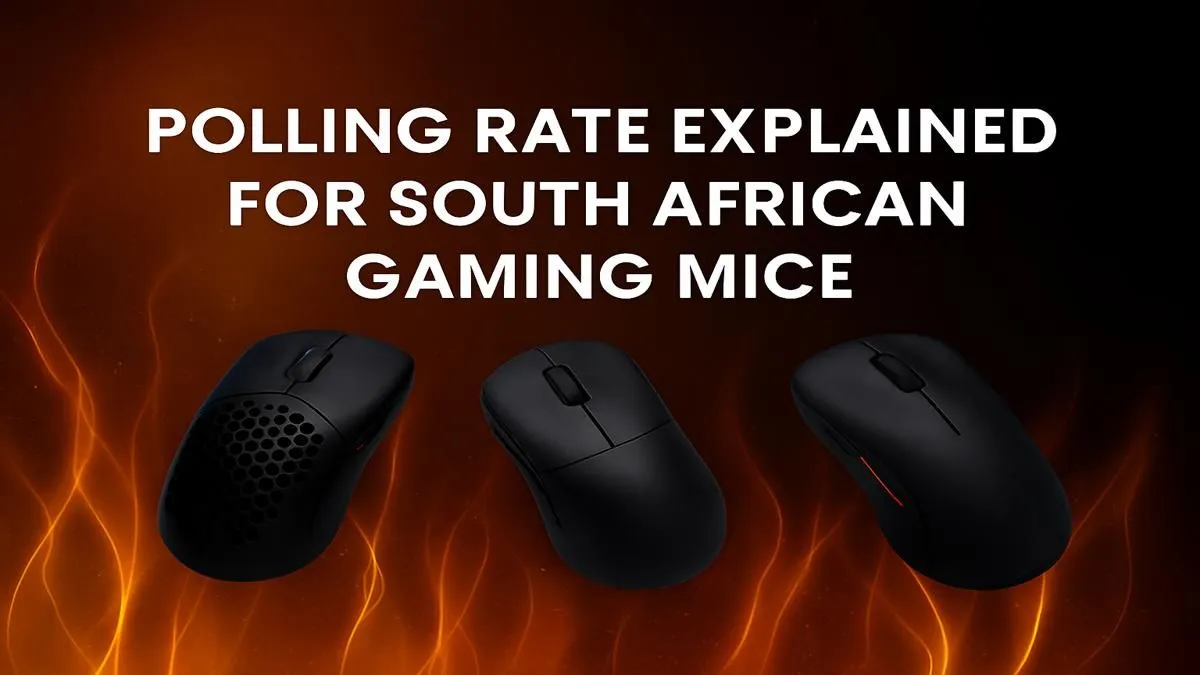
Think of polling rate as how often your gaming mouse reports its position to your computer. It's measured in Hertz (Hz). A mouse with a 125Hz polling rate updates your PC 125 times every second. A mouse with a 1000Hz polling rate? It's chatting with your PC a whopping 1000 times per second.
More updates mean a smoother, more responsive cursor movement on your screen. This higher frequency reduces the perceptible lag between your physical hand movement and the digital action, giving you a more accurate, one-to-one feeling.
Why a High Polling Rate Matters for Gamers
In fast-paced competitive titles, every millisecond counts. A higher mouse polling rate provides a more current stream of data to the game engine, resulting in several key advantages:
- Smoother Tracking: Your crosshair glides across the screen instead of making tiny, almost invisible jumps. This is crucial for tracking moving targets.
- Reduced Input Lag: The time between you moving your mouse and seeing the result is minimised.
- Improved Precision: With more data points, the game knows your mouse's exact position more accurately, allowing for finer adjustments and better flick shots.
Your mouse is just one part of the equation. A responsive setup includes your entire peripheral arsenal. Pairing a high-performance mouse with the right keyboard, perhaps customised with different keyboard switches, creates a truly seamless gaming experience.
Polling Rate vs. DPI: What's the Difference?
It's easy to confuse polling rate with DPI (Dots Per Inch), but they control very different things.
- DPI is about sensitivity. It determines how far your cursor moves on screen for every inch you move the mouse on your desk.
- Polling Rate is about responsiveness. It determines how often the mouse's position is updated.
You can have a high DPI and a low polling rate, which would feel fast but choppy. The sweet spot for gaming is a high polling rate combined with a DPI setting you're comfortable with. And speaking of comfort, don't neglect ergonomics; a good wrist rest can prevent fatigue during those long ranked sessions.
Check Your Polling Rate ⚡
Most gaming mice come with software (like Logitech G Hub, Razer Synapse, etc.) where you can easily check and adjust your polling rate. It's usually set to 1000Hz by default on modern gaming mice. If you feel any stuttering, especially on older PCs, you can try lowering it to 500Hz, but 1000Hz is the gold standard for competitive play.
The 1000Hz Standard and Beyond 🚀
For years, 1000Hz has been the benchmark for a great gaming mouse. It offers a tangible improvement over older 125Hz or 500Hz models with almost no downside. Recently, however, "hyper-polling" mice have hit the market, boasting rates of 4000Hz and even 8000Hz.
While technically faster, the real-world benefit for most gamers is minimal and can sometimes put extra strain on your CPU. For the vast majority of South African gamers, a solid 1000Hz mouse is the perfect choice for performance and value. Focus on optimising your entire setup first. Personalising your rig with cool keyboard keycaps is great for aesthetics, but ensuring your core performance is dialled in is what truly matters.
Finding the Right Gear in SA
The good news? You don't need to break the bank to get a mouse with an excellent polling rate. Most modern gaming mice from reputable brands support 1000Hz out of the box. Upgrading your peripherals is one of the most cost-effective ways to improve your entire gaming experience.
You can often find some of the best gaming keyboard deals that won't empty your wallet. If you're looking for an all-in-one upgrade, a quality keyboard and mouse combo can provide fantastic value. Even grabbing the cheapest gaming keyboard in South Africa will feel leagues better than a standard office model for gaming.
So, the next time you're wondering what polling rate is, you'll know it's the secret sauce behind that smooth, responsive aim every serious gamer needs.