Quick Answer
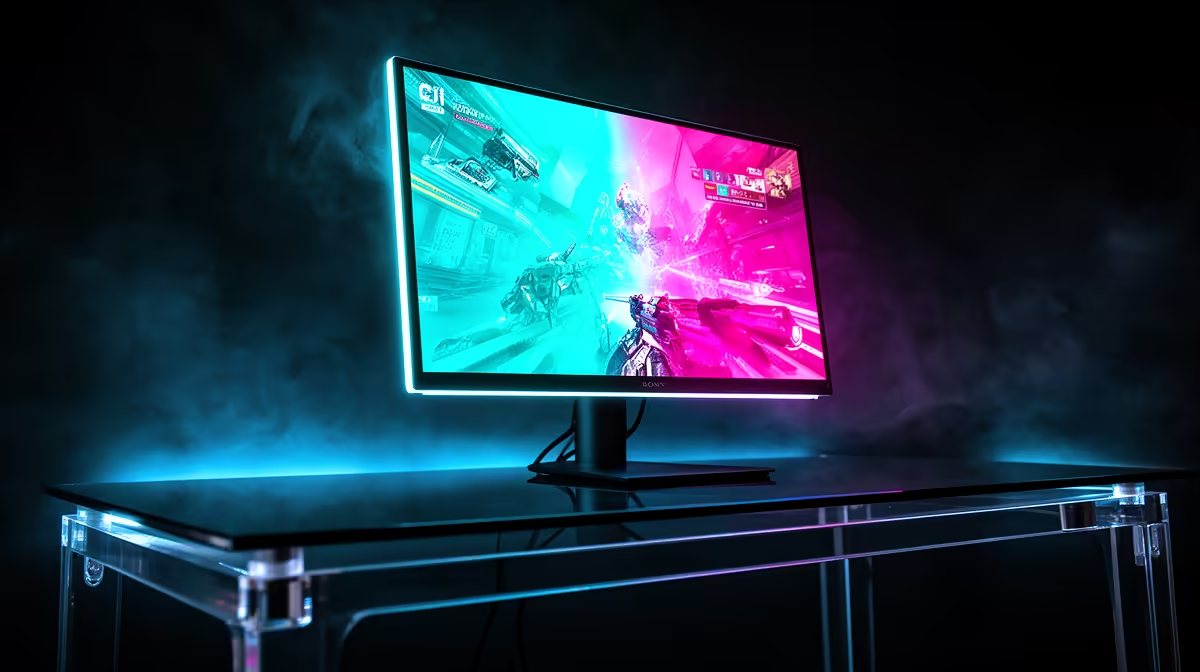
Look for a native 4K Fast IPS panel with dual-mode refresh (typically 4K 160Hz and FHD 240Hz or 320Hz), HDMI 2.1, DisplayPort 1.4 with DSC, G-Sync Compatible or FreeSync Premium Pro, and a response time of 1ms or below. These specs ensure both modes perform properly rather than one being a compromised afterthought.
Panel Technology and Refresh Ceiling 🖥️
The foundation of any dual-mode monitor is its native panel. You want a Fast IPS panel for its 0.3ms to 1ms GTG response time and wide colour coverage (aim for 95% DCI-P3 or better). VA panels at these refresh rates still produce smearing in dark scenes; TN panels sacrifice too much colour accuracy and viewing angle for productivity use. The refresh rate ceiling in each mode matters: a dual-mode panel peaking at 4K 144Hz and FHD 240Hz is less capable than one reaching 4K 160Hz and FHD 320Hz. For competitive gaming, the FHD ceiling determines how useful the mode is; anything below FHD 240Hz does not offer a meaningful advantage over simply running the 4K mode at its highest setting.
Connectivity and Ergonomics Checklist 🔧
A dual-mode panel needs the right ports to deliver its advertised modes. Confirm at least one DisplayPort 1.4 output (for DSC-supported 4K 160Hz from a gaming PC) and one HDMI 2.1 port (for console 4K 120Hz). USB-C with DisplayPort Alt Mode is a strong bonus for SA remote workers who switch between a gaming rig and a work machine. On the ergonomic side, look for a stand with height adjustment of at least 110mm and tilt plus swivel. A fixed-height stand on a 32-inch monitor is difficult to position on variable desk surfaces, and a separate VESA arm adds R500 to R1,500 to the total cost. Confirm 100x100 VESA mounting support if you prefer an arm.
Adaptive Sync, HDR and OSD Quality ✨
G-Sync Compatible or FreeSync Premium Pro ensures tear-free output when frame rates fluctuate, which is inevitable in any open-world game. HDR certification should be at least VESA DisplayHDR 400; DisplayHDR 600 produces noticeably better HDR performance. OSD quality is underrated: a dual-mode monitor whose refresh rate toggle is buried three menus deep discourages players from switching appropriately. Monitors with a dedicated mode-switch shortcut button or joystick OSD navigation are significantly more usable. In South Africa, budgeting R8,000 to R15,000 for a 32-inch dual-mode 4K panel covers models with most of these features; premium configurations sit above R15,000.
Test Both Modes at the Counter ⚡
If viewing the monitor in person, ask the retailer to switch between 4K and FHD modes. A well-built dual-mode panel switches cleanly in under 3 seconds. Extended blackouts above 5 seconds during the mode switch indicate a poor firmware implementation.
FAQ
What GPU do I need to use the FHD 320Hz mode meaningfully?
You need a GPU capable of sustaining above 200fps in your target game at FHD. The RTX 5070 or RX 9070 XT achieves this comfortably in optimised esports titles. Below that tier, 250fps is attainable in lighter games but not guaranteed in demanding competitive titles.
Are dual-mode monitors more prone to panel defects?
No. Dual-mode is a firmware and pixel-grouping feature, not a hardware variant. The underlying Fast IPS panel carries the same defect rates as any standard IPS monitor from the same manufacturer. Standard warranty covers dead pixels and backlight defects in any mode.
Is 32 inches the ideal size for a dual-mode 4K monitor?
For desktop use at 60 to 75cm viewing distance, 32 inches is the sweet spot. The 4K mode delivers 138 PPI and the FHD mode is usable at that distance for gaming. Larger sizes shift the ideal viewing distance further back, suiting living room setups rather than a standard gaming desk.
Ready to shortlist a dual-mode 4K gaming monitor?
Evetech stocks dual-mode monitors with Fast IPS panels, adaptive sync, and HDMI 2.1, all locally available with South African warranty support.