Quick Answer
When a case ships without fans, prioritise fan mount count, size compatibility (120mm, 140mm, or 200mm), and pre-drilled radiator support so your first purchase covers both airflow and potential future liquid cooling. A case with strong mounting options saves money long-term because you are not forced into an expensive case swap later.
Fan Mount Layout Is the Starting Point 🔧
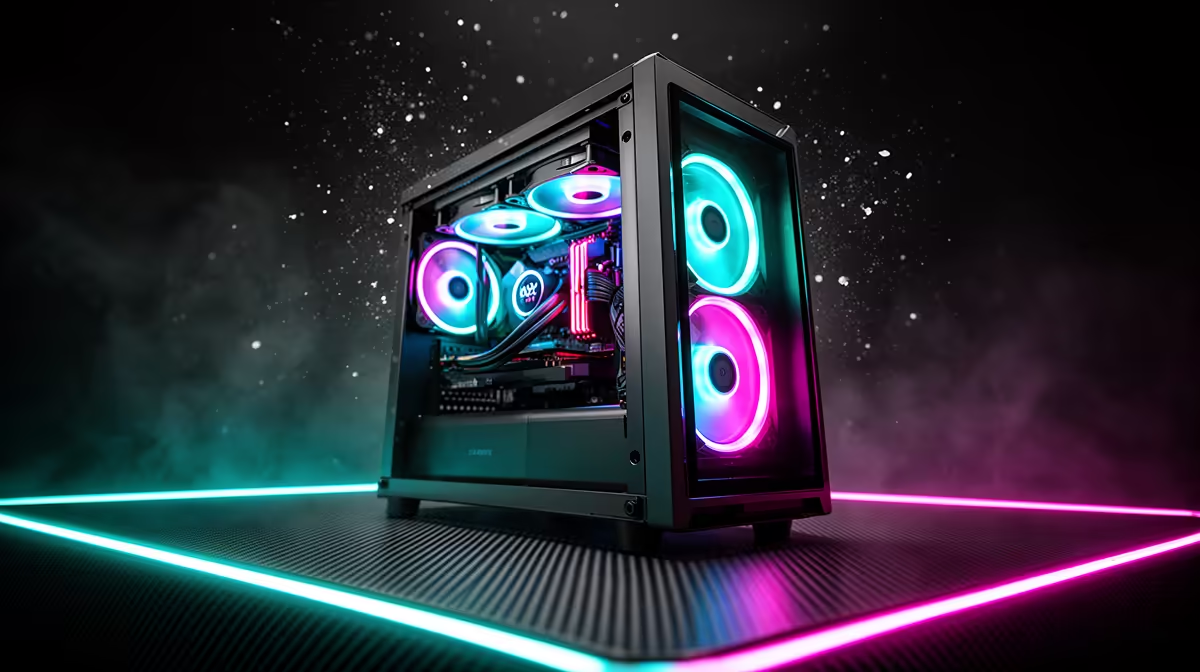
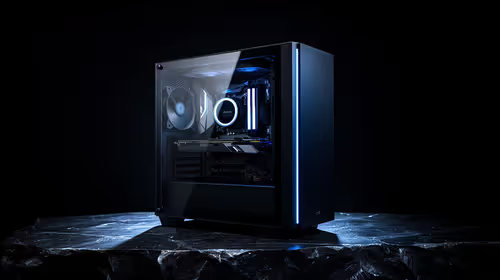
Not all fanless cases are created equal. A mid-tower with three 120mm front mounts and one rear 120mm gives you a solid push-pull foundation, while a case supporting 140mm or 200mm front fans delivers noticeably higher airflow volume at lower RPM and less noise. Check the fan specifications listed on the box: maximum supported fan diameter matters more than the number of mounts when you are running a warm GPU like the RTX 5080, which can hit 350W TDP under full load. South African summers push ambient temperatures above 35 degrees Celsius in Gauteng and the Western Cape, meaning passive or under-fanned cases thermal-throttle faster than they would in cooler climates.
Radiator Clearance and Static Pressure Matters 🌬️
If you plan to add an AIO cooler later, check top-panel radiator dimensions before you buy the case. A top slot rated for 240mm works fine with a twin-fan AIO, but RTX 50-series and Ryzen 9000-series builds benefit from 360mm or 420mm support to keep both the CPU and GPU temps in check. Cases with mesh front panels typically outperform solid-panel designs by 5 to 8 degrees Celsius on GPU junction temperature, which translates to longer silicon lifespan and sustained boost clocks. Budget R400 to R900 for three quality 120mm fans or two 140mm fans to complete your airflow stack on a mid-range case.
Cable Routing and Fan Header Access 🖥️
A fanless case without good cable routing options becomes a nightmare once you add your own fans. Look for rubber grommets on the main pass-throughs, a PSU shroud, and at least two dedicated fan headers on the motherboard-side panel. Most modern cases include a small fan hub, but verify the header count in the spec sheet. If the case uses a proprietary fan controller rather than standard 4-pin PWM headers, you lose the ability to manage fan curves via your motherboard BIOS, which limits tuning flexibility. South African builders who order locally stocked cases from Evetech can confirm specs before purchase rather than waiting on international freight that adds weeks and customs duty.
Match Fan Size to Slot First ⚡
Before buying fans separately, note the exact slot diameter your case supports. Mixing 120mm fans in a case optimised for 140mm means you leave airflow potential on the table. A pair of 140mm fans at 800 RPM moves more air than three 120mm fans at 1,200 RPM while staying quieter.
FAQ
How many fans should I add to a mid-tower case?
Three fans is the practical minimum for most builds: two intake at the front and one exhaust at the rear. A high-end GPU like the RTX 5070 Ti benefits from a fourth fan as a top exhaust. This configuration keeps positive pressure in the case, reducing dust accumulation on filters.
Is it worth buying a case with a fan controller included?
For most builders, a motherboard with six or more fan headers handles all speed management via BIOS. A bundled controller only adds value if your board has fewer headers than your planned fan count, or if you want a manual knob rather than software curves.
Do larger fans mean more noise?
Not necessarily. A 140mm fan running at 700 RPM is quieter than a 120mm fan running at 1,200 RPM while moving similar air volume. Choosing larger diameter fans where your case allows is usually the best strategy for quiet high-airflow cooling.
Ready to pick the right case for your fan setup?
Browse Evetech's range of PC cases online and filter by fan mount compatibility so your build stays cool from day one.