Quick Answer
An 8K/60Hz DisplayPort 2.1 cable is worth the extra cost only if you own or plan to buy both an 8K-capable display and a GPU like the RTX 5090 that can actually drive 8K content at 60Hz. For every other South African gamer, a DP 1.4 cable handles current needs and costs R100 to R200 less.
The Real Cost of 8K Gaming in South Africa 💰
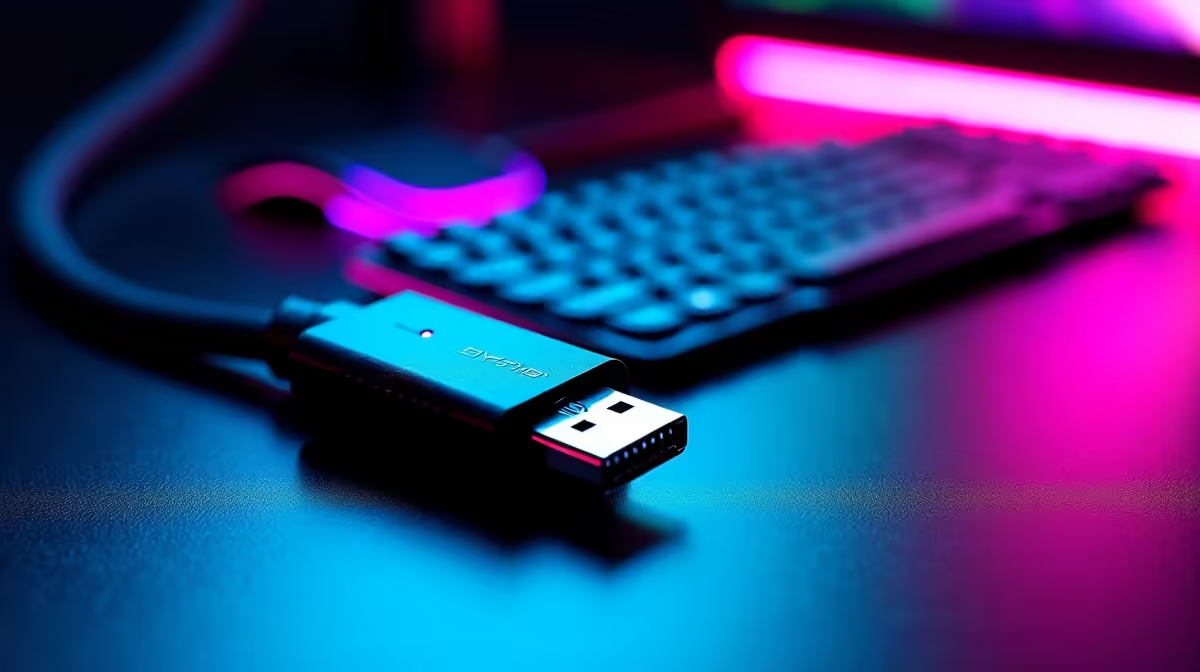
An 8K/60Hz gaming setup requires an 8K display (currently R25,000 to R60,000 and above in the SA market), a GPU capable of rendering at 8K (the RTX 5090 is the only consumer card that approaches this reliably in 2026), and a DisplayPort 2.1 UHBR10 cable. The cable itself costs R300 to R550 for a certified 1 to 2 metre passive version, compared to R180 to R300 for a DP 1.4 cable. The cable premium is therefore R100 to R200 over a DP 1.4 alternative. In isolation, that is a small amount relative to the overall 8K setup cost. The question is whether you actually need it: if your monitor tops out at 4K/144Hz, a DP 2.1 cable adds zero visible benefit.
Who Benefits from a DP 2.1 Cable Right Now 🖥️
Three groups of South African gamers benefit immediately from a DP 2.1 cable. First: 4K/240Hz gamers who want uncompressed bandwidth without DSC (Display Stream Compression). DP 1.4 can handle 4K/240Hz via DSC, but a DP 2.1 cable at UHBR10 (77.4 Gbps) carries it uncompressed. Second: content creators and workstation users using high-resolution professional displays where signal fidelity matters more than gaming frame rate. Third: early adopters buying 8K panels who want to avoid replacing the cable again in 12 months. For the average South African gamer at 1440p/165Hz or 4K/60Hz, a DP 1.4 cable remains the smarter spend.
The Future-Proofing Argument for SA Buyers 🚀
DisplayPort 2.1 cables are backwards compatible with DP 1.4 and DP 1.2 GPUs and monitors. Buying a DP 2.1 cable now means you will not need to replace it when you upgrade to an RTX 60-series or equivalent GPU in two to three years. The R100 to R200 premium today can be justified as a one-time purchase that stays relevant through multiple hardware generations. However, this argument only holds if you use certified DP 2.1 cables with verifiable VESA markings. An uncertified cable claiming DP 2.1 may not actually sustain UHBR10 speeds even today, making it a waste of any premium.
8K at 60Hz Requires DSC for Most GPUs ⚡
Even an RTX 5090 driving an 8K display at 60Hz uses Display Stream Compression to fit the signal within DP 2.1 UHBR10 bandwidth. 8K uncompressed would require UHBR20 (80 Gbps per lane), which no consumer cable standard supports yet. This is normal behaviour and does not reduce visible image quality for gaming or video.
FAQ
Are 8K displays sold in South Africa or only available through imports?
A small number of 8K displays are available through local specialist retailers, but the 8K gaming monitor market in South Africa is extremely limited in 2026. Most available 8K panels are large-format TVs rather than gaming monitors. A DP 2.1 cable is more useful for 4K/240Hz gaming monitors, which are more widely stocked locally.
Does a DP 2.1 cable improve picture quality on a 4K/144Hz monitor compared to a DP 1.4 cable?
No, not at 4K/144Hz. Both cable versions carry that resolution and refresh rate within DP 1.4's HBR3 bandwidth. The only difference a DP 2.1 cable brings at 4K/144Hz is headroom for future resolution or refresh rate increases.
Is there a risk of buying a fake DP 2.1 cable in South Africa?
Yes. Cables without VESA certification can be labelled as DP 2.1 without meeting the standard. Buy from a verified local retailer with a real invoice and return policy, and check the cable packaging for the specific VESA DisplayPort 2.1 certification mark.
Planning a 4K/240Hz or future 8K setup?
Check Evetech's DisplayPort 2.1 cable stock alongside RTX 50-series GPUs. All stocked locally with SA warranty support so you can build confidently.