Quick Answer
Fourways streamers and content creators can order studio microphones from Evetech, with USB condensers like the HyperX SoloCast starting at R900 and broadcast-grade options like the Elgato Wave:3 (R2,400) or Rode NT-USB Mini (R2,000) providing professional audio quality. XLR microphones like the Shure SM7B (~R4,500) deliver the best noise rejection for home studios. Evetech delivers to Fourways via Joburg North courier next business day.
USB Microphones for Fourways Streamers
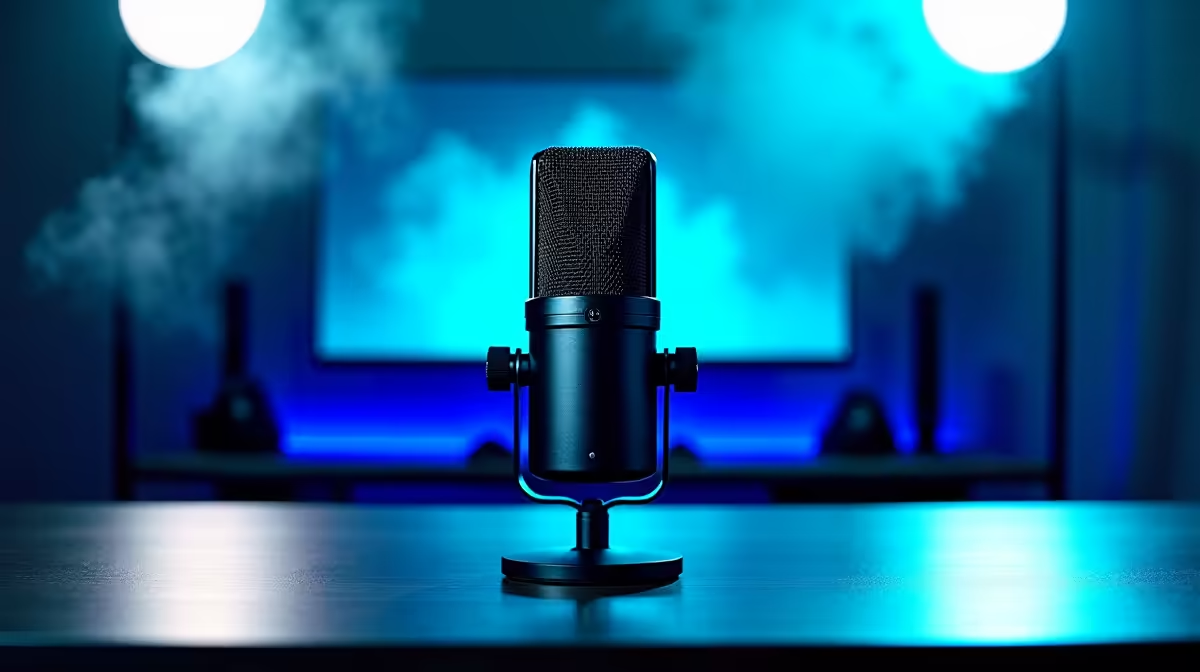
The HyperX SoloCast (R900) is the entry-point USB cardioid mic for Fourways streamers — plug-and-play via USB-C, cardioid polar pattern, and a tap-to-mute button. For a step up, the HyperX QuadCast S (R1,800) adds multi-pattern support (cardioid, bidirectional, omnidirectional, stereo), RGB, and a built-in pop filter. The Elgato Wave:3 (R2,400) uses Clipguard technology — a secondary analogue circuit prevents digital clipping during loud audio spikes, critical for streamers who react loudly to gameplay. The Blue Yeti (R2,800) remains the versatile multi-pattern choice for podcasters who interview guests and need bidirectional or omnidirectional modes.
XLR Microphones for Serious Setups
XLR microphones require an audio interface but deliver better noise floor and dynamic range. The Rode NT1-A (R3,500 body only) paired with a Focusrite Scarlett Solo (R2,200) is the standard home studio setup. The Shure SM7B (~R4,500) is a dynamic microphone that rejects background room noise aggressively — ideal for Fourways home studios where there is ambient street noise or family activity during streams.
Microphone Setup in a Fourways Home
Condenser microphones pick up everything in the room. In a typical Fourways home with hard floors and wall reflections, position the microphone 15–20cm from your mouth in cardioid mode and add a foam acoustic panel behind it. A desk boom arm (~R400–R600) keeps the mic at a consistent distance, reducing volume variation between sessions.
FAQ
What USB microphone should a Fourways streamer buy under R2,000?
The HyperX QuadCast S (R1,800) is the top USB mic under R2,000 for streaming — multi-pattern support, RGB, built-in shock mount and pop filter, and a large 14mm condenser capsule. The HyperX SoloCast (R900) is the budget alternative for streamers who only need cardioid mode.
Is a condenser or dynamic microphone better for home streaming?
For home studios with good acoustic treatment, condensers (Blue Yeti, Elgato Wave:3) capture more detail and sound richer on stream. Dynamic mics (Shure SM7B) are better in untreated rooms — they reject reflections and background noise but sound slightly less detailed. For most Fourways bedroom setups, a condenser with a pop filter and boom arm produces professional results.
Do I need an audio interface with a USB microphone?
No — USB microphones connect directly to a PC via USB without any additional hardware. An audio interface is only needed for XLR microphones. The Focusrite Scarlett Solo (~R2,200) is the standard SA starting interface if you plan to upgrade to XLR in the future.
home streamers, the cheapest audio upgrade after buying a USB mic is a boom arm — it keeps the mic at a consistent 15–20cm distance from your mouth, which dramatically reduces volume variation across sessions.