You drop your phone on its charging pad every night. It’s convenient, clean, and feels like the future. But a nagging thought sometimes pops up, fuelled by online rumours: are there wireless charging health risks? Is that little pad slowly zapping you with harmful radiation while you sleep? 🤔
Let's cut through the noise. In South Africa, we love our tech, but we also deserve the facts. Here’s a straight-talking deep dive into the science behind wireless charging and your health.
Unpacking the Tech: How Does It Even Work?
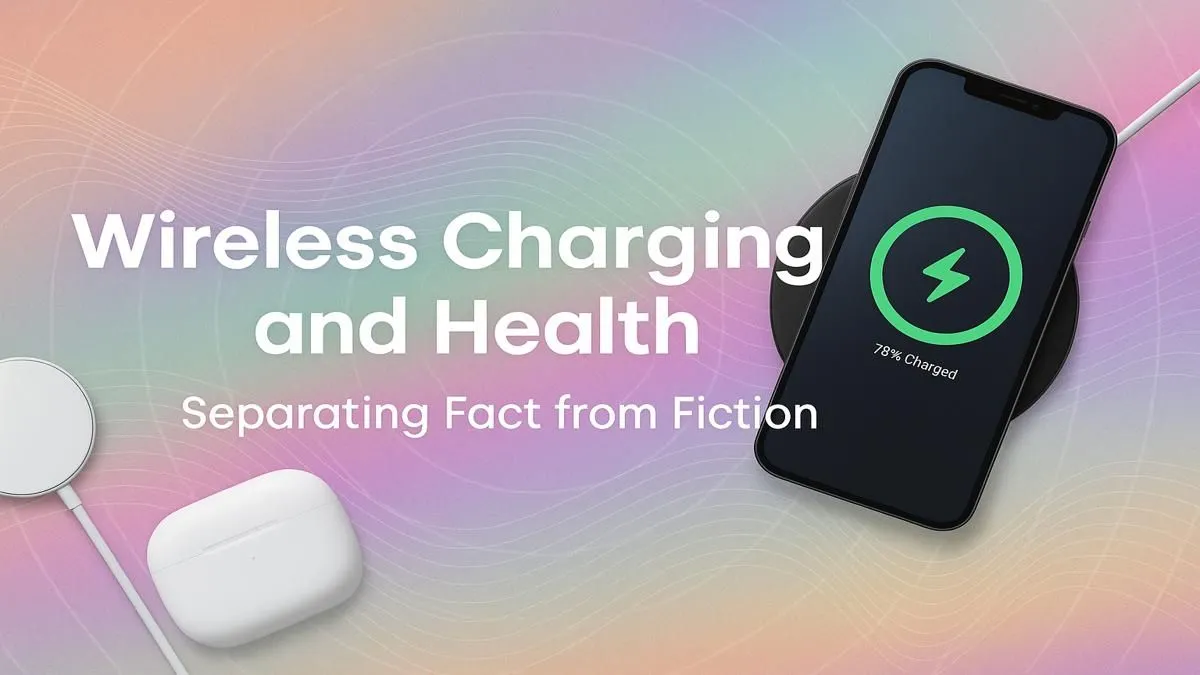
Before we tackle the myths, let's quickly understand the magic. Most wireless chargers use a standard called Qi (pronounced "chee"). It works on a simple principle: electromagnetic induction.
Inside the charging pad is a coil of wire. When electricity flows through it, it creates a small, localised magnetic field. Your phone has a similar coil inside it. When you place your phone on the pad, the magnetic field from the pad induces an electric current in your phone's coil, charging the battery. It’s the same core technology behind many of the latest phone and device chargers on the market. Simple, clever, and no plugs needed.
The "Radiation" Myth: Separating Fact from Fear
This is the big one. The word "radiation" sounds scary, but it's crucial to know there are two main types:
- Ionising Radiation: This is the high-energy, bad stuff like X-rays and gamma rays. It has enough power to knock electrons out of atoms and can damage DNA.
- Non-Ionising Radiation: This is low-energy radiation. It includes everything from radio waves and Wi-Fi to visible light... and the magnetic field from your Qi charger.
The electromagnetic field (EMF) generated by a wireless charger is extremely weak and operates over a very short distance. It dissipates so rapidly that just a few centimetres away, it’s virtually undetectable. International safety standards are incredibly strict, and Qi-certified chargers operate far, far below the prescribed limits. Reputable brands like Promate, for instance, engineer their products to comply with these strict international standards, ensuring they are safe for everyday use.
Get the Best Charge ⚡
For the fastest and safest wireless charge, make sure your phone's coil is centred on the charging pad. A slight misalignment can slow things down and generate a bit more heat. Most modern chargers have guides or magnets to help you get it just right!
What Are the Actual Dangers of Wireless Charging?
While the concerns about radiation are largely unfounded, there are a couple of real-world risks to consider—and they have nothing to do with your health. The real danger comes from heat and poor-quality hardware. 🛡️
A cheap, uncertified charger from a dodgy online store might not have proper temperature controls or safety circuits. In a worst-case scenario, this could lead to:
- Overheating: Damaging your phone’s battery health over time.
- Inefficiency: Wasting electricity and charging your device incredibly slowly.
- Fire Hazard: A very rare but possible risk with faulty electronics.
The lesson? Steer clear of no-name knock-offs. A quick search for a trusted Promate charger shows you options built for safety and reliability.
The Verdict: A Clear Conscience for Your Convenient Charge
So, are there significant wireless charging health risks you need to worry about? The overwhelming scientific consensus is no. The non-ionising radiation they produce is incredibly weak and falls well within global safety limits. You're exposed to far stronger EMFs just by walking outside in the sun.
The real risk isn't to your body, but to your device if you use a cheap, uncertified charger. By investing in a quality product from a trusted brand, you get all the convenience without any of the worry. It's a brilliant piece of tech that declutters your desk, joining the ranks of other essential gaming accessories that simply make life easier. ✅
Ready to Cut the Cord Safely?
Embrace the convenience of wireless charging with the peace of mind that comes from quality gear. Ditch the myths and the messy cables. Explore our wide range of certified chargers and find the perfect, safe solution for your setup.