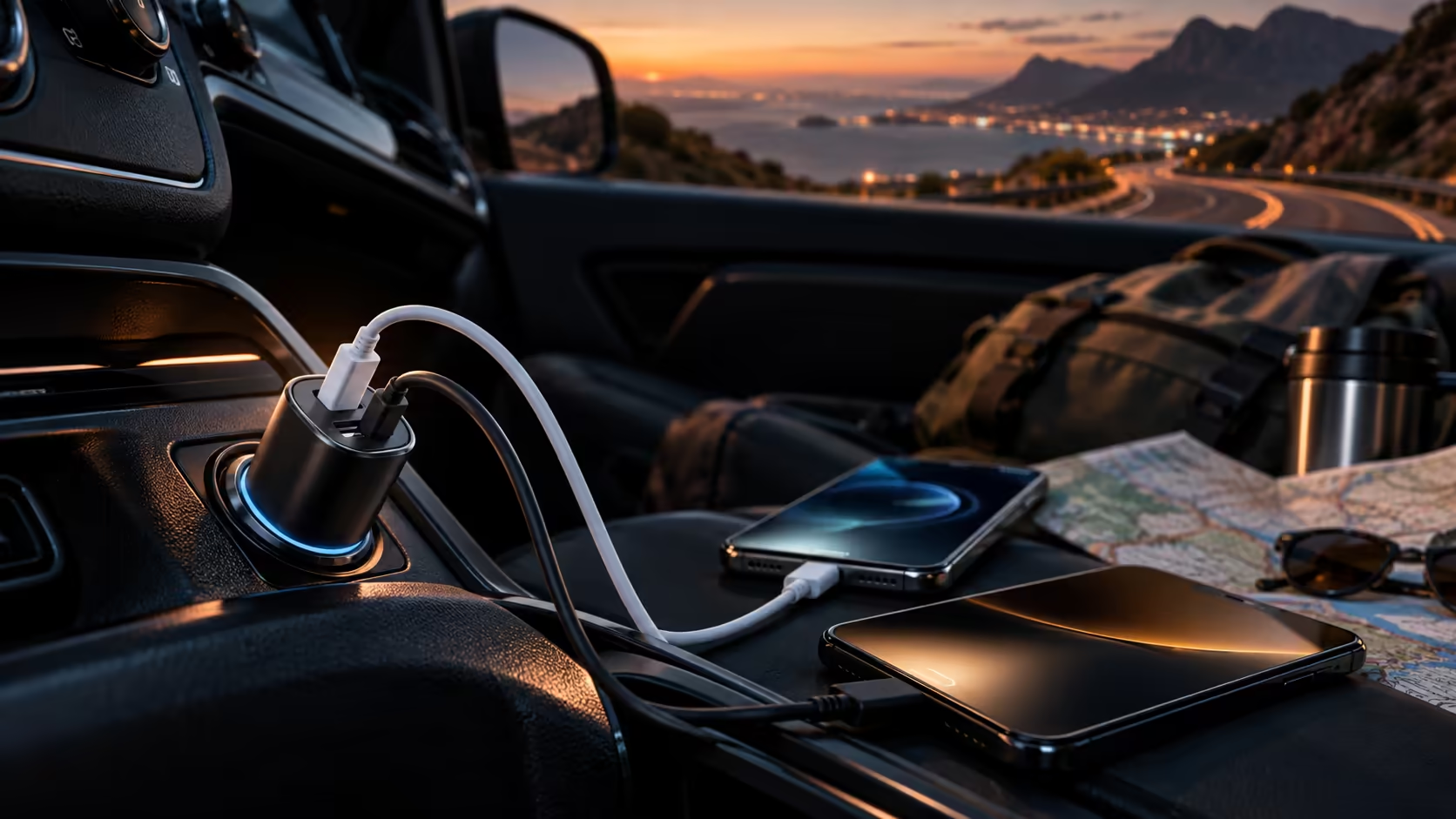
A dual-port car charger earns its R349 price the moment someone else regularly rides in the car with you. Before that point, the second port is paid-for convenience sitting mostly idle, which is a fair thing to know upfront before deciding whether the spend genuinely suits your own situation.
Quick Answer
The second port, 22.5W alongside the main 30W USB-C output on Anker's R349 unit, stops being a nice-to-have and starts being the actual value driver as soon as a partner, a lift club, or a work bakkie's dashcam competes for the same socket regularly. A solo driver charging one phone gets full value from a single-port charger at a similar or slightly lower price instead. Buying locally also keeps any warranty claim close to home, rather than shipping a fault back overseas on what was, in the end, originally only a small accessory purchase.
👥 The economics of a second regular user
A dual-port charger typically costs only R50 to R100 more than an equivalent single-port unit, since the added complexity is mostly in the shared-power negotiation logic rather than in doubling every component from scratch. For a solo driver, that premium buys a second port that spends most of its life sitting unused, which is a small, low-stakes cost to carry for the sake of occasional flexibility down the line.
The maths flips once a second person is in the car most days. At that point, the alternative to a dual-port charger is buying two single-port units, one per person, or accepting that one person simply does not get to charge on a given trip. Against either alternative, the modest premium for a genuine second output looks like clear, obvious value rather than an optional extra tacked onto the price.
🚗 Lift clubs and work vehicles: the clearest cases
A lift club sharing one car most weekdays is close to the clearest, most easily justified case for dual-port value there is, since two phones genuinely compete for the same socket on a predictable, near-daily basis rather than only occasionally. The shared 12W-per-device figure once both ports are active is still well ahead of an old-style socket, and the alternative of only one person charging on any given trip is a real, recurring inconvenience a second port directly solves.
A work vehicle running a dashcam permanently, plus a driver's own phone, is a similar case even without a second passenger ever climbing in, since the dashcam occupies one port continuously and effectively turns the vehicle into a two-device household on every single trip regardless of who else happens to be in the car that particular day.
💰 What the premium is genuinely buying
The value of a dual-port charger's second output is best measured against what not having it costs: a second charger purchase, a second socket search in the car, or simply one person going without power on trips where it matters. Weighed that way, the modest extra spend over a single-port equivalent buys its way out of the same small frustration repeating on every single shared trip going forward.
For a genuinely solo driver, that same premium buys optionality rather than a solved problem, which is still worth having but delivers noticeably less obvious value on any given ordinary day. Either way, buying locally keeps the warranty path short, and checking the best-sellers or the accessories range alongside the charger rounds out a purchase built around how the car is actually used.
Frequently Asked Questions
Is a dual-port charger ever a bad value choice?
Rarely, given how small the premium typically is over a single-port equivalent, though a genuinely solo driver gets less day-to-day use from the second port than a shared-car user would.
How much more does dual-port typically cost over single-port?
Usually only a small amount, not a dramatic jump, which is a big part of why buying dual-port up front rarely turns out to be regretted even by a driver who only reaches for the second output now and then.
Does a dashcam count as a reason to buy dual-port even for a solo driver?
Yes. A camera left running around the clock turns even a one-person car into a two-device situation on every single drive, whether or not anyone else ever rides along.
Is buying locally really worth it over a cheaper import for a small item like this?
For most buyers, yes. A local fault turns into a quick counter return, where the same problem on an overseas order means postage costs that can end up rivalling what the item itself originally cost to bring in.
Does the value case for dual-port change for a family with three or more regular charging needs?
Yes, at that point a single dual-port charger starts to feel stretched again, and splitting the load across a second charger or a genuinely separate socket becomes the better value decision rather than squeezing everything through two ports.
Is the value argument different for a work vehicle compared with a personal car?
Not fundamentally, though a work vehicle tends to reach the break-even point for dual-port sooner, since a dashcam or a second regular driver often makes the second output a daily rather than occasional need.
Does the value case weaken once a device is replaced with a newer, faster-charging one?
Not really. A newer device still competes for the same shared budget once a second port is active, so the underlying value argument for dual-port stays the same even as individual devices change over time.
Is it worth checking the shared 12W figure before assuming dual-port is the right choice?
Yes, since that number, not the two headline figures, is what actually describes daily use once a second person genuinely relies on the same socket regularly.
Is it worth asking a passenger to contribute toward a shared charger?
For a genuinely regular lift-club arrangement, splitting a R349 cost between two or three people who use it daily is a reasonable, low-friction way to settle who actually pays for something every one of them genuinely benefits from equally, rather than leaving it as an awkward, unresolved question that nobody ever quite wants to raise.
Ready to work out if dual-port is worth it for your car?
Have a look at the car charger range and count how many people actually share your socket.