Quick Answer
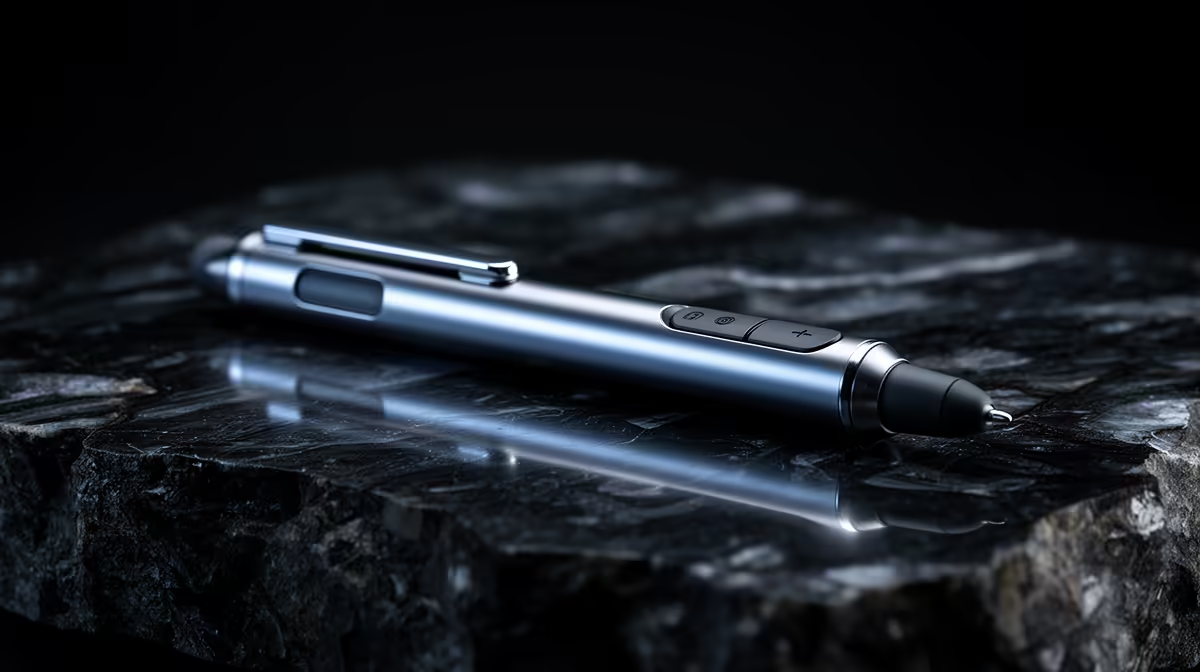
For South African buyers, the stylus features that deliver the most rand-per-value are palm rejection, 4,096 pressure levels, USB-C charging, and a replaceable nib system. Tilt support is worthwhile for artists. Multi-device Bluetooth adds value for professionals. Skip RGB, branding premiums, and proprietary charging connectors.
Ranking Features by ZAR Value for SA Buyers 💰
Palm rejection delivers the most impact per rand: without it, the stylus is frustrating to use for any extended session. It is included in virtually all active styli above R400, making it an easy baseline requirement. Next, 4,096 pressure levels over 1,024: the performance difference in drawing and handwriting is clear, and the ZAR premium is typically only R100 to R300 at entry price points. USB-C charging over Micro-USB or AAAA battery: Micro-USB is a legacy connector, and AAAA cells cost R30 to R60 each and are scarce locally. Paying R50 to R150 more for USB-C is sound value. Replaceable nibs: nibs wear every 200 to 500 hours; a pen with third-party-compatible nibs costs R30 to R80 per replacement versus R150 to R300 for proprietary-only nibs.
Features Worth Paying More For in SA Context 🎨
Tilt support adds R300 to R600 to a pen's retail price at mid-range. For illustrators and designers using shading-heavy techniques, this is justified. For note-takers, it adds nothing practical. Sub-15 ms latency is worth the upgrade from 20 to 25 ms latency found in entry styli; this puts you in the R800 to R1,500 range for most brands. The perceptible smoothness improvement in fast handwriting and gesture drawing justifies the cost. An ergonomic grip and balanced weight (14 to 18 grams) reduce hand fatigue over four to eight hour sessions; this is hard to assess without handling the pen, so check local Evetech stock descriptions for weight specs before ordering online.
Features to Skip for Most SA Buyers 🔍
RGB or LED indicators add R100 to R300 with no functional benefit. Premium branding can cost 40 to 60 percent more for identical sensor hardware. Barrel rotation sensors suit only professional calligraphers. Proprietary charging cradles are inconvenient and costly to replace. Wireless charging via a proprietary pad loses USB-C compatibility. In a rand-volatile import market, paying for features you will not use raises your effective cost per useful feature.
Test the Nib Availability Before Buying ⚡
Before purchasing a stylus pen, check whether replacement nibs for that model are available from SA retailers. If replacement nibs require international shipping, factor in the delivery cost and time when evaluating total ownership cost. A pen with locally available R50 nibs is better long-term value than one requiring a R200 international order every six months.
FAQ
Is a R600 active stylus pen good enough for professional creative work in SA?
For most freelance creative work including illustration, photo editing annotation, and client presentations, yes. Professional-grade illustration at a commercial standard benefits from R1,500 to R2,500 pens, but R600 covers the majority of workflows.
Does spending more on a stylus improve drawing quality automatically?
Not automatically. A R2,500 pen used with a misconfigured pressure curve or poor-quality tablet produces worse results than a R800 pen set up correctly. Driver configuration and practice matter as much as hardware quality.
How do I compare ZAR prices for styli without falling for imported pricing?
Stick to locally stocked retailers for price comparisons. Imported pricing in USD or GBP must be converted at the prevailing exchange rate, then VAT and import duties added, which typically adds 25 to 35 percent over the base foreign price.
Want to spend your rands on features that actually matter?
Browse Evetech's stylus pen range with honest spec listings and locally stocked prices, so you can compare features by what they cost in ZAR, not converted foreign currency.