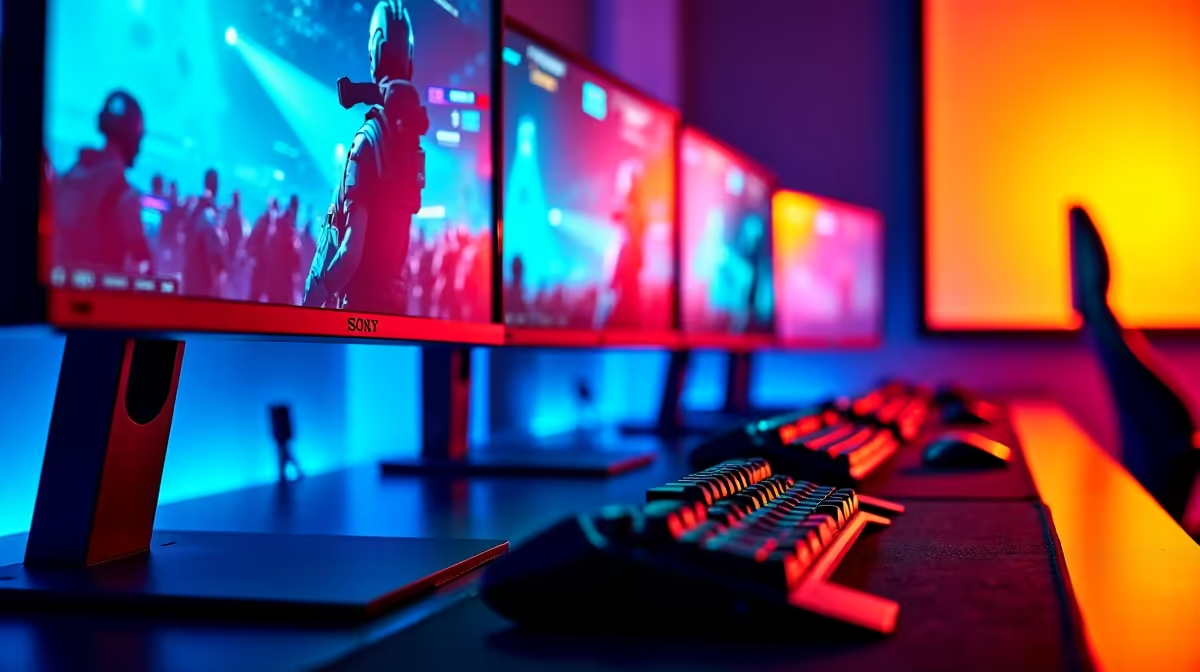
Ever wondered what gives professional gamers their split-second edge? It’s not just lightning-fast reflexes or thousands of hours in-game. Often, the unseen advantage is right in front of them: their monitor. For South African gamers serious about climbing the ranks in Valorant or CS2, choosing one of the best esports monitors for 2025 is a non-negotiable step. This guide breaks down the tech used by the pros and helps you find the perfect display to dominate the server.
What Makes an Esports Monitor "Pro-Grade"?
Forget 4K resolutions and fancy curved screens for a moment. In the competitive scene, speed is king. The best esports monitors prioritise features that deliver the smoothest, most responsive gameplay possible. This is about gaining a tangible advantage, where seeing an enemy a few milliseconds earlier can be the difference between winning and losing a round.
Three core specs define a pro-grade display:
- Refresh Rate (Hz): This is how many times your screen updates per second. While 144Hz was once the gold standard, today's pros won't settle for less than 240Hz, with many upgrading to 360Hz and beyond. A higher refresh rate means smoother motion and less blur, making it easier to track fast-moving targets. 🎯
- Response Time (ms): This measures how quickly a pixel can change colour. A low response time (ideally 1ms GTG or less) is crucial for eliminating "ghosting" or motion blur, ensuring your crosshair stays crisp and clear during a rapid flick shot.
- Sync Technology: This synchronises your monitor's refresh rate with your graphics card's frame output, eliminating ugly screen tearing.
Finding a display that balances these features is key to unlocking your potential. When you start exploring the options, you'll see how these specs define the difference between a standard screen and one of the best PC monitors for gaming available in SA.
Sync Tech: The Secret to Flawless Frames
Have you ever been in a high-stakes firefight and noticed a distracting horizontal line "tearing" across your screen? That happens when your GPU and monitor are out of sync. This is where adaptive sync technology becomes your best friend. It’s a core feature in any top display used by pros.
There are three main flavours you’ll encounter:
- NVIDIA G-Sync: Often considered the premium option, displays with G-Sync technology have a dedicated hardware module inside that ensures a flawless, tear-free experience with NVIDIA graphics cards.
- AMD FreeSync: This is AMD's open-standard alternative. FreeSync monitors are typically more affordable and widely available, offering excellent performance for those running AMD GPUs.
- Adaptive Sync: This is the VESA standard that underpins many FreeSync and "G-Sync Compatible" monitors. A screen listed with Adaptive Sync provides a baseline variable refresh rate experience that works with most modern graphics cards.
Choosing the right one usually comes down to your graphics card, but the goal is the same: perfectly smooth frames when it matters most.
The Best Esports Monitors You Can Buy in South Africa
While specific models change, the brands trusted by esports professionals remain consistent. These companies have invested heavily in creating panels that meet the gruelling demands of competitive play. When looking for the best esports monitors for 2025, you'll find these names at the top of every list.
AOC: The Esports Mainstay
You can't watch a major tournament without seeing their logo. Brands like AOC have built their reputation on delivering blistering speed and reliability. Their AGON series is specifically engineered for competitive gaming, focusing on high refresh rates and minimal input lag, making them a popular choice for aspiring pros.
HP OMEN: Performance Meets Polish
HP has made massive strides in the gaming world. The HP Omen lineup is a favourite for players who want a sleek design without compromising on raw performance. They offer some of the top displays used by pros, balancing incredible speed with the excellent colour accuracy of modern IPS panels.
Pro Gamer Setup Tip 🔧
Don't just plug and play! After setting up your new high-refresh-rate monitor, make sure you've enabled its maximum speed in both your Windows Display Settings and your GPU's control panel (NVIDIA Control Panel or AMD Software). Many monitors default to 60Hz out of the box, meaning you could be leaving a huge performance advantage on the table.
Dahua: The High-Value Contender
Pro-grade performance doesn't always have to come with a pro-grade price tag. Emerging brands like Dahua are proving that top-tier specs can be accessible. They offer monitors with 165Hz+ refresh rates and 1ms response times at price points in ZAR that are hard to ignore, making them a fantastic choice for gamers ready to make a serious upgrade without breaking the bank. 🚀
Ultimately, the right monitor won't magically make you a pro, but the wrong one can definitely hold you back. By investing in a display with the core specs valued by professionals—high refresh rates, low response times, and adaptive sync—you’re giving yourself the best possible tool to perform at your peak.
Ready to See the Difference?
Climbing the ranks requires gear that won't let you down. The best esports monitors for 2025 aren't just about pretty pictures; they're about raw performance. Explore our full range of high-performance gaming monitors and find the display that will give you the competitive edge.