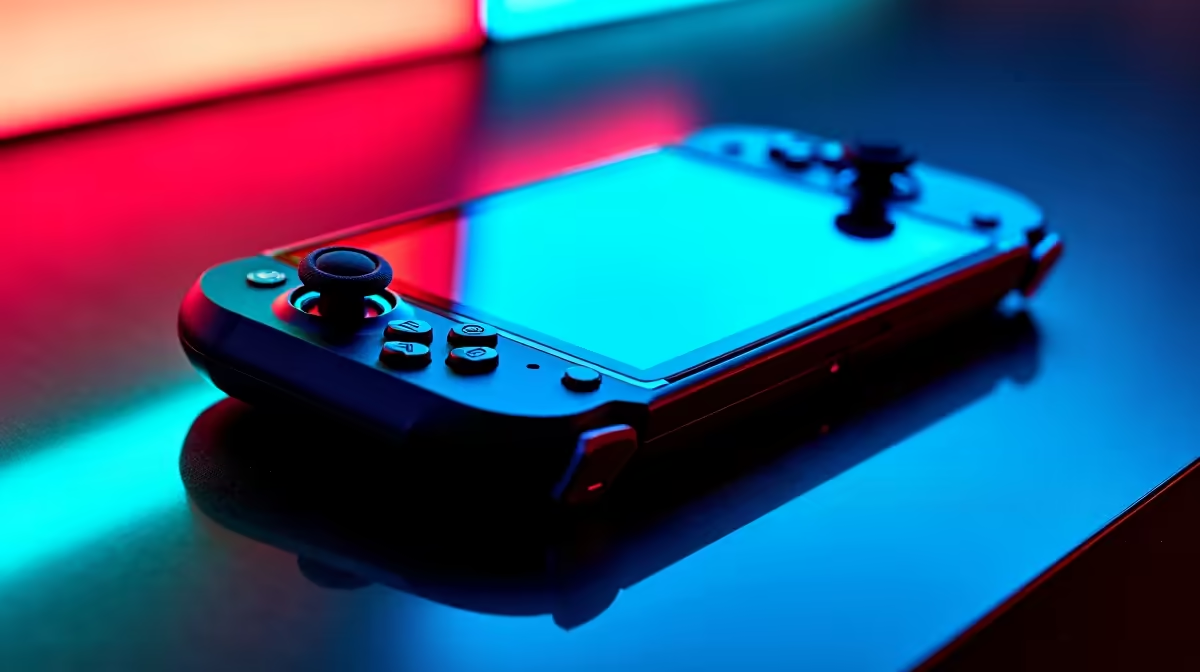
The handheld gaming scene is absolutely buzzing in South Africa. We've seen the Steam Deck, ROG Ally, and MSI Claw battle it out. But Lenovo's first Legion Go, with its massive screen and detachable controllers, really carved out its own space. Now, whispers from inside Lenovo's labs are getting louder, pointing towards a successor... a Legion Go 2 handheld slated for a potential 2026 release. What could this beast be packing? Let's speculate.
What Could Power the Legion Go 2 Handheld?
The original Legion Go launched with the powerful AMD Z1 Extreme chip. By 2026, that silicon will be ancient history. We can realistically expect the Legion Go 2 handheld to feature a next-generation AMD APU, likely built on their "Zen 5" or even "Zen 6" architecture. This isn't just a small step up; we're talking a potential leap in performance and efficiency that could finally deliver smooth, high-framerate gaming at native resolution on a portable device. 🚀
This future chip, combined with faster LPDDR5X RAM and a next-gen PCIe 5.0 SSD, means loading times could become a thing of the past. While the current market for handheld gaming consoles is already impressive, the performance floor for a 2026 device will be significantly higher. Lenovo's challenge will be taming the heat and power draw of such a powerful chip.
Refining a Unique Design Formula
Lenovo's masterstroke with the first model was its versatility. The detachable controllers and kickstand made it a mini Nintendo Switch for the PC world. For the Legion Go 2 handheld, we expect them to double down on this.
Potential Upgrades We'd Love to See:
- An OLED Display: The biggest "what if?" is the screen. While the original's 8.8-inch QHD+ display was gorgeous, an OLED panel would offer perfect blacks and incredible colour vibrancy. Will Lenovo make the switch? It seems likely, given the trend in premium tech.
- Improved Ergonomics: The detachable controllers could be refined for better comfort during long sessions. Hall effect joysticks and triggers as standard would also eliminate stick drift, a major win for longevity. Lenovo's current handheld set a great foundation, and we're excited to see them build on it.
- Smarter Software: Legion Space, the software hub, was a good first attempt. A more polished, intuitive, and bug-free version 2.0 would be crucial for the Legion Go 2 handheld to truly feel like a seamless console-like experience.
Battery Boost Tip ⚡
On your current handheld, create a custom power profile in Windows. Set the maximum processor state to 99% instead of 100%. This prevents the CPU from entering its inefficient "boost" state, often saving a significant amount of battery life with only a tiny drop in performance for many games. It's a lifesaver for extending those gaming sessions on the go!
The Handheld Landscape in 2026
By the time Lenovo's next-gen handheld arrives, the market will be even more competitive. We'll likely have a Steam Deck 2, a successor to the ASUS ROG Ally, and probably a new contender from MSI. This competition is fantastic news for us gamers in South Africa. It means more innovation, better performance, and hopefully, more competitive pricing in ZAR.
The Legion Go 2 handheld will need to bring its A-game, leveraging its unique features to stand out. While 2026 feels a long way off, the groundwork is being laid now. The future of PC gaming is portable, powerful, and incredibly exciting. For now, the current generation offers more power than we could have dreamed of just a few years ago. You can check out the full handheld range to see just how far we've come. ✨
Ready to Game on the Go... Today? The Legion Go 2 is an exciting prospect for 2026, but why wait to experience the thrill of portable PC gaming? The current generation of devices offers incredible power and value right now. Explore our massive range of handheld gaming consoles and find the perfect machine to conquer your world.