Lexar's THOR ULTRA brings PCIe 5.0 storage to a broad set of capacities, but its headline speed is only one part of the buying decision. South African PC builders should check platform support, sustained workload needs, cooling and the price gap to proven local Gen5 drives.
Quick Answer
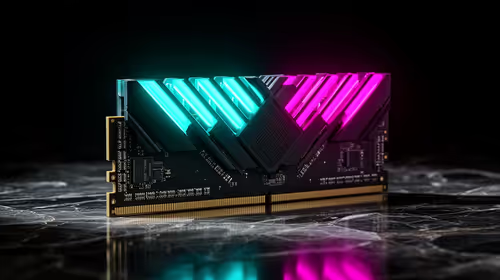
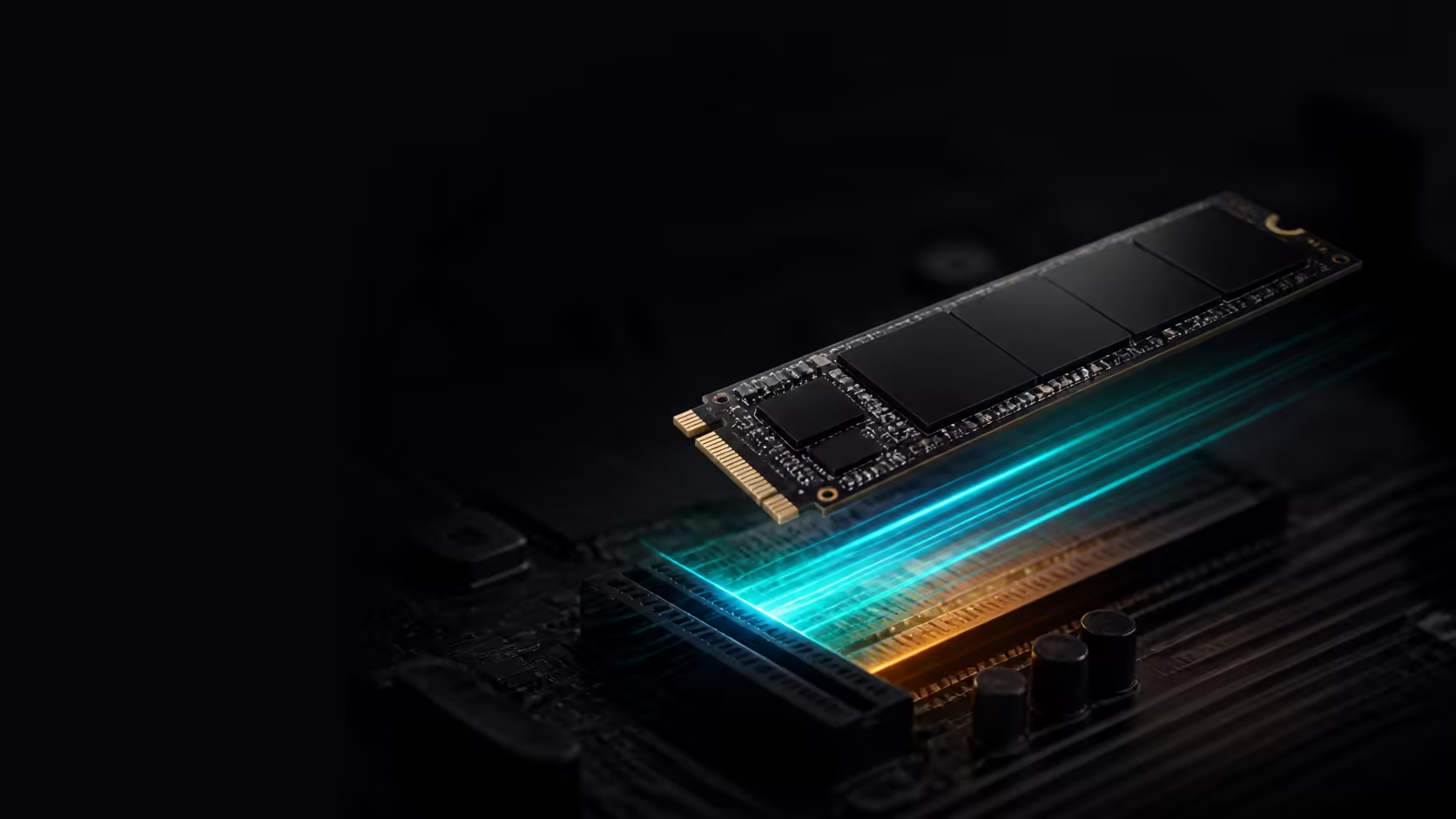
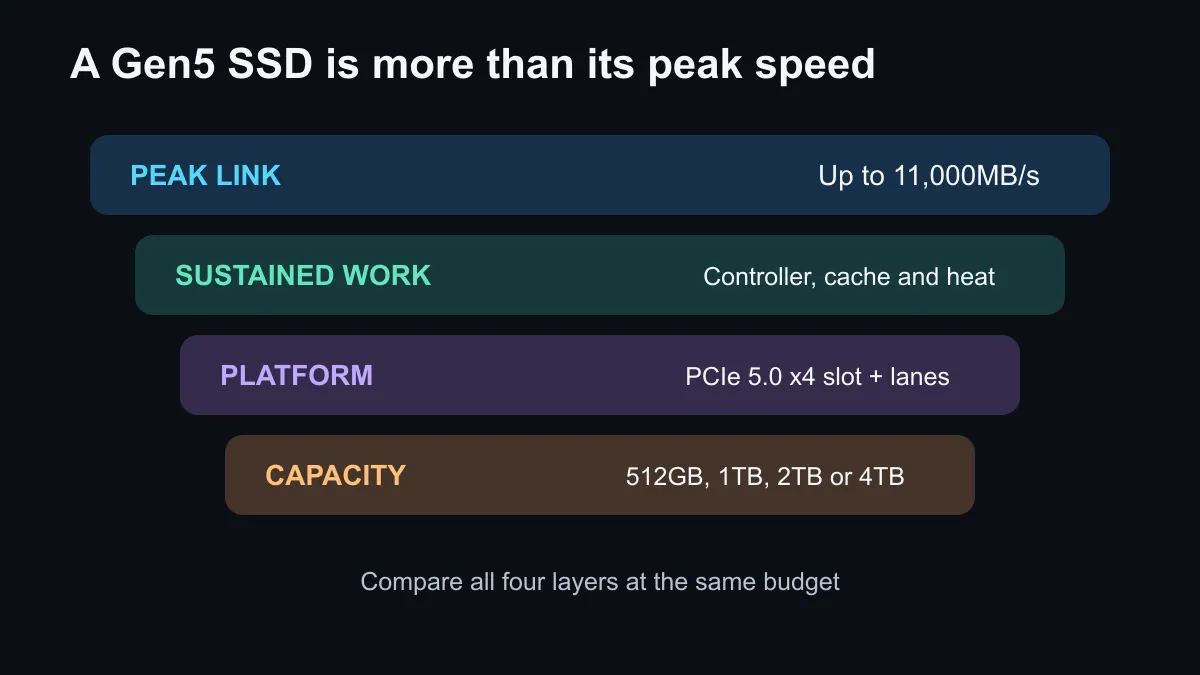
The THOR ULTRA is an M.2 2280 PCIe 5.0 x4 NVMe SSD offered in 512GB, 1TB, 2TB and 4TB capacities. Lexar rates the 1TB through 4TB models for reads up to 11,000MB/s and writes up to 10,000MB/s. It uses a DRAMless controller with Host Memory Buffer, 3D TLC NAND and dynamic SLC caching. No South African release date or rand price is confirmed. In the 18 August Evetech snapshot, the captured high-end Gen5 NVMe selection included 2TB and 4TB models from R8,699 to R19,499.
🚀 Read the speed claim correctly
The maximum figures apply to the 1TB, 2TB and 4TB versions. The 512GB model is rated lower, at up to 9,500MB/s reads and 5,000MB/s writes. These are sequential figures, which describe large ordered transfers under suitable conditions. Game launches, Windows tasks and small-file work also depend on latency, random access, software and the rest of the PC.
The drive uses a Realtek RTL9175 controller built on a 6nm process. It is DRAMless, so it uses Host Memory Buffer to borrow a small amount of system memory for mapping work. That design can lower cost and power, but buyers doing long professional writes should wait for independent sustained-performance and temperature testing instead of assuming the peak figure lasts through every workload.
🧩 Confirm the platform and cooling
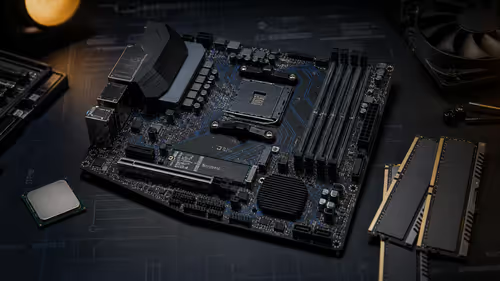
PCIe 5.0 x4 performance requires a compatible M.2 slot connected with the right lane configuration. A Gen5 drive will generally operate in an older slot at the older link speed, so the purchase may add cost without delivering the advertised throughput. Check the motherboard manual, not only the chipset name, because some M.2 slots share lanes or run from the chipset.
Fast SSDs can produce enough heat to throttle under sustained work. Confirm that the chosen slot has a suitable motherboard heatsink or that the drive's final local package includes the needed cooling. Keep airflow moving over the storage area, especially when a large graphics card sits close to the M.2 slot. The broader SSD catalogue makes it easier to compare Gen4 and Gen5 capacity before paying for interface speed.
💾 Choose capacity before chasing a benchmark
The current snapshot gives a local cost reference, not a THOR ULTRA price. A 2TB WD Black SN8100 Gen5 model was R8,699, while sampled 4TB Gen5 drives ranged from R13,499 to R19,499. Capacity can matter more than a small peak-speed difference when games, project files and scratch space compete for room.
For a gaming PC, compare real load-time gains against a good Gen4 alternative and put the saved money where it changes frame rate or capacity. For video, engineering or data work, check the write volume, sustained speed, endurance and recovery plan. Lexar lists a five-year limited warranty and a 1.5-million-hour mean time between failures, but model-specific endurance limits and local warranty handling still need confirmation at retail.
Use the SSD best-seller page to see popular current options, then compare like for like: same capacity, interface, warranty and cooling. Wait for local pricing and third-party tests if THOR ULTRA is the target. Buy an available drive if the system needs storage now and another model meets the measured workload at a better total cost.
Frequently Asked Questions
What capacities does THOR ULTRA offer?
Lexar lists 512GB, 1TB, 2TB and 4TB versions.
Which models reach the full 11,000MB/s read figure?
The stated maximum applies to the 1TB, 2TB and 4TB models, not the 512GB version.
Does a Gen5 SSD work in a Gen4 slot?
It should operate at the older slot's supported speed, but the motherboard manual should confirm compatibility and lane sharing.
Is DRAMless automatically bad?
No. Host Memory Buffer can work well for many uses, but long sustained workloads need model-specific testing.
Planning a faster storage build? Confirm the M.2 link and cooling first, then compare capacity and sustained performance at the same budget.