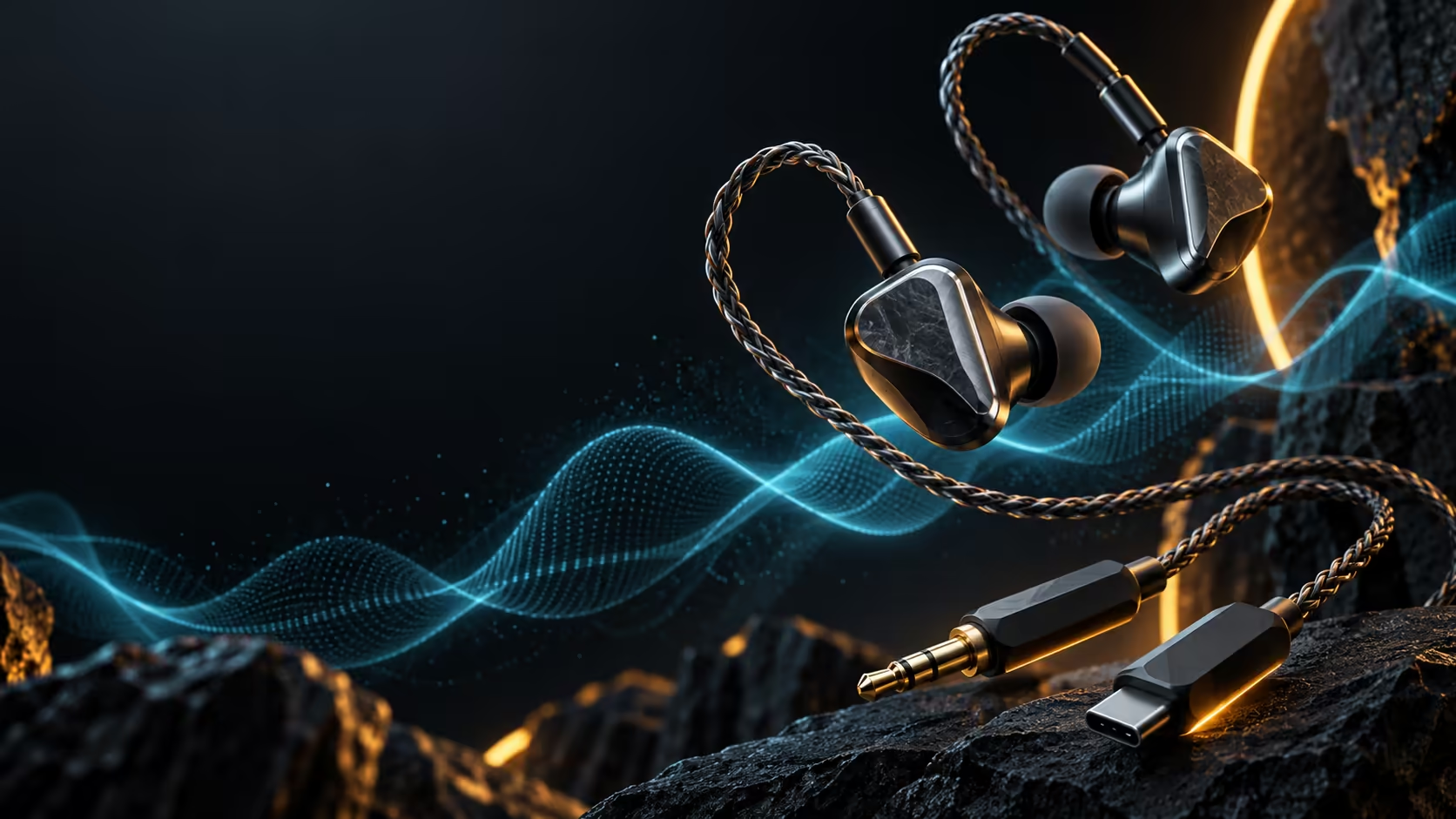
The Sharkoon STEALTHBITE gaming IEM is a wired in-ear headset built around a hybrid-driver earpiece, an inline microphone and several connection options. Its bundle includes a detachable 3.5mm TRRS cable, USB DAC and USB-C to USB-A adapter. That makes the launch interesting for PC, laptop and controller users, but compatibility still depends on the exact port and audio path.
Quick Answer
STEALTHBITE is for buyers who prefer a light in-ear fit and a direct wired signal over a full-size wireless headset. Three silicone tip sizes help with seal, while the included adapters cover more devices. South African price and availability are not confirmed, so use the specification as a checklist rather than assuming it is already on local shelves.
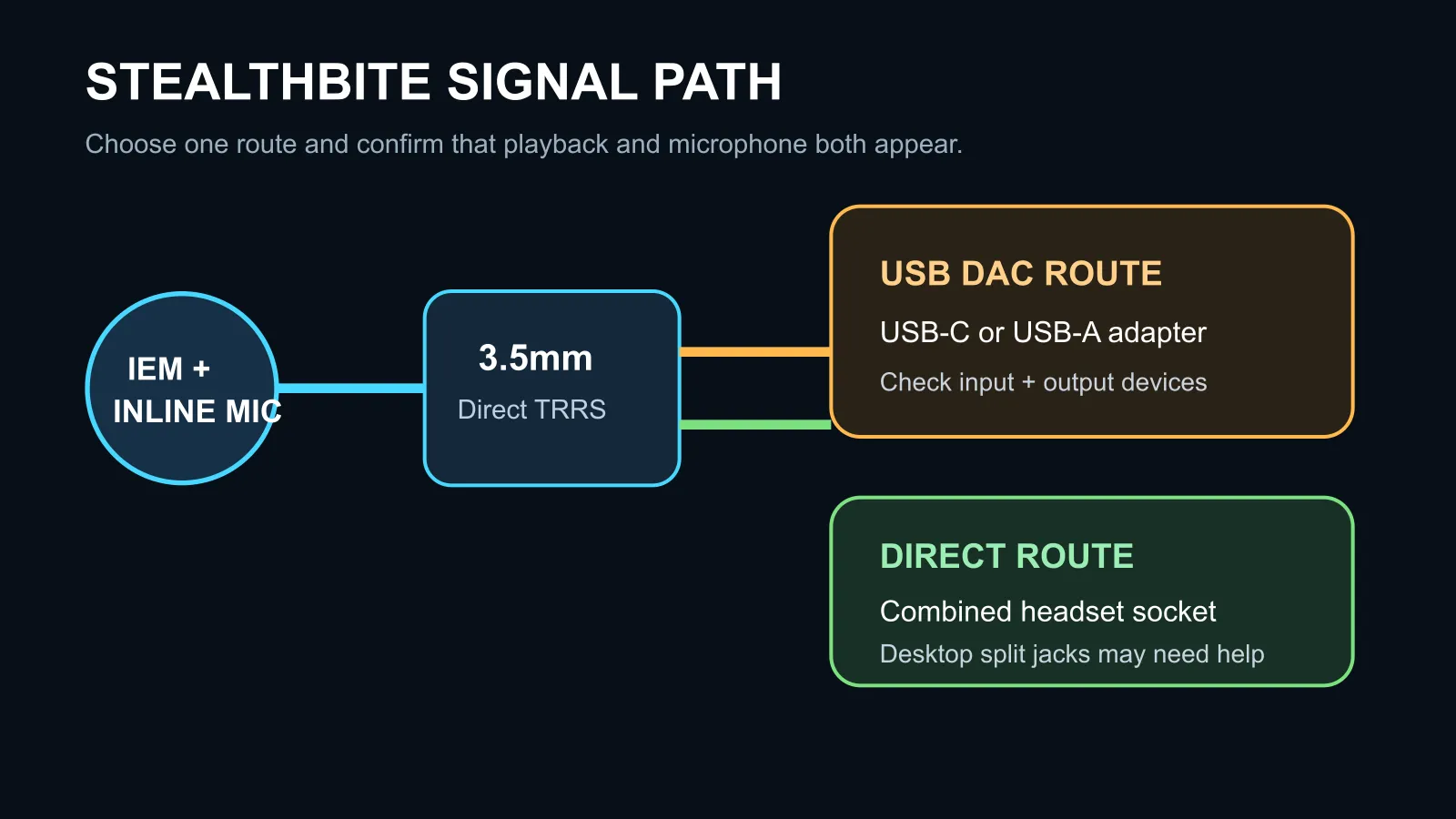
The bundle solves several connection cases
The simplest path is the 3.5mm TRRS plug. On a device with a combined headset socket, that one connector can carry both playback and microphone signals. A desktop with separate headphone and microphone jacks may need a splitter that is not part of the stated bundle.
The USB DAC creates a digital audio path for machines without a suitable analogue socket. The USB-C adapter broadens where that DAC can connect, but a connector shape never guarantees full support. Confirm that the phone, laptop or handheld accepts USB audio and that the operating system exposes both playback and microphone devices.
Fit matters as much as the driver list
An in-ear monitor relies on a stable seal. A tip that is too small can reduce bass and shift the way spatial cues feel. A tip that is too large can create pressure and discomfort during a long session. Test each included size, insert both sides consistently and keep the cable routed so movement does not pull on the earpiece.
The hybrid layout combines different driver types inside each earpiece. That describes the construction, not a guaranteed sound-quality ranking. Tuning, fit and the recording still determine the result. The listed 32-ohm impedance is a conventional load for personal devices, but output level also depends on sensitivity and the source.
The captured local catalogue included entry wireless earbuds from R99 and a wired gaming headset from R199. These are price anchors only; they are not direct substitutes for the STEALTHBITE design.
Before committing to an in-ear design, compare it with the headset already on the desk. Note whether isolation helps concentration or makes it harder to hear the room, whether the cable reaches the preferred port without tension, and whether the ear tips remain comfortable after an hour. Clean removable tips according to the maker's instructions and avoid sharing them. A small storage case also matters because loose earpieces and adapters are easier to misplace than a full-size headset.
Check the microphone before buying
The inline microphone is convenient for chat, but its position follows the cable. Test whether clothing rub transfers into the call and whether the microphone level remains clear without heavy software gain. Players who stream or speak for hours may still prefer a separate microphone.
For local alternatives, compare earbuds, gaming headsets and headset specials. Filter by wired connection first, then confirm the plug type, microphone, ear-tip options and warranty.
Frequently Asked Questions
Is the STEALTHBITE wireless?
No. It uses a detachable wired cable and optional USB DAC path.
Will the inline microphone work through every adapter?
Not automatically. The host, adapter and selected input device must all support the microphone channel.
Why include three ear-tip sizes?
They let users improve seal, stability and comfort for different ear shapes.
Treat the connection chain and physical fit as part of the audio specification.
The safest buying test is simple: connect through the intended route, select the correct playback and recording devices, listen at a moderate level, then record a short voice sample. Repeat the test after reconnecting the cable. Reliable detection and comfort are more valuable than a feature that works only in one software setup.
Check the whole signal path. Match the plug, adapter, microphone and ear-tip fit to the device you actually use.