Laying down tracks in your DAW, only to be hit with crackles, pops, and a CPU overload warning? We've all been there. Your processor is the heart of your digital studio, and in South Africa, the choice often boils down to two titans: Intel and AMD. Finding the best laptop processor for music production isn't just about specs... it's about matching the tech to your creative workflow. Let's find the right core for your sound. 🎵
What Really Matters in a CPU for Music Production?
Before picking a side, it's crucial to understand what your Digital Audio Workstation (DAW) like FL Studio, Ableton Live, or Cubase actually demands from a processor. It's not as simple as "more cores equals better".
Single-Core vs. Multi-Core Performance
Think of it this way:
- Single-Core Speed: This is king for real-time audio processing. One channel strip with a heavy chain of plugins (like a compressor, EQ, and reverb) relies heavily on the speed of a single CPU core. A higher clock speed (measured in GHz) means lower latency and less chance of those dreaded audio dropouts while recording or playing live.
- Multi-Core Power: This comes into play when you're running many tracks, virtual instruments (VSTs), and plugins simultaneously. Bouncing tracks, rendering your final mix, and handling complex orchestral libraries are tasks that can use multiple cores at once. More cores mean you can build bigger, more complex projects.
The best laptop processor for music production balances both, but your personal style will determine which to prioritise.
Team Blue: The Case for Intel Processors
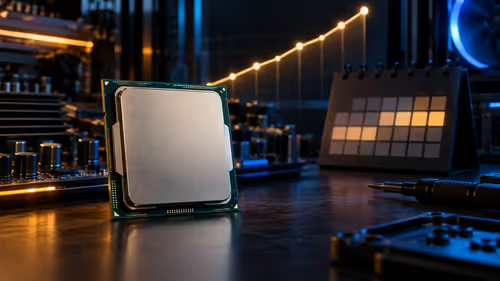
For years, Intel has been a studio staple, known for rock-solid stability and blistering single-core performance. Processors like the Core i7 and Core i9 series often lead the pack in clock speeds, which is a massive plus for low-latency recording and live performance setups.
Another key advantage for many producers is Thunderbolt connectivity. This high-speed port is common on Intel-powered laptops on special and is the standard for many high-end audio interfaces, offering incredible speed and bandwidth. If your gear relies on Thunderbolt, an Intel CPU is often the most straightforward choice. 💻
Team Red: The AMD Ryzen Advantage
AMD has completely changed the game with its Ryzen processors. Their strength? Incredible multi-core performance that often delivers more power for your Rand. A Ryzen 7 or Ryzen 9 CPU can be an absolute beast for producers who use dozens of VSTs and work on massive, track-heavy projects.
While their single-core speeds are now highly competitive with Intel, it's the multi-core value proposition that makes them so attractive. If you're mixing, mastering, or scoring films inside the box, the sheer number of cores in one of these AMD laptops on special can dramatically speed up your workflow, especially when it's time to export your final project.
Audio Pro Tip ⚡
On Windows, audio glitches are often caused by DPC Latency, where a driver is hogging the processor for too long. Download a free tool like LatencyMon to check your system before you even install your DAW. This can help you identify problematic drivers (often related to Wi-Fi or graphics cards) and optimise your machine for flawless audio performance.
The Verdict: So, Intel or AMD for Music in ZA?
Honestly, there's no single "winner" in 2024. The best laptop processor for music production truly depends on you.
- Choose Intel if: You prioritise the lowest possible latency for recording vocals and instruments, your workflow depends on Thunderbolt gear, or you mainly work on projects with fewer, but more demanding, plugin chains.
- Choose AMD if: You're a power user building huge projects with tons of virtual instruments, you do a lot of offline rendering and bouncing, and you want the absolute best multi-core performance for your money.
Many of the best gaming laptop deals feature top-tier CPUs from both camps, along with the fast RAM and storage that music production demands, making them an excellent choice for any producer. 🚀
Beyond the Processor: Don't Forget These
Your CPU is the engine, but it needs a good car around it. When choosing your laptop, also ensure it has:
- RAM: 16GB is the minimum. 32GB is the sweet spot for working with large sample libraries.
- Storage: A fast NVMe SSD is non-negotiable. It dramatically speeds up project loading times and sample library access.
- Ports: Make sure you have enough USB ports for your audio interface, MIDI controllers, and external drives.
Ultimately, the goal is a balanced system that lets you create without technical roadblocks.
Ready to Build Your Dream Studio Rig? The Intel vs AMD debate is closer than ever, but the perfect CPU for your music is out there. The key is matching its strengths to your creative flow. Explore our massive range of laptop specials and find the perfect machine to bring your sound to life.