Stuttering frame rates killing your vibe in Apex Legends? We get it. In South Africa, getting maximum performance without dropping a stack of cash on a new GPU is the ultimate goal. That's where upscaling tech comes in. The big debate for PC gamers right now is DLSS vs FSR. Both promise a massive FPS boost, but they work very differently. Let's break down which one is right for your rig and your wallet. 🚀
What's the Big Deal with Upscaling?
Before we dive into the DLSS vs FSR showdown, what even is upscaling?
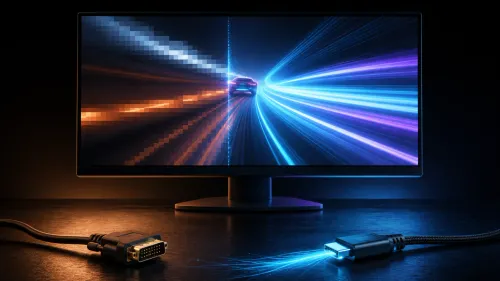
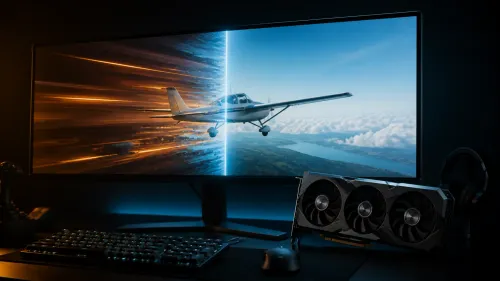
Imagine telling your graphics card to draw the game at a lower resolution (like 1080p), and then using some clever tech wizardry to stretch and sharpen that image to fit your higher-resolution monitor (like 1440p or 4K). You get the performance of running at 1080p, but with a picture that looks much closer to native 4K.
The result? More frames per second (FPS), smoother gameplay, and the ability to turn on demanding features like ray tracing without your PC grinding to a halt. Both NVIDIA's DLSS and AMD's FSR are brilliant at this, but they take very different paths.
NVIDIA DLSS: The AI-Powered Performance King
NVIDIA's Deep Learning Super Sampling (DLSS) is the exclusive tech for their GeForce RTX graphics cards. It uses dedicated hardware called Tensor Cores and a powerful AI algorithm to reconstruct the image. Because the AI is trained on ultra-high-quality offline renders of games, it's incredibly good at predicting what the final, high-resolution frame should look like.
The big win for DLSS is often image quality. In many comparisons, it produces a sharper, more stable image than FSR, sometimes even looking better than the native resolution. The latest version, DLSS 3, even introduces Frame Generation, which uses AI to create entirely new frames for an even bigger performance lift. The only catch is that you need one of the latest NVIDIA GeForce RTX cards to use it.
AMD FSR: The Open-Source Hero for Everyone
AMD's FidelityFX Super Resolution (FSR) is the people's champion. 🎮 Unlike DLSS, FSR is open-source. This means it doesn't require specialised hardware and works on a massive range of GPUs. That includes modern AMD Radeon graphics cards, older AMD cards, and even NVIDIA's cards (including the non-RTX ones).
FSR uses an advanced spatial upscaling algorithm. While it's not powered by a deep-learning AI in the same way as DLSS, the results from FSR 2.0 and beyond are seriously impressive, getting very close to DLSS quality. Its biggest advantage is accessibility. If you're running a slightly older rig, FSR can feel like a free hardware upgrade, breathing new life into your GPU.
Check Game Support First! 💡
Before you buy a new GPU based on either tech, quickly check if your favourite games support it. Both DLSS and FSR need to be implemented by game developers. A quick search for "Cyberpunk 2077 FSR support" or "Call of Duty DLSS support" will give you the answer. Most new AAA titles support both, but it's always best to be sure!
The Verdict: Which Tech Wins for You?
So, after comparing DLSS vs FSR, which one should you bank on? The answer depends entirely on your situation.
- If you are buying a new high-end NVIDIA RTX 30-series or 40-series card... DLSS is a phenomenal feature. The image quality is typically best-in-class, and features like Frame Generation are incredible. It's a huge reason to invest in Team Green's ecosystem.
- If you are on an AMD GPU, an older NVIDIA card, or a tight budget... FSR is your hero. The performance boost is massive, the image quality is excellent, and its open-source nature means you can enjoy upscaling benefits without being locked into the latest, most expensive hardware.
Ultimately, both technologies are fantastic for South African gamers. They allow us to push our systems harder, enjoy higher resolutions and settings, and get more value from our hardware. The real winner is you, the player, who gets a smoother, faster gaming experience. ✨
Ready to Unleash More FPS? The DLSS vs FSR debate comes down to your hardware. Whether you're siding with Team Green's AI power or Team Red's open-source flexibility, the right graphics card is waiting. Explore our incredible graphics card deals and find the perfect GPU to conquer your favourite games.