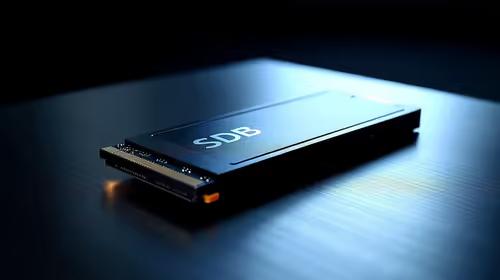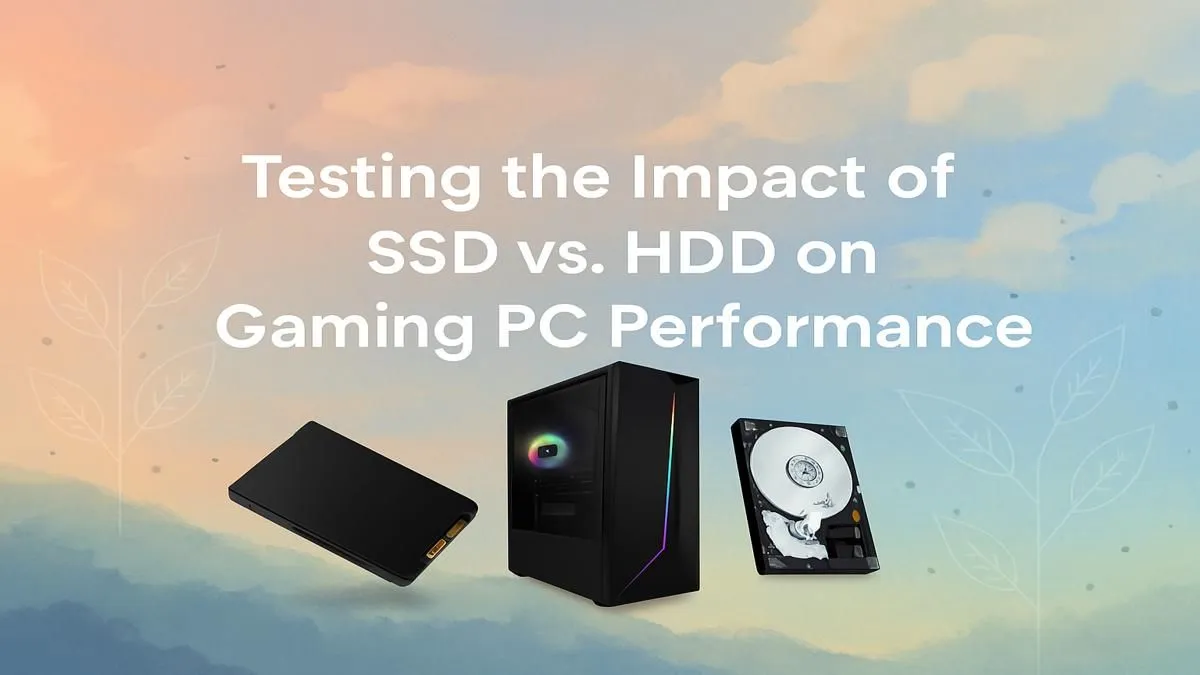
Staring at a loading screen while your mates are already dropping into the hot zone... we’ve all been there. It’s frustrating. For years, the debate has raged in gaming circles across South Africa: SSD vs HDD for gaming. Is a Solid State Drive (SSD) really worth the extra cash, or can a trusty old Hard Disk Drive (HDD) still get the job done?
This isn't just about specs on a box; it's about tangible, in-game advantages. Let's settle the score with the ultimate performance benchmark. 🚀
SSD vs HDD: The Tech Behind the Speed
Before we dive into the benchmarks, let's quickly break down the core difference. Think of it this way:
- An HDD is like a record player. It has a physical, spinning platter and a mechanical arm (the read/write head) that has to physically move to find your data. It’s proven technology, but it’s limited by moving parts.
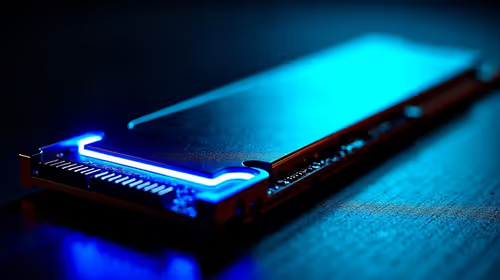
- An SSD is like a high-tech USB stick. It uses flash memory chips and has zero moving parts. Data is accessed electronically and almost instantly.
This fundamental difference is why the SSD vs HDD for gaming discussion almost always leans in one direction. For gaming, speed is everything.
The Gaming Performance Benchmark: Where SSDs Shine ✨
So, where will you actually feel the difference? The impact of an SSD on your gaming experience is most profound in a few key areas.
Blazing Fast Game Loading Times
This is the most obvious win for SSDs. Games with massive worlds and high-resolution textures take an age to load from an HDD. An SSD can slash these times by more than half, sometimes even more. For sprawling, detailed environments, the difference is night and day. Loading up a saved game in a complex world like Night City on one of our custom Cyberpunk 2077 gaming PCs feels almost instant on an NVMe SSD.
Eliminating Texture Pop-In and Asset Streaming Stutter
Ever been driving or flying at high speed in an open-world game and seen textures or objects suddenly pop into view? That's often your HDD struggling to stream assets fast enough. An SSD's rapid access times ensure the game world loads in smoothly around you, creating a more immersive experience. This is crucial for seamless exploration in games like Grand Theft Auto V or when flying over detailed landscapes in a rig built for Microsoft Flight Simulator.
Gaining a Competitive Edge
In fast-paced online shooters, every second counts. While your opponents on HDDs are still loading the map, you’re already in, choosing your operator and planning your first move. This small head start can be a real advantage in titles where map knowledge is key. Getting into the action first on a dedicated Counter-Strike 2 gaming PC or dropping faster in a Call of Duty: Warzone machine is a tangible benefit of SSD speeds.
Does an SSD Improve Your FPS?
This is a common question, and the answer is... not directly. Your Frames Per Second (FPS) are primarily determined by your graphics card (GPU) and processor (CPU). An SSD won't magically give you a higher frame rate.
However, it delivers a smoother experience. An HDD can cause micro-stutters when the game needs to load new assets mid-gameplay. An SSD eliminates this bottleneck, resulting in more stable frame times and a perceptibly smoother game. In a frantic build-fight on a Fortnite-ready PC or a chaotic team fight with a PC optimised for Overwatch 2, that consistency can be the difference between winning and losing.
The Hybrid Hero Setup 🔧
For the best of both worlds without breaking the bank, use a dual-drive setup. Install your Windows operating system and your most-played games on a smaller, faster NVMe SSD (500GB or 1TB). Then, use a large, affordable HDD (2TB or more) for mass storage—your huge library of older games, gameplay recordings, and media files. It's the most cost-effective way to get speed where it counts and capacity where you need it.
The HDD's Place in a Modern Gaming Rig
So, is the HDD completely obsolete for gaming? Not quite. Its main advantage remains undeniable: massive storage capacity for a fraction of the price. If you have a colossal game library or need space for other large files, an HDD still offers incredible value.
They are perfect secondary drives for games you don't play as often or titles that aren't as demanding on load times. Think of your extensive collection of mods for a Minecraft gaming PC or storing dozens of match replays from your PUBG sessions. An HDD is the perfect, affordable data vault.
The Verdict: An SSD is Non-Negotiable for Gaming
The SSD vs HDD for gaming debate is effectively over. While an HDD still serves a purpose for bulk storage, an SSD has become an essential component for any modern gaming PC in South Africa. The dramatic reduction in loading times and a smoother overall experience provide a quality-of-life improvement that you'll appreciate every single time you boot up a game.
For your operating system and your favourite games, an NVMe SSD isn't just a luxury... it's the new standard. ⚡
Ready to Ditch the Loading Screens? The SSD vs HDD debate for gaming is settled: speed wins. For the ultimate performance, an SSD is the only way to go. Explore our massive range of custom gaming PCs and build the machine that'll conquer your world.