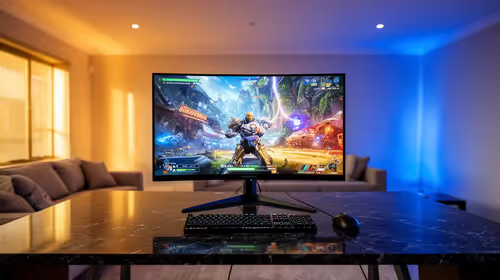
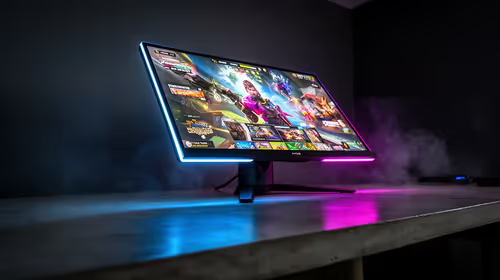
Brightness is useful headroom, not a cure for every difficult room. A 350-nit portable display versus a dimmer screen can remain easier to see under strong indoor light, but reflections, contrast and placement still decide practical clarity.
Quick Answer
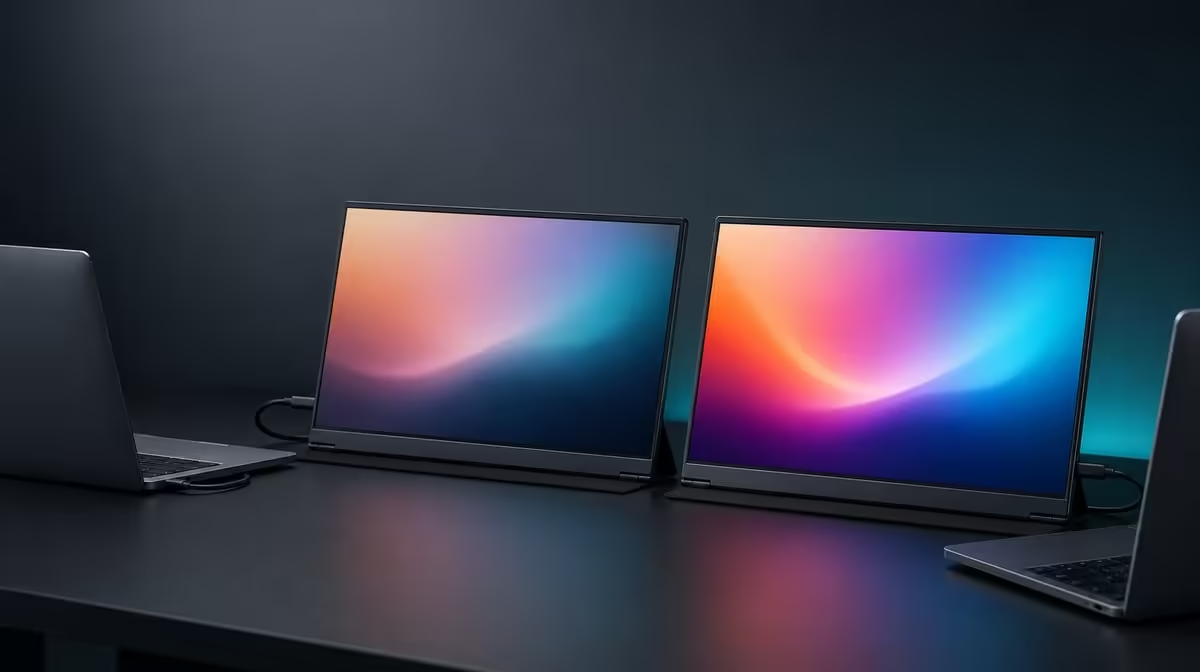
Choose 350cd/m2 when changing indoor spaces require more brightness reserve. The R2,399 UPERFECT UFree V combines that stated output with 1500:1 contrast on a 15.6-inch FHD IPS panel, although it does not guarantee comfortable viewing in direct sunlight.
☀️ Use headroom where it matters
In a bright office, classroom or room near a window, a higher available output can help the image compete with ambient light. The screen does not need to run at maximum in every location.
Begin at a moderate setting, open a white document and dark image, then raise brightness only until both remain readable. Excess output in a dim room can make white backgrounds harsh.
Compare brightness claims across Evetech's portable monitor range, keeping the intended room beside each figure.
🪟 Remove glare first
A reflection can overwhelm panel output and flatten dark detail. Rotate the foldable stand, move away from direct window paths or change a nearby lamp before increasing brightness.
The UFree V's IPS panel states 178-degree viewing, yet extreme off-axis positions can still make reflections and colour judgement harder. A centred angle remains the best working reference.
Do not promise outdoor readability from 350cd/m2. Direct sun is a more demanding condition than a bright indoor room.
🌓 Read brightness with contrast
The 1500:1 ratio describes measured bright-to-dark separation. Good room placement helps that contrast remain visible, while glare can make blacks appear lighter.
Use text, near-black steps and a familiar photograph. A dimmer panel may remain comfortable in controlled light; the UFree V's 350cd/m2 advantage matters when extra headroom is actually used.
The wider Evetech monitor category can help compare portable output with fixed displays designed for a known desk.
✅ Save room-specific settings
Record one daytime and one evening brightness level, along with the stand position. Recheck after moving the screen because portable use changes reflection paths.
Brightness does not change the native 1920 x 1080 sharpness or prove colour accuracy. Keep resolution, gamut and room visibility as separate buying rows.
At R2,399, the useful result is a screen that remains clear in the buyer's indoor spaces without constant maximum output. Review Evetech's current monitor best sellers through that room test.
Build a three-room trial when portability matters. Use a controlled home desk, a bright window-side location and a typical meeting or study room. Record the lowest comfortable level rather than simply noting that the panel can go brighter.
Keep the same document and photograph open in all three places. This makes changes in room light visible without introducing new content.
Add a reflection map to the note. Mark whether the bright source sits in front of, behind or beside the screen and which foldable-stand direction removed it most effectively.
Check the laptop beside the UFree V. If one panel must run much brighter to remain usable, repeated eye movement may feel uneven even though both screens are individually readable.
Review the result after a full session. A setting that looks powerful for five minutes can become tiring across sustained white documents.
The comparison is complete when the buyer can name the indoor conditions where the 350cd/m2 reserve matters and the conditions where a lower setting is sufficient.
Add text scaling and content type to every room record. Small grey interface labels can become difficult before a bright photograph does, so visibility should be tested through the hardest regular material.
If the setup moves during the day, repeat the reflection check after repositioning. A previously clear screen can face a new window even when brightness remains unchanged.
Keep the conclusion narrow: the UFree V provides useful indoor headroom, while comfortable clarity still depends on the person, task and placement.
Frequently Asked Questions
Where is 350cd/m2 most useful?
It provides extra headroom in bright indoor rooms, classrooms and temporary workspaces.
Does 350cd/m2 guarantee outdoor readability?
No. Direct sunlight and strong reflections can still overpower the display.
Should the screen always run at maximum?
No. Match brightness to ambient light and viewing comfort.
How does contrast affect perceived visibility?
Contrast separates bright and dark content, while glare can reduce that separation.
Does brightness change Full HD sharpness?
No. Sharpness still begins with the native 1920 x 1080 resolution and suitable scaling.
What else improves a bright-room setup?
Control reflections, centre the viewing angle and position the foldable stand carefully.
How much is the 350cd/m2 model?
The UPERFECT UFree V costs R2,399.
Ready to test brightness in the room that matters?
Compare Evetech's portable displays, place the UFree V away from glare and save a comfortable daytime level below its available ceiling.