A 4K editing rig can handle high-refresh esports when its graphics card, processor and display are balanced for the chosen game. Editing strength alone does not guarantee low input latency or stable frame times, especially if the machine was configured for colour work and quiet rendering.
Validate both workloads
Run the actual esports title at competitive settings and the monitor native resolution. Record one-percent lows, temperature and noise after a sustained match, then export a representative 4K timeline. Confirm the display supports the intended refresh through the available port and cable. Keep project files off a nearly full system drive.
Do not let the esports requirement silently change the monitor used for grading. A dual-display arrangement may separate competitive refresh from accurate creative work, but it adds calibration, desk-space and port demands. Draw both signal paths before committing to the final display layout.
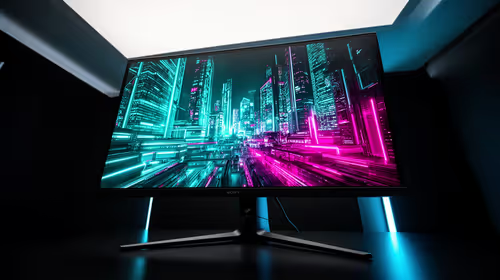
The AOC U27G42 is a verified 4K 160Hz monitor at R4,819. The Palit RTX 5070 Ti 16GB is verified at R12,700. Confirm current stock, port standard, variable-refresh support, power requirements and application compatibility before purchase.
Competitive players may prefer a lower-resolution 240Hz display beside a colour-accurate editing screen. Streaming or capture adds another load, so test it in the same rehearsal. Budget for a precise mouse, wired network and sensible cooling before decorative upgrades.
Balancing edits with esports? > Compare Evetech monitors and GPUs for the target resolution.