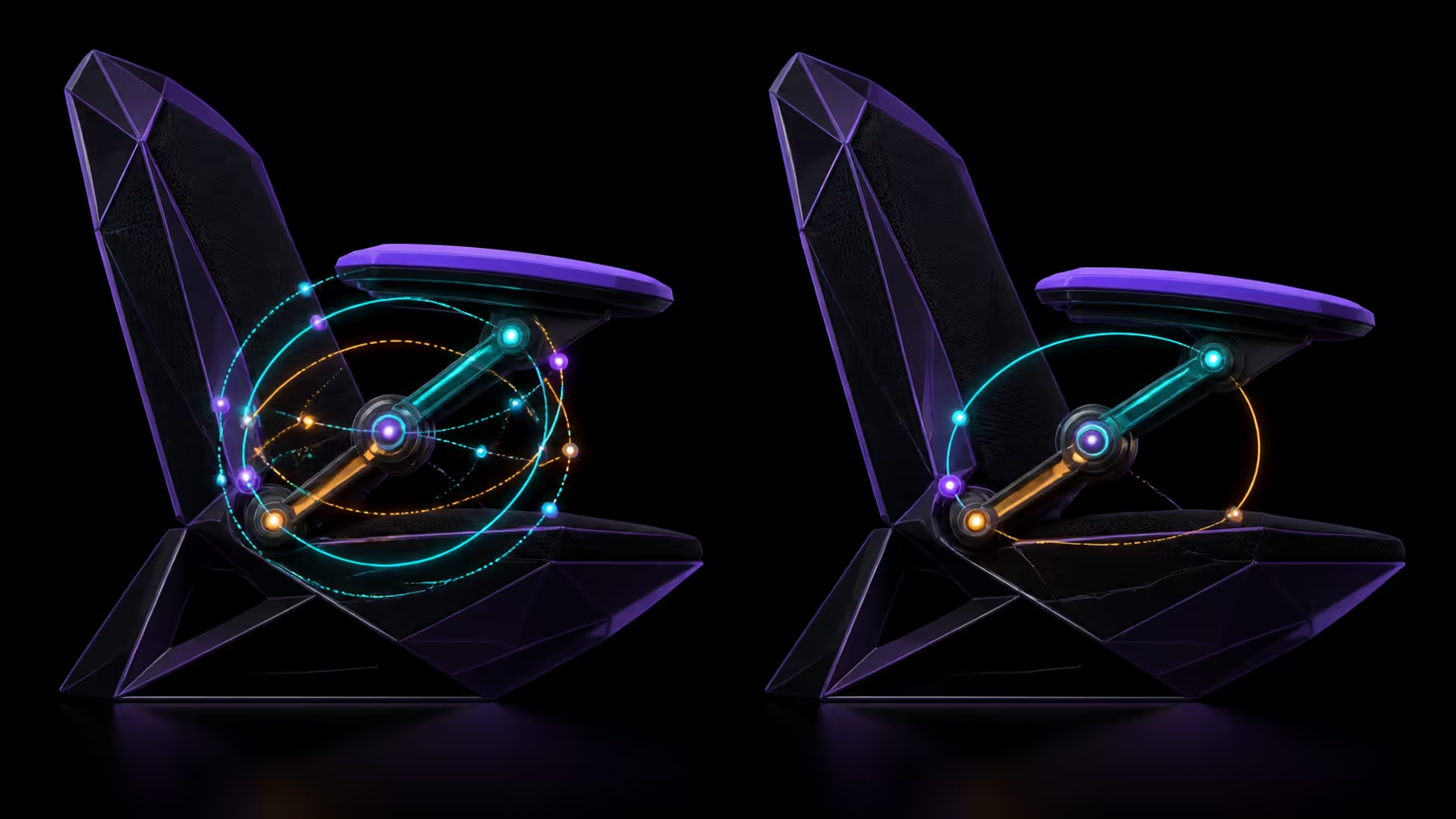
A 6D versus 4D armrest comparison is useful only after each movement has been translated into a real task position. Dimension counts are not universal instructions, and a different range description should not be forced into either label.
Quick Answer
The E3 Ultra armrests are five-way 720-degree omni-mechanical supports, not a generic 6D or 4D design.
Compare 6D and 4D designs by the exact directions, usable range and control access on each chair. Fewer movements may be enough when they reach the keyboard and mouse positions you need. The R9,599 HBADA E3 Ultra instead uses 720-degree omni-adjustment armrests, which should be assessed on their own terms.
🧮 Decode each candidate separately
A "D" count usually signals multiple adjustment dimensions, but manufacturers can group movements differently. Write down height, width, angle, depth or other documented controls for each candidate rather than assuming two labels use the same definition.
This makes omissions visible and prevents a larger number from winning automatically. Control quality, reach and the ease of returning to a setting remain separate considerations.
🌀 Keep omni range out of the wrong box
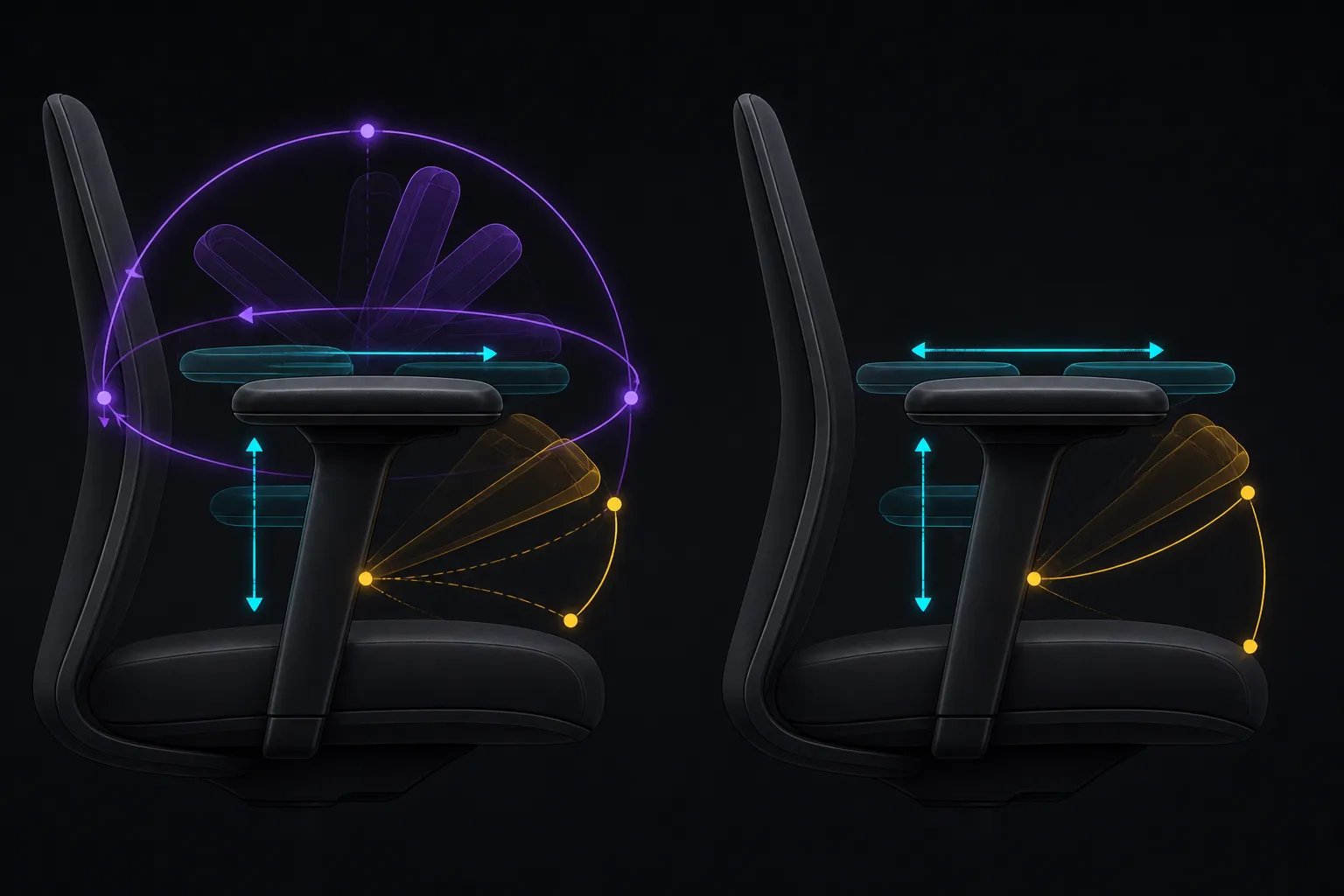
The E3 Ultra carries a 720-degree omni-adjustment description for its armrests. That is not evidence that the system is 6D or 4D, and no undocumented movement should be attached to it.
Compare the physical range with options in Evetech's HBADA chair selection. Focus on whether each support can meet the forearm without raising the shoulder or pushing the chair away from the desk.
🎯 Test positions, not maximums
Set one candidate for typing, another for pointer work, and a third for a relaxed call. Note clearance at the desk edge and whether the arms remain supported while the hands move. This produces evidence connected to use.
Both sides may need different settings, especially for asymmetric input. A system that offers a large theoretical range but misses the useful zone adds complexity without benefit.
💡 Decide how much control earns value
Adjustment matters most for shared chairs, varied tasks or an unusual desk relationship. A single-user workstation with a well-matched fixed geometry may not need every possible movement.
Use Evetech's office seating department to compare the actual control lists. At R9,599, value the E3 Ultra's omni armrests according to the work positions they serve, not by translating them into a dimensional label they do not carry.
Control effort belongs in the scorecard too. A movement that is theoretically present but awkward to reach, understand or restore may reduce practical value for a shared user. Ask each regular user to repeat the setup without coaching and note where the process breaks down.
Keep the chair level and the desk relationship unchanged during this exercise. If one candidate is tested closer to the keyboard or at a different height, the resulting shoulder position cannot be credited fairly to its dimension count.
Also test transitions between positions. Move from typing to a call, then back to pointer-heavy work, watching whether the supports can clear the desk and return accurately. This sequence exposes useful adjustment far better than rotating an unloaded armrest through its maximum range.
Give every candidate the same trial time. A complex system may improve with familiarity, while an apparently simple one may reveal limitations only after the full task sequence.
Each arm combines full pad rotation, full body swivel, 1.97-inch height, 4.33-inch forward-back travel and 20-degree tilt. Compare those actual movements with the named axes of a 6D or 4D rival, giving value only to positions that reach the user's inputs.
A label with more dimensions is not better if its useful positions cannot be reached quickly.
Frequently Asked Questions
Which workstation needs should determine armrest range?
Your keyboard, mouse, desk clearance and shoulder position should decide. The best range is the one that reaches these practical support points without obstruction.
Can 6D and 4D be compared without exact controls?
Not reliably. Obtain the movement directions for both systems, because dimension counts can be defined differently and hide important range differences.
Which armrest design is on the E3 Ultra?
HBADA uses an omni-adjustment design with a 720-degree range on this chair. Assess that range directly rather than renaming it.
Does 720-degree movement equal 6D?
No. Degrees and dimensional labels describe capability in different ways; one number cannot be converted into the other without an exact mechanism map.
How can armrest usefulness be tested?
Try representative typing, pointer and meeting postures. Check forearm contact, shoulder relaxation, desk collision and how easily the preferred setting returns.
When are fewer adjustments sufficient?
They are sufficient when the supports already reach every important task position for the intended user and workstation without forcing compensating posture.
Ready to compare armrest controls through the positions they provide?
Explore Evetech office chairs with a task checklist that keeps 4D, 6D and omni descriptions properly separated.