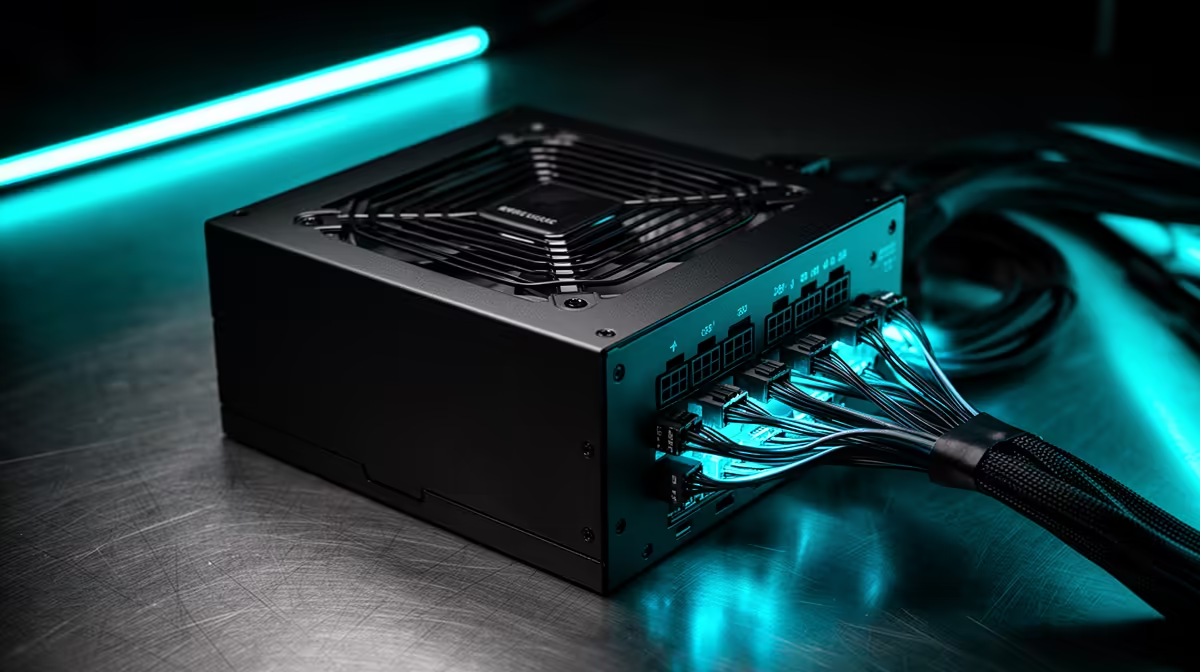
An RTX 5090 build lives or dies on the power supply, since the card's peak draw and transient spikes demand a quality unit with proper headroom. That stays true here even when a similar guide suggests otherwise.
Quick Answer
An 850W PSU can run an RTX 5090 only in a lean, stock build, and even then headroom is tight. The card's roughly 575W draw plus a mid CPU and basics can approach 800W under load, so a 1000W 80+ Gold unit is the safer planning target for stability and any overclock.
Where 850W sits for an RTX 5090
On paper an 850W 80+ Gold unit can power an RTX 5090 paired with a modest CPU and few extras, but the card's transient spikes eat the margin fast. With a high-end CPU or any overclock, peak draw can brush the rail's limit and trip protection. Treat 850W as the floor for a stock build and 1000W as the planning target for comfortable, stable headroom. Once an RTX 5090 PSU plan is sorted here, the rest of the diagnosis falls into place.
Overclocking headroom
Any overclock raises both average and peak draw, so the more headroom the supply has, the more stable the result. On a 1000W unit there is room to push the card and CPU; on a tighter supply, an overclock is the first thing that triggers a protection shutdown. Size the PSU for the spikes you will create, not just the stock figure. Keep an RTX 5090 PSU plan simple here and the fix becomes obvious.
FAQ
Will an overclock change my PSU needs?
Yes. An overclock raises average and peak draw, so it eats headroom. A 1000W unit leaves room to push the card and CPU, while a tighter supply trips protection first when you overclock. With an RTX 5090 PSU plan in front of you, work the check before reaching for your wallet.
Is more wattage always better for an RTX 5090?
Up to a point. A quality 1000W unit covers the card with headroom; going far beyond that wastes money and runs less efficiently at idle. Choose a strong 1000W over a no-name higher-wattage supply. Local buyers running an RTX 5090 PSU plan get the steadiest result by following this order.
Do transient spikes really matter for the RTX 5090?
Yes. The card spikes well above its rated draw for milliseconds, and a cheap supply sags or trips on those spikes. An ATX 3.1 or 80+ Gold and above unit is built to handle them, which is why quality beats raw wattage. With an RTX 5090 PSU plan, the proof is in repeating the same scene, not in guessing.
Power the RTX 5090 properly
Compare Evetech 1000W ATX 3.1 supplies with the native 12V-2x6 cable so your flagship card runs stable under peak load and any overclock. That stays true here even when a similar guide suggests otherwise.