Two 8GB cards from different generations meet here, and the newer one wins on speed while the older one wins on power. The AMD Radeon RX 5700 XT vs GTX 1070 matchup is really a question of whether your power supply and case can take a hungrier card for a clear performance gain, especially at 1440p.
Quick Answer
The RX 5700 XT is faster, newer and generally the better 1440p card. It draws about 225W and needs an 8-pin plus a 6-pin lead, so plan on a 550W supply or more. The GTX 1070 draws around 150W from a single 8-pin lead and suits older or modest supplies. Radeon cards on Evetech currently range from roughly R9,999 to R19,999 if you want to step beyond both.
🏁 Performance and the 8GB tie
Both cards carry 8GB of video memory, so capacity does not separate them. What does is architecture. The RX 5700 XT uses a newer Navi design with GDDR6, and in most games it holds a lead that grows as the resolution rises. At 1080p both feel quick. At 1440p the Radeon keeps higher, steadier frame rates.
The 1070 remains a decent 1080p card for esports and older titles, and it still handles many recent games at medium settings. It lacks the newest features, so there is no DLSS here, and neither card has hardware ray tracing. Both do support image scaling tricks such as FSR, which can stretch their lives a little.
🔌 Power leads and supply size
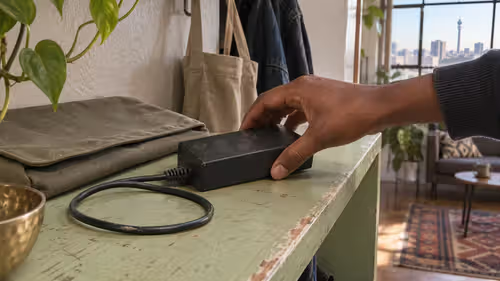
This is where the older card earns respect. The 1070's single 8-pin lead and roughly 150W rating work on supplies many people already own. The 5700 XT's 225W rating and its two leads, an 8-pin and a 6-pin, mean you need to count connectors on the power supply, not just watts.
If your supply is small or has only one spare lead, you may need to replace it, and that cost belongs in the comparison. A good 550W unit gives either card room. Check the connectors on the exact model of card you are considering, since partner boards differ. The AMD Radeon graphics card range shows current options, including cards with simpler power needs.
🌡️ Heat, noise and the used market
The Radeon runs hotter and louder in a closed case, so intake airflow matters. In a Johannesburg summer, a case with two front fans and clean filters keeps either card calmer. Dust is a Highveld fact of life, so blow out the heatsinks before the cards get slow.
Almost every 5700 XT and 1070 you will meet is second-hand. Test under load, listen for rattling fans, and keep the seller's proof of purchase. Both generations saw heavy mining use, which is not automatically bad but deserves a careful look at temperatures. For perspective on current demand, see the GPU best sellers list.
Frequently Asked Questions
Which is faster, the RX 5700 XT or the GTX 1070?
The RX 5700 XT is newer and generally quicker, particularly at 1440p. Both have 8GB, so memory size is not the deciding factor.
Which needs the bigger power supply?
The 5700 XT, at about 225W, so aim for 550W or more with the right leads. The GTX 1070 is rated near 150W and is easier on modest supplies.
Does either support ray tracing?
No hardware ray tracing on either. Choose on price, power and condition for rasterised 1080p and 1440p play.
Is the GTX 1070 still worth it?
For 1080p esports and older titles, yes, especially if your supply already suits it. It does not offer DLSS.
What should I check when buying either used?
Run a stress test, watch temperatures and fan noise, and keep proof of purchase. Heavy mining use was common for both.
Will heat be a problem in my case?
The Radeon is the warmer card. Good intake airflow matters, and a larger case helps both.
Ready to match a graphics card to your power supply?
Explore the Evetech graphics card range and check connectors, length and wattage before you buy.