Quick Answer
The Apple Studio Display is worth it in a dual-monitor setup if your primary machine is Apple Silicon and you value reference-grade colour accuracy, a premium 5K panel, and a clean aesthetic. For Windows-only users or mixed setups, the high price relative to alternatives makes it harder to justify.
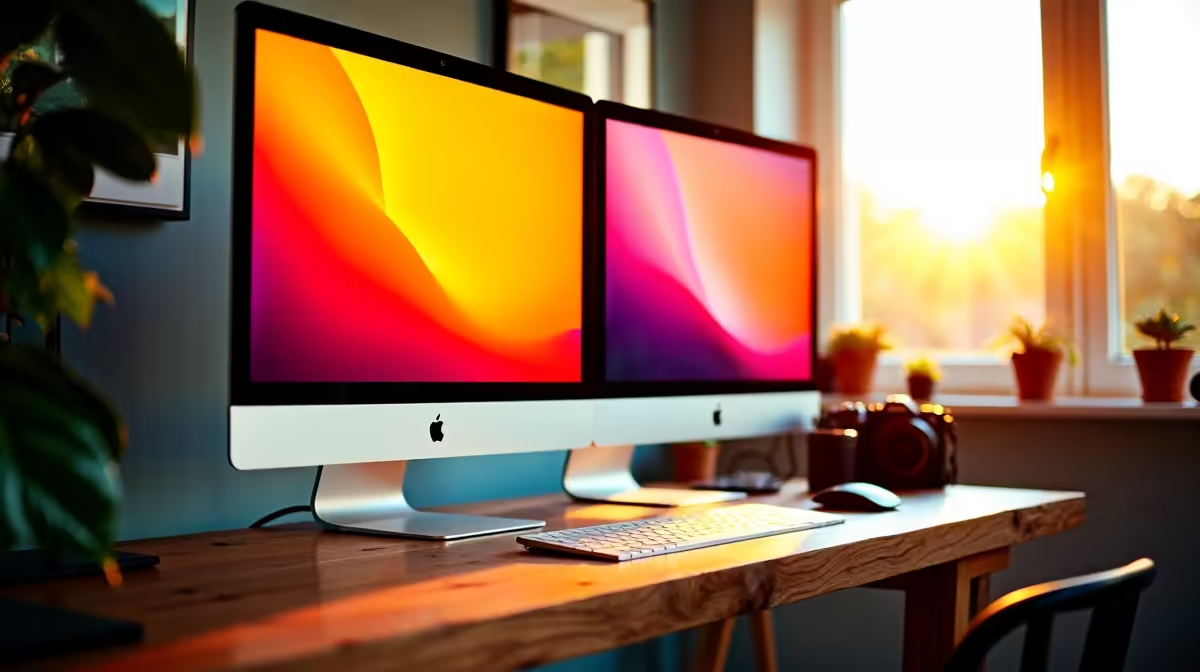
The Apple Studio Display is a remarkable panel - 5K resolution, P3 wide colour, True Tone, and a 12 MP Centre Stage webcam built into a strikingly minimal aluminium chassis. But at its price point, which in South Africa translates to a very significant Rand outlay, the question of whether it fits into a dual-monitor configuration deserves a careful answer.
Compatibility and Connectivity in a Dual Setup
The Studio Display connects via a single Thunderbolt 3 cable, which limits compatibility to Macs and Thunderbolt-equipped PCs. In a dual-monitor setup, your second display can be any monitor connected via your remaining ports - HDMI, DisplayPort, or a second Thunderbolt connection. However, the Studio Display does not support DisplayPort daisy-chaining, so each display needs its own host connection. On a MacBook Pro with multiple Thunderbolt ports this is straightforward. On a Mac mini or Mac Studio, the port count accommodates this easily. For Windows users, driver support for the Studio Display''s full feature set - particularly the webcam and True Tone - is limited or absent, reducing the value proposition significantly.
Colour Accuracy for Creative Work
Where the Studio Display genuinely earns its price is in colour accuracy for professional creative work. The P3 wide colour gamut, factory-calibrated panel, and True Tone ambient adaptation make it exceptional for photo editing, video grading, and graphic design. In a dual-monitor professional setup, using the Studio Display as your primary creative canvas and a secondary monitor for palettes, references, or communication apps is a proven workflow. South African photographers and videographers who deliver work to international clients with strict colour specifications will find the Studio Display''s accuracy genuinely useful.
Value Versus Alternatives
The honest assessment for most South African buyers is that the Studio Display''s price is very difficult to justify unless colour accuracy and ecosystem integration are non-negotiable requirements. High-quality IPS and OLED alternatives at lower price points offer excellent panels for general creative and gaming use. If you are a Mac-centric professional whose work demands reference colour accuracy, the Studio Display is a one-time investment that will last many years. If your use case is general productivity or gaming in a dual-monitor setup, the funds are better directed toward two high-quality monitors rather than one premium Apple display.
Frequently Asked Questions
Q: Can the Apple Studio Display be used with a Windows PC? A: It can display an image via Thunderbolt, but advanced features like the webcam with Centre Stage and True Tone are not supported on Windows. This significantly reduces the value for Windows-only users.
Q: Is the Studio Display worth it just for the 5K resolution? A: Resolution alone does not justify the premium. The value comes from the combination of 5K, P3 colour accuracy, the built-in webcam, and seamless macOS integration.
Q: What should the secondary monitor be in a Studio Display dual setup? A: Any monitor that suits your secondary use case. A 1440p or 4K display at a more accessible price point is a practical choice that preserves budget while still giving you dual-screen productivity.