Quick Answer
For architecture portfolio work, a docking station matters most when you run a laptop into a large external monitor for CAD and rendering all day; it gives you one-cable connection to a 27-inch-plus screen, keyboard, mouse and storage. A USB-C dock with dual 4K output and 100W power delivery costs about R1,500 to R3,500 and is the practical pick for student architects.
When a dock genuinely helps portfolio work
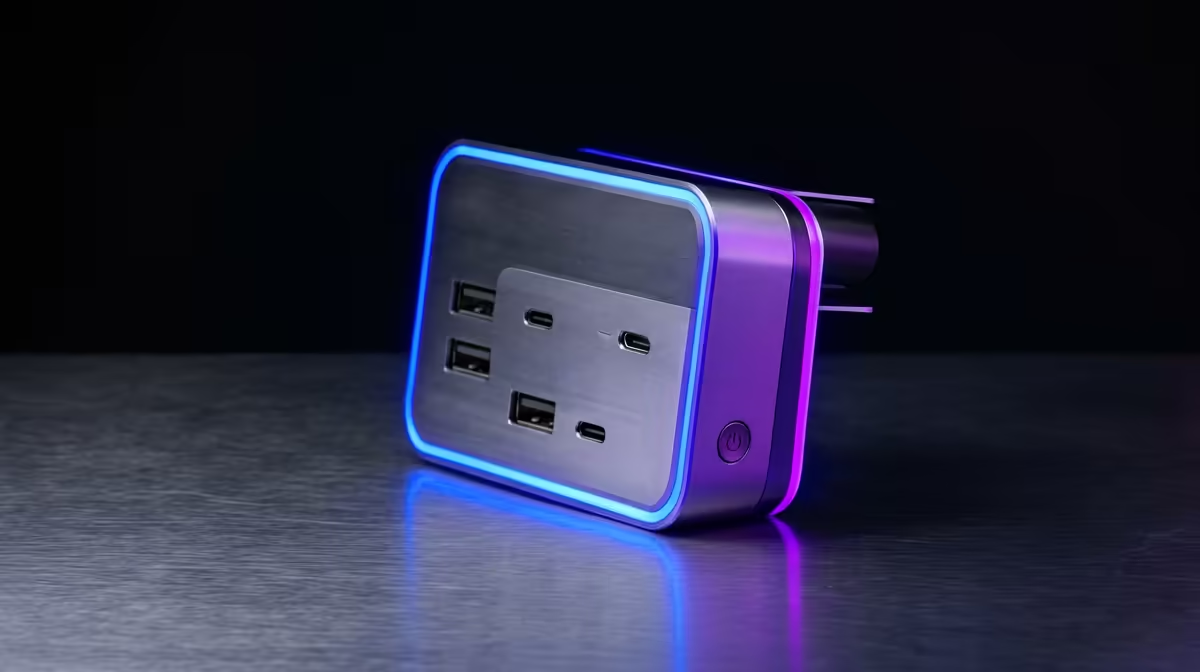
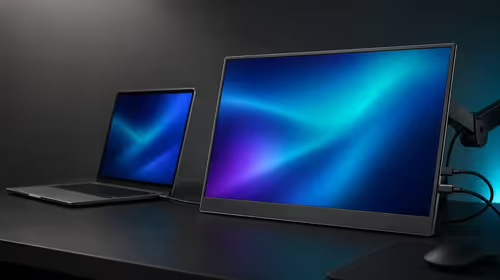
Architecture portfolio work means hours in CAD, Revit or rendering software where screen real estate and stable connections matter. A docking station shines when you bring a laptop to a fixed desk and want it driving a 27-inch or larger external monitor, plus a proper keyboard, mouse and an external SSD holding your project files. A R1,500 to R3,500 USB-C dock with dual 4K output and 100W power delivery sets all of that up over one cable, so the laptop charges while you work and you plug in once a day.
When you can skip the dock
If you do most rendering on a desktop tower, or your laptop already drives your single monitor over HDMI and you only use a mouse, a dock adds little. The value appears when you regularly move between desk and studio and need fast, repeatable connection of multiple devices and a large screen. For storing and shuttling large portfolio files, pair the dock with an external SSD so reads and writes don't bottleneck on a slow drive. Buy the dock when the daily plug-in count and screen needs justify it, not by default.
FAQ
What dock specs suit CAD and rendering?
Dual 4K display output for screen space, 100W power delivery to keep the laptop charged under load, and at least one 10Gbps USB port for a fast external SSD holding project files. A R1,500 to R3,500 USB-C dock covers these.
Do I need a Thunderbolt dock for architecture?
Usually not. A 10Gbps USB-C dock handles dual monitors and an external SSD fine. Thunderbolt's 40Gbps only matters if you constantly move huge project files off very fast external drives.
Will a dock improve render times?
No, render speed comes from the CPU and GPU, not the dock. A dock improves your working setup, screen space, charging and storage access, which makes long portfolio sessions smoother but doesn't speed up rendering.
dual-4K dock with a fast external SSD for your project files, so CAD opens quickly and you connect the whole desk, screen, peripherals and storage, with one cable.