New games are asking for more memory while the easy upgrade has become harder to budget. Sixteen gigabytes now appears as a minimum or recommended figure in many releases, but that line is only the start. The game shares RAM with Windows, launchers, browser tabs, voice chat and capture.
Quick Answer
Read the requirements for the exact game and treat minimum as the lowest supported target, not a promise of smooth multitasking. Test your full session before release when possible. Keep 16GB when the measured workload has headroom; plan 32GB when new games, mods and background tools already push the system close to paging.
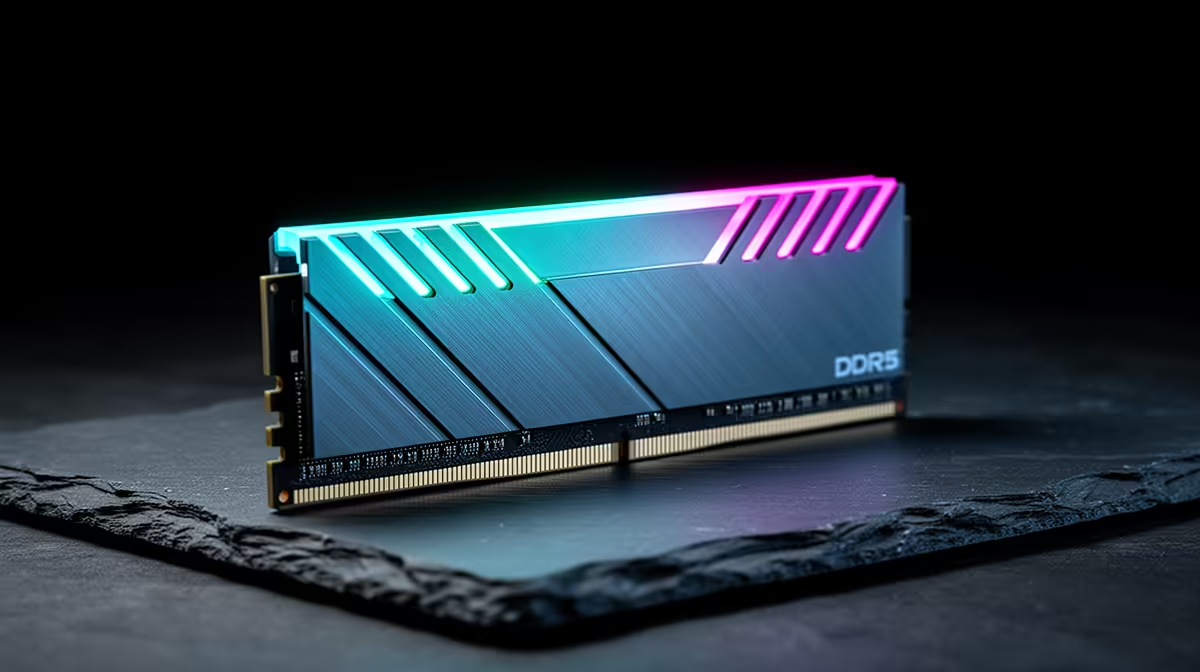
Evetech's DDR5 memory selection helps you compare matched kits, while the memory best sellers show practical capacities for a planned upgrade.
Why Requirements Rise
Games use larger worlds, higher-detail assets, more simulation and heavier background systems. Engines can also keep more data ready to reduce storage waits.
The published number includes assumptions about the operating system and target settings. Mods, high-resolution texture packs and community tools can push beyond it.
Older and lighter games do not inherit the newest requirement. Build around your library.
Minimum Is a Support Line
A 16GB minimum does not tell you whether Discord, a browser and recording can stay open. It may target low settings or a particular resolution and frame rate.
Read the CPU, GPU, storage and operating-system requirements beside RAM. A memory upgrade cannot repair a graphics card below the minimum feature level.
Wait for measured performance when the developer's table lacks detail. Pre-release requirements can change.
Measure Before the Launch
Use a demanding game you already own and recreate your normal session. Watch Available and Committed memory, storage activity and frame time.
Low available memory plus page-file activity and stutter supports a capacity upgrade. A system with several gigabytes free may be limited by the CPU or GPU instead.
Keep the page file active on a healthy SSD. It protects stability, though it cannot match real RAM speed.
Plan the Upgrade as One Kit
Check DDR4 or DDR5, motherboard slots, supported density and CPU memory guidance. A matched 2x16GB kit gives 32GB across two modules.
Adding a second kit can work, but four DDR5 modules and mixed revisions may need lower settings. If 32GB is the clear destination, replacing the old pair can be cleaner.
Buy before the release only when compatibility and need are settled. A forecast should not rush you into the wrong generation.
FAQ
Is 16GB a true minimum for new games?
For some games it is the published floor. The exact title, settings and background workload decide whether it is comfortable.
Should I upgrade before a big release?
Do so when current measurements and the published requirement both point to pressure. Otherwise wait for trustworthy tests.
What is a practical 2026 target?
Thirty-two gigabytes suits a broad new gaming build, while a controlled 16GB system remains viable for many libraries.
Read the full game requirements, measure your normal background session and upgrade to one matched kit before memory pressure spoils the release.