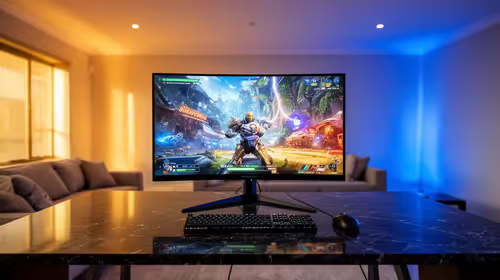
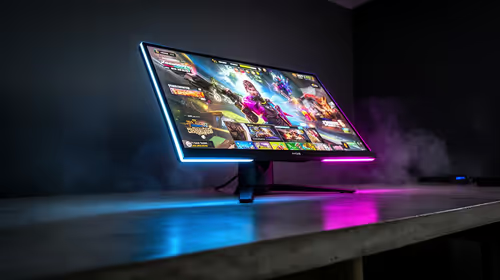
One screen can remain flexible across different graphics upgrades. FreeSync Premium and G-Sync Compatible on one monitor provide alternative adaptive-refresh routes for supported AMD and NVIDIA systems. The R10,999 ASUS XG27AQDMG includes both on its QHD 240Hz WOLED panel.
Quick Answer
Yes. AMD graphics can use the XG27AQDMG's FreeSync Premium option, and supported NVIDIA hardware has a G-Sync Compatible route. The active computer selects its matching path rather than both simultaneously. At R10,999, that flexibility accompanies 0.03ms response, 240Hz and True Black HDR.
🔴 Follow the AMD path
With supported AMD graphics, enable adaptive sync for the monitor input and activate FreeSync Premium in graphics controls. Confirm the game is using the intended QHD display mode.
The gaming monitor catalogue helps identify screens offering the sync support needed for a chosen system.
🟢 Use compatible NVIDIA graphics
For an appropriate NVIDIA setup, select the XG27AQDMG and enable the G-Sync Compatible route. Multi-monitor users should confirm they are changing the correct display.
Test a variable frame-rate scene. A label in software is useful, but smooth tear-resistant movement is the practical outcome being sought.
🔄 Understand what dual support changes
Dual support improves platform flexibility. If a future graphics upgrade moves from AMD to NVIDIA or the reverse, the monitor retains an adaptive-refresh path.
It does not increase rendering performance. FreeSync Premium and G-Sync Compatible coordinate display timing with completed frames; the computer still determines frame rate.
🌈 Keep picture features separate
WOLED black depth and DisplayHDR 400 True Black influence image presentation, while 0.03ms response addresses pixel transitions. Compare the OLED monitor selection for that wider feature mix.
Physical shape is independent again. The curved monitor range serves buyers who want a different sense of peripheral immersion.
Configure one adaptive-sync path at a time
An AMD graphics system can use the monitor's FreeSync Premium support, while a compatible NVIDIA setup can use the G-Sync Compatible route. Select the monitor's adaptive-sync option, enable the matching graphics-platform control and test a game with naturally varying frame output. Dual support broadens compatibility; it does not mean both branded modes should be layered together on one active GPU.
Verify the basics before blaming sync. Native QHD and the chosen refresh must be active, the game should open on the intended display and the cable path must support the requested mode. Pan across vertical scenery and look for a horizontal split. Then repeat after one change. Variable refresh addresses the timing relationship between rendered frames and screen updates, not low average performance or unrelated stutter.
Dual-platform support becomes valuable when a graphics card changes. The R10,999 XG27AQDMG can remain useful across supported AMD and NVIDIA systems without the buyer replacing the screen solely for another sync label. Save a short note for each platform with the selected display mode and control-panel path. That makes a future upgrade a configuration task rather than a mystery, while the 240Hz WOLED panel, HDR and protection features continue serving the same desk.
Rebuild sync after a platform change
Connect the new graphics output directly, install its supported software and first establish native QHD at the intended refresh. Then enable the monitor's adaptive-refresh option and the single branded path that matches the new GPU. Open a variable-frame scene and inspect tearing before restoring old frame caps or game-specific overrides. This clean sequence avoids carrying an AMD or NVIDIA profile assumption into the other platform. Record the final mode once motion is stable so the next driver update has a known baseline.
Frequently Asked Questions
Does dual support mean both modes run simultaneously?
No. The setup uses the adaptive-sync route that corresponds to the graphics platform currently driving the screen.
What is the AMD option on the XG27AQDMG?
AMD FreeSync Premium is the specified variable-refresh path for compatible AMD graphics.
Which NVIDIA adaptive-refresh label does it carry?
The monitor is G-Sync Compatible for an appropriate supported NVIDIA configuration.
Why can dual adaptive sync help during a graphics upgrade?
It keeps a variable-refresh option available if the next computer uses the other major graphics platform.
Does either sync mode increase rendered frame rate?
No. They adjust display timing around delivered frames. Hardware and game settings determine rendering speed.
What other features accompany dual sync at R10,999?
The price includes QHD WOLED, 240Hz, 0.03ms response, True Black HDR and OLED protection hardware.
Ready to keep adaptive refresh through the next graphics-platform change?
Compare Evetech's dual-sync monitors, choose the correct current route and record the setup so a future upgrade starts from a known baseline.