Quick Answer
For deal planners, the biggest case-fan mistake is buying cheap fans with no PWM control or specs listed, then needing to replace them. Spend a little more on PWM fans with stated airflow and noise figures, like an Arctic P12 PWM around R150 each, and you buy once instead of twice.
The SA Buyer Mistake Checklist
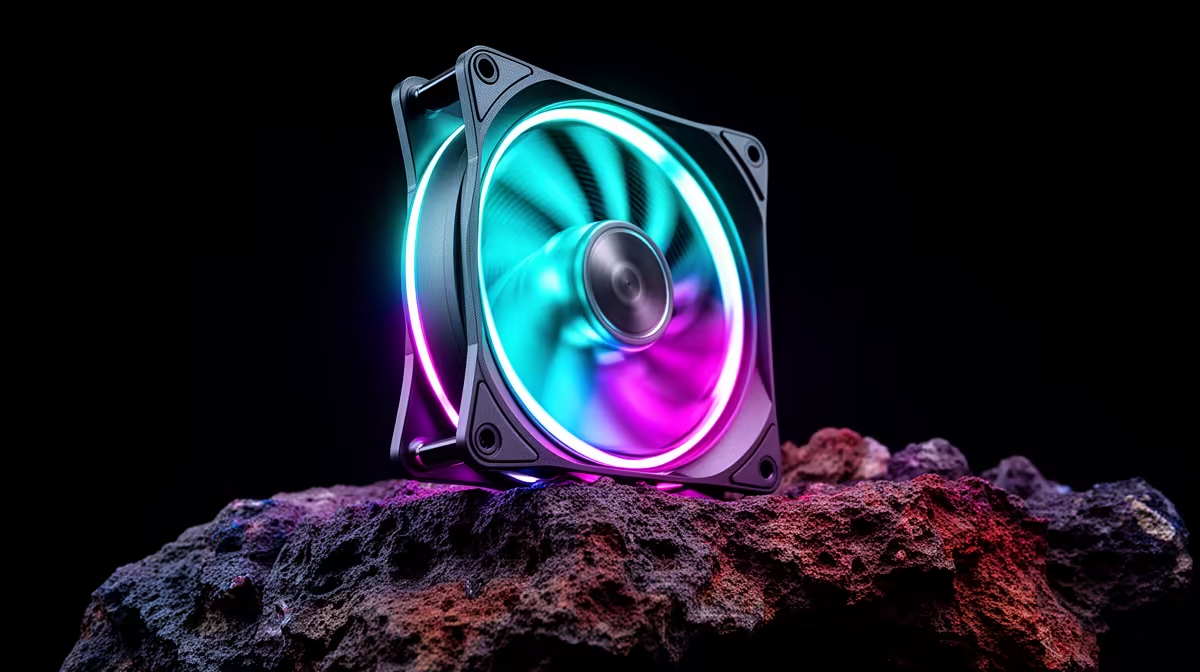
The classic deal-planner trap is chasing the lowest unit price on fans with no published CFM (airflow) or dBA (noise) figures, no PWM connector and weak bearings. They look like a bargain until they whine, push little air and die in a year. The fix is buying value PWM fans with real specs: an Arctic P12 PWM moves around 56 CFM at a low noise level for roughly R150 each, and a three-pack near R1,200 is genuine value. Each fan draws only about 2W, so running several adds little to your power bill. Specs on the box are the difference between a deal and a regret.
Plan Airflow, Not Just Price
A deal is only a deal if the fans actually do their job. Plan a simple positive-pressure layout, two or three intakes at the front and one exhaust at the rear, so dust enters through filters rather than every gap. Match fan size to your case (120mm or 140mm), prefer PWM so the motherboard can ramp them with a quiet curve, and avoid the cheapest 3-pin molex fans that run flat-out and loud. Buying right the first time is the real saving for a deal planner.
FAQ
What is the most common case-fan buying mistake?
Buying the cheapest fans with no published airflow or noise specs and no PWM control. They whine, move little air and need replacing, so paying slightly more for spec'd PWM fans is the real saving.
How many case fans do I actually need?
Most mid-towers run well on two or three intake fans at the front and one exhaust at the rear. This positive-pressure setup pulls air through dust filters and exhausts heat efficiently without over-spending on fans.
Are PWM fans worth the extra rand?
Yes. PWM lets the motherboard ramp fans with a quiet curve, so they stay silent at idle and spin up only under load. Cheaper 3-pin fans often run flat-out and loud, which PWM avoids.
fans with published CFM and dBA, run two intakes and one exhaust for positive pressure, and set a quiet fan curve in BIOS so dust stays out and noise stays down.