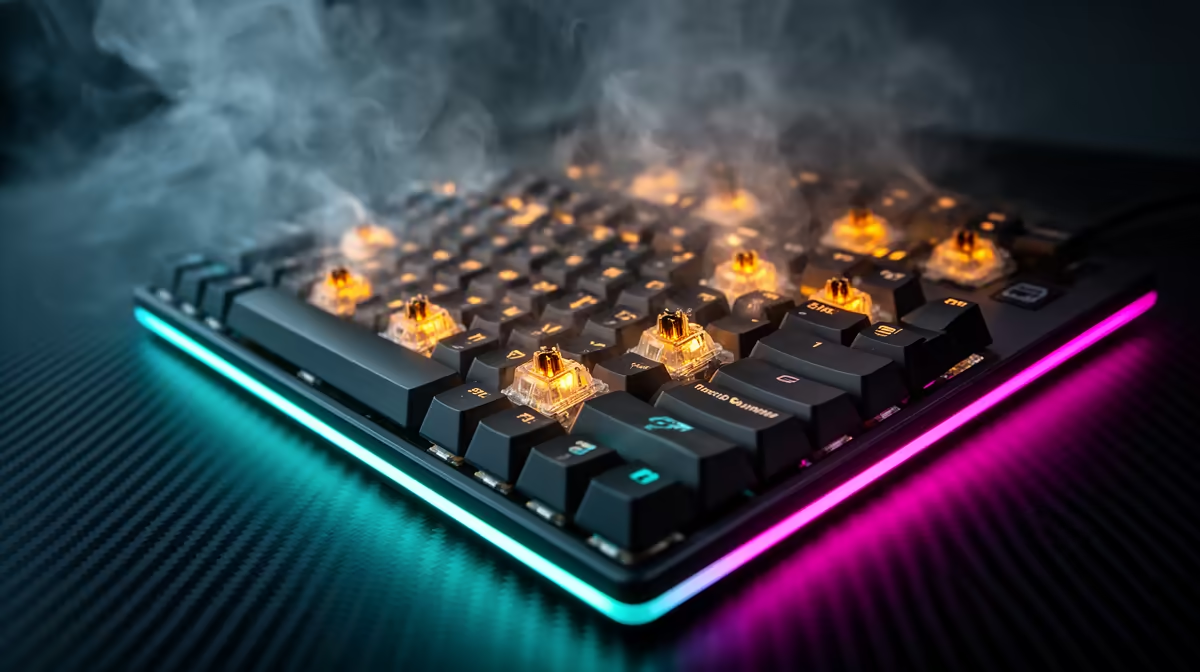
Counter-strafing depends on releasing one direction and applying the other with clean timing. Rapid trigger can shorten the key travel between those events. It sharpens the tool; you still have to execute the movement.
Quick Answer
On a capable magnetic keyboard, rapid trigger resets A or D after a small upward movement. The key can activate again after a small downward movement. A conventional switch waits for its fixed reset and actuation points.
Use a moderate setting and practise the same stop-and-shoot drill. Compare current peripheral favourites with gaming accessories for your setup, paying attention to firmware stability and per-key control.
Understand the Movement
In a shooter with acceleration and deceleration, counter-strafing uses the opposite movement input to reach an accurate state at the intended moment. The precise game behaviour differs by title. Learn the game's own movement model before copying another game's timing.
Rapid trigger reduces the distance needed for the keyboard to report release and re-press. It does not decide when you make either motion. A poor rhythm stays poor at a shorter travel distance.
Build a Useful Profile
Apply rapid trigger to movement keys first. Keep abilities, chat and modifiers at safer actuation points. A uniform hair-trigger board can create an unwanted crouch, walk or menu command.
Begin with enough reset distance to prevent twitching when your finger relaxes. Reduce it one step, run the drill and type a short message. Save the last reliable profile before experimenting further.
Check calibration if one direction behaves differently. Magnetic switch compatibility, sensor alignment and firmware affect the travel map. Use approved switches and run the manufacturer's calibration after changes.
Separate Rapid Trigger From Input Priority
Rapid trigger follows one key's movement. SOCD or last-input-priority features decide what happens when opposing keys are held together. Games and tournaments can treat those features differently.
For CS2, disable Snap Tap-style automation in line with Valve's current official instruction. For any event, read the current rulebook and ask the organiser when a feature is unclear.
Use a Repeatable Drill
Stand at a marked point in a practice area and alternate left and right stops before firing one shot. Keep the same frame-rate cap and network conditions. Record several sets with your baseline profile, then repeat with rapid trigger after a practice period.
Count clean stops and accidental direction changes rather than choosing the run that felt fastest. If the character twitches, increase the reset distance. If release still feels late, lower it one step. The drill turns a vague sensation into a profile you can explain and reproduce.
FAQ
Will rapid trigger make every counter-strafe perfect?
No. It reduces switch travel. Your release, opposite press, aim timing and the game's movement state remain under your control.
How sensitive should A and D be?
Start in the middle of the available range and lower it until the reset feels quick without accidental inputs. There is no universal best value.
Can I leave rapid trigger on for typing?
You can, but many people prefer a deeper, calmer profile for writing. Save separate modes if the keyboard supports them.
Practise the movement with a controlled profile, then choose a keyboard that gives each key the adjustment you need.