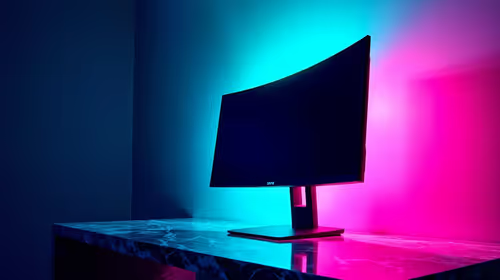
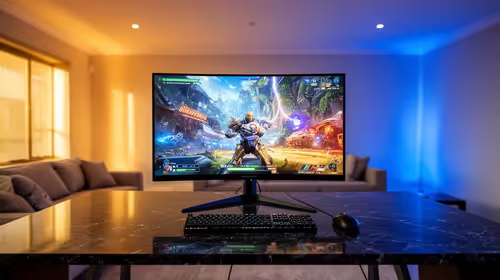
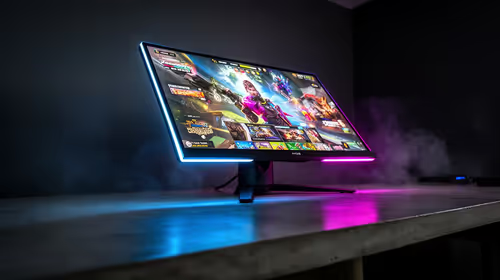
Colour coverage and HDR only improve viewing when they preserve meaningful differences, not when they simply make every shade louder. HDR10 and 93% DCI-P3 for gaming can enrich highlights, effects and wide-gamut media while supporting more nuanced creative work. The R4,499 Alienware AW2726DL brings both to a 27-inch QHD IPS monitor with a competitive 280Hz side.
Quick Answer
Yes, HDR10 and 93% DCI-P3 can improve suitable games and media by expanding the tonal and colour range the display can represent. The gain depends on good content, sensible mapping and a restrained picture profile. At R4,499, the AW2726DL combines these picture capabilities with IPS, QHD, FreeSync Premium and 1ms GTG, making them useful extras rather than its only purpose.
🌈 Read the gamut figure correctly
DCI-P3 describes a wide colour space used for digital cinema and HDR content. A 93% coverage figure tells you how much of that space the panel can reach. It does not say every displayed colour lands perfectly on target.
Avoid increasing saturation merely because the panel has broad reach. Excess can merge neighbouring reds, exaggerate grass and make skin tones unnatural. Use familiar objects and neutral greys to keep adjustment grounded.
Compare picture-focused models across the gaming monitor range, considering whether applications and content can make sensible use of the wider gamut.
🔦 Give HDR10 suitable material
HDR10 carries information for a broader tonal presentation than SDR. A strong setup keeps texture in bright clouds and lamps, retains objects in shadow and avoids turning ordinary UI panels into glaring blocks.
Complete the operating-system HDR calibration before the in-game procedure. Set peak and paper-white controls through the sample images, then inspect a dark interior, an outdoor sky and a colourful effect scene. A title with poor HDR handling may still look better in a sound SDR mode.
Pay special attention to interface elements. A white map or subtitle can become painfully bright even while the 3D scene looks balanced. Adjust UI luminance separately where the title allows it, and verify that pale text remains readable over both bright sky and dark rooms.
The AW2726DL's IPS viewing consistency helps during shared viewing, although a centred seat remains the best reference. Use current monitor deals to compare HDR10 in the context of panel type, refresh and price.
🎮 Separate picture range from motion speed
HDR10 and gamut describe image reproduction. The AW2726DL's 280Hz, 1ms GTG and FreeSync Premium deal with update cadence, pixel transitions and variable frame timing. A game can use both sets of capabilities, but they should be tested independently.
Create a calibrated HDR profile for atmospheric titles and a neutral SDR competition profile. Confirm the active resolution and refresh after switching. Do not let a bright HDR configuration become the default for documents or late-night browsing.
The stand's height, tilt, swivel and pivot movement helps control viewing angle and reflections. That physical setup can reveal more picture improvement than another saturation step. Check the monitor best-sellers page after deciding how much time your library spends in HDR.
For everyday images, use applications that handle colour appropriately and export for the intended destination. Wide gamut on the working screen cannot force another device to reproduce the same range, so review important output on a conventional display too.
Room light changes perceived colour and contrast. A warm lamp can make neutral whites appear cooler by comparison, while a reflection lifts black levels. Establish consistent lighting before comparing profiles, and use the AW2726DL's stand movement to aim reflections away from the viewing area.
Revisit the profile after several different games. If reds clip, skin tones become artificial or shadow information vanishes, step back from saturation and contrast adjustments. A broad gamut should preserve distinctions across content rather than advertise itself in every scene.
Frequently Asked Questions
Does 93% DCI-P3 mean 93% colour accuracy?
No. It describes gamut coverage, not the error between requested and displayed colours. Accuracy is a separate measurement and calibration concern.
Should HDR10 stay on for desktop work?
Only if SDR applications look comfortable through the operating system's mapping. Keeping a separate SDR desktop profile is often simpler.
Can a game support HDR10 but still look worse?
Yes. Weak tone mapping or unsuitable calibration can raise blacks, clip highlights or make interfaces harsh. Compare the same scene in SDR.
Does HDR reduce 280Hz performance?
They are separate capabilities. Confirm the active mode after enabling HDR and measure game performance rather than assuming one changed the other.
Ready to make wider colour reveal nuance instead of mere intensity?
Compare Evetech's HDR gaming displays and build separate picture profiles that respect the content, the room and the speed of each game.