Quick Answer
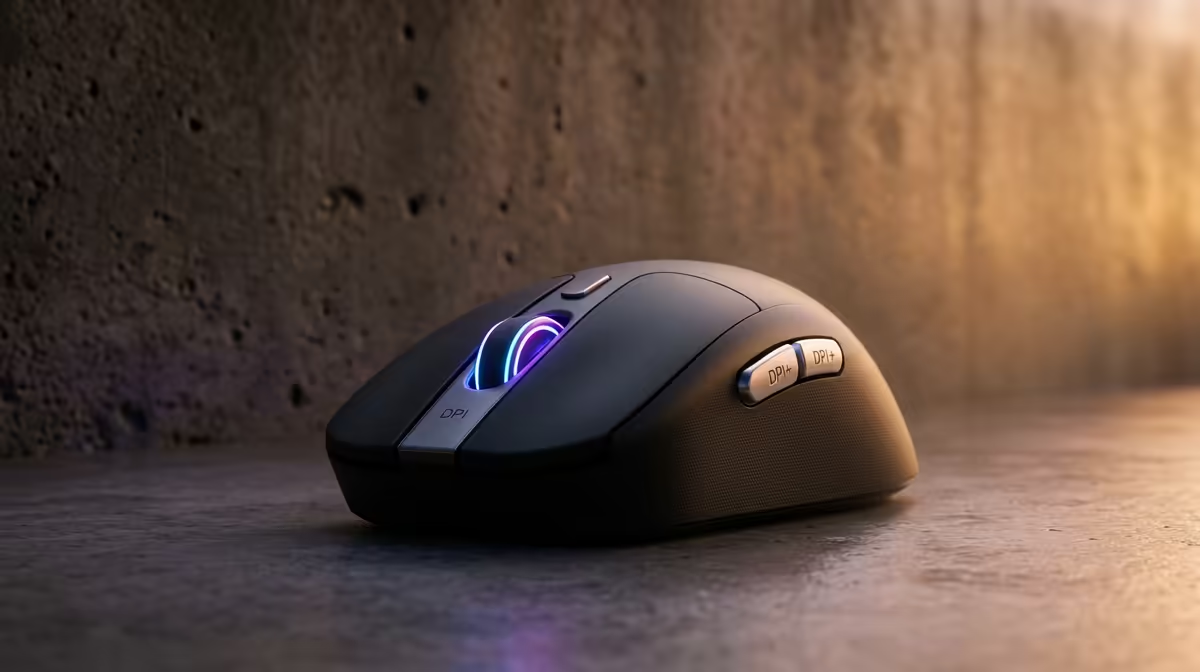
No, an 8000Hz polling-rate mouse is not necessary for couch co-op gaming. The jump from 1000Hz to 8000Hz reduces polling interval from 1ms to 0.125ms, but the real-world benefit needs a fast CPU, steady frame rate, and a 240Hz or 360Hz monitor.
What It Actually Changes
For couch co-op gaming, the mouse affects input feel rather than graphics performance. Story, strategy, editing, and couch sessions rarely expose the 8K advantage, while aim-heavy esports can. Higher polling can also use more CPU time, so a lower-end PC may feel smoother at 1000Hz or 2000Hz.
Specs And Price Checks For SA Buyers
Broad SA price bands for premium 8K-capable mice are around R1,500-R3,800. Compare Razer Viper V3 Pro, Razer DeathAdder V3 Pro with the correct dongle, Logitech G Pro X Superlight 2, Endgame Gear OP1 8K, and Pulsar X2H 8K. Weight, sensor shape, switches, and wireless stability matter more than the headline Hz number.
Where The Money Works Hardest
Prioritise the monitor and frame rate first. If the PC cannot hold 200 fps or better in the game you care about, 8000Hz will be hard to feel. For non-esports use, a comfortable 1000Hz or 2000Hz mouse and a good pad usually give better value.
Local Fit Check
For South African buyers, also check delivery timing, warranty handling, plug or cable needs, and whether the part fits the desk or case you already own. A practical fit check prevents a good product from becoming the wrong purchase.
FAQ
Is 8000Hz better than 1000Hz?
Technically yes, because polling interval drops from 1ms to 0.125ms. Practically, the difference is small unless the full setup is fast enough.
Can 8000Hz hurt performance?
It can add CPU overhead on weaker systems or badly tuned games. Drop to 1000Hz or 2000Hz if you notice stutter.
What matters besides polling rate?
Shape, weight, sensor quality, click feel, feet, and pad surface matter every day. A comfortable mouse at 1000Hz beats an awkward 8000Hz one.