Premium buyers expect every component to be finely tunable, and the fan curve is where that control meets case fans. The question is whether fan-curve flexibility is a genuine reason to pay more or a feature that any decent fan already covers.
Quick Answer
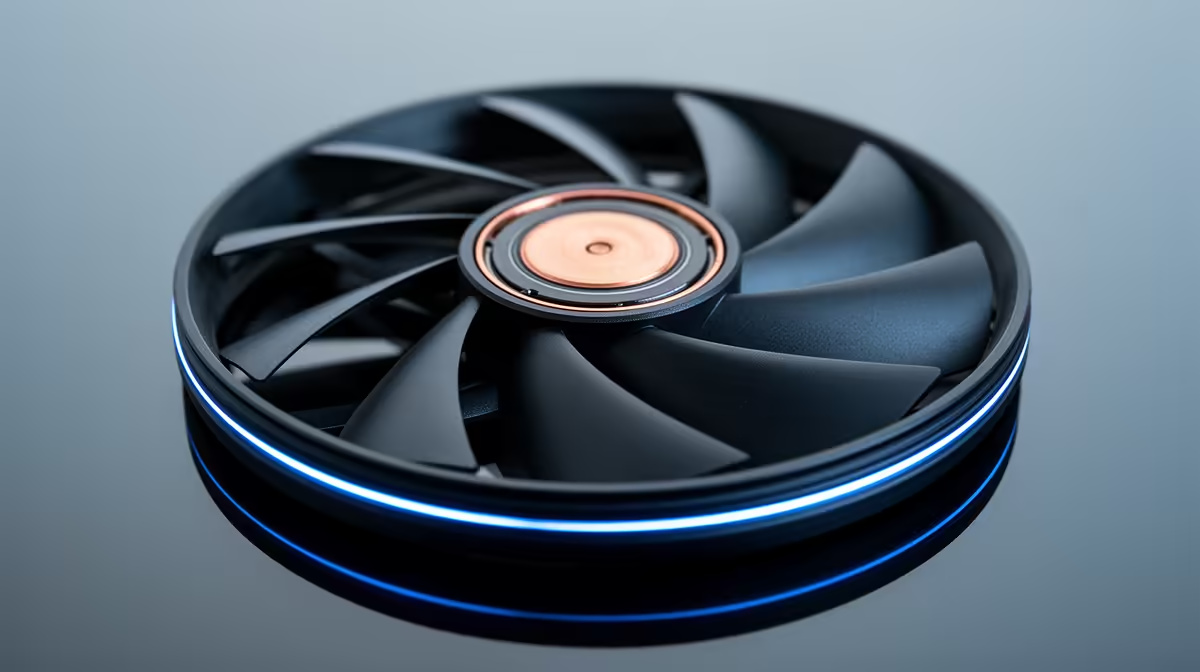
Fan curve matters for premium buyers, but the curve lives in software and the motherboard, not the fan itself; what you pay for is a PWM 4-pin fan with a wide, smooth speed range. A premium fan idling near 300 RPM and topping 1,800 RPM gives the curve room to work. Expect R350 to R550 for that range.
What Actually Enables A Good Fan Curve
The motherboard or fan controller sets the curve, but the fan needs a 4-pin PWM connection and a broad usable RPM range to follow it smoothly. A premium fan that spins quietly at very low RPM and ramps high under load lets you tune a curve that is silent at idle and effective under heat.
Where Premium Spend Pays Off
Higher-end fans hold a wider, more linear PWM range and better bearings, so the curve transitions are smooth and quiet rather than steppy. For a buyer who wants a near-silent idle that ramps cleanly under load, that refinement is the real benefit, more than any single headline number.
FAQ
Does the fan or the motherboard control the curve?
The motherboard or a fan controller sets the curve. The fan must support 4-pin PWM and have a wide RPM range to follow it. So you buy the fan for its range, not the curve itself.
Why does a wide RPM range matter for a curve?
A wide range lets the curve idle the fan very low for silence and ramp it high when temperatures climb. A fan with a narrow range cannot deliver both quiet idle and strong cooling.
Is a 3-pin fan fine for fan curves?
3-pin fans only allow voltage control, which is coarser. For a smooth, tunable curve, a 4-pin PWM fan is the better choice, especially for a premium build aiming for fine control.
Choose 4-pin PWM fans with a wide RPM range so your fan curve can be both whisper-quiet and effective under load.