Quick Answer
Yes, noise matters for first-time PC builders choosing a mini PC, because these small boxes sit close to you on a desk or under a TV. Look for a model with a larger heatsink, a temperature-controlled fan and a Ryzen APU that runs cool; the quietest units stay near 30dBA under light load.
Why small boxes can get loud
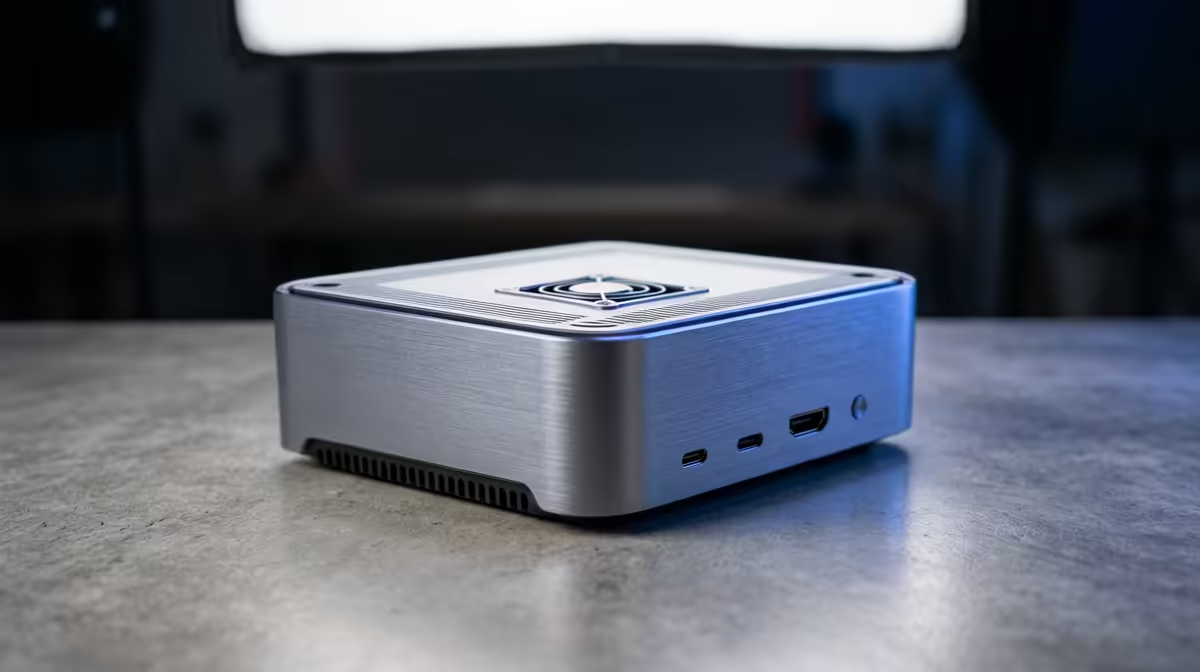
A mini PC packs a capable APU into a tiny chassis with little room for cooling, so a cheap model can spin its small fan fast and whine under load. Since the box usually sits an arm's length away, that noise is intrusive. The quietest mini PCs use a generous heatsink, a larger or smarter fan, and a power-efficient Ryzen APU that produces less heat to begin with.
How to pick a quiet one
Favour models reviewed for low noise, ideally with a configurable fan curve in the BIOS so you can prioritise silence. A Radeon 780M-class APU in a well-cooled chassis stays quiet for esports at 1080p 60fps and near-silent for browsing and media. Avoid the cheapest no-name boxes, which often skimp on cooling.
Practical noise tips
Place the mini PC where its vents are unobstructed, keep it dust-free, and set a relaxed fan curve for light tasks. Those steps keep a good mini PC unobtrusive on a desk.
FAQ
Are mini PCs noisy?
Cheaper ones can be, because a small fan spins fast in a tight chassis. Well-cooled models with a larger heatsink and an efficient Ryzen APU stay quiet, near 30dBA under light load.
Can I control mini-PC fan noise?
Often yes, via a fan curve in the BIOS. Set it to favour quiet for browsing and media, and it only ramps under gaming load, keeping the box unobtrusive on a desk.
What does a quiet mini PC cost at Evetech?
Well-cooled, quiet-running mini PCs currently run about R12,000 to R18,000 at Evetech. The premium often buys better cooling and lower noise as much as speed.
relaxed fan curve in the BIOS for everyday use and keep the mini PC's vents clear. On a desk that close to you, quiet cooling matters as much as raw speed.