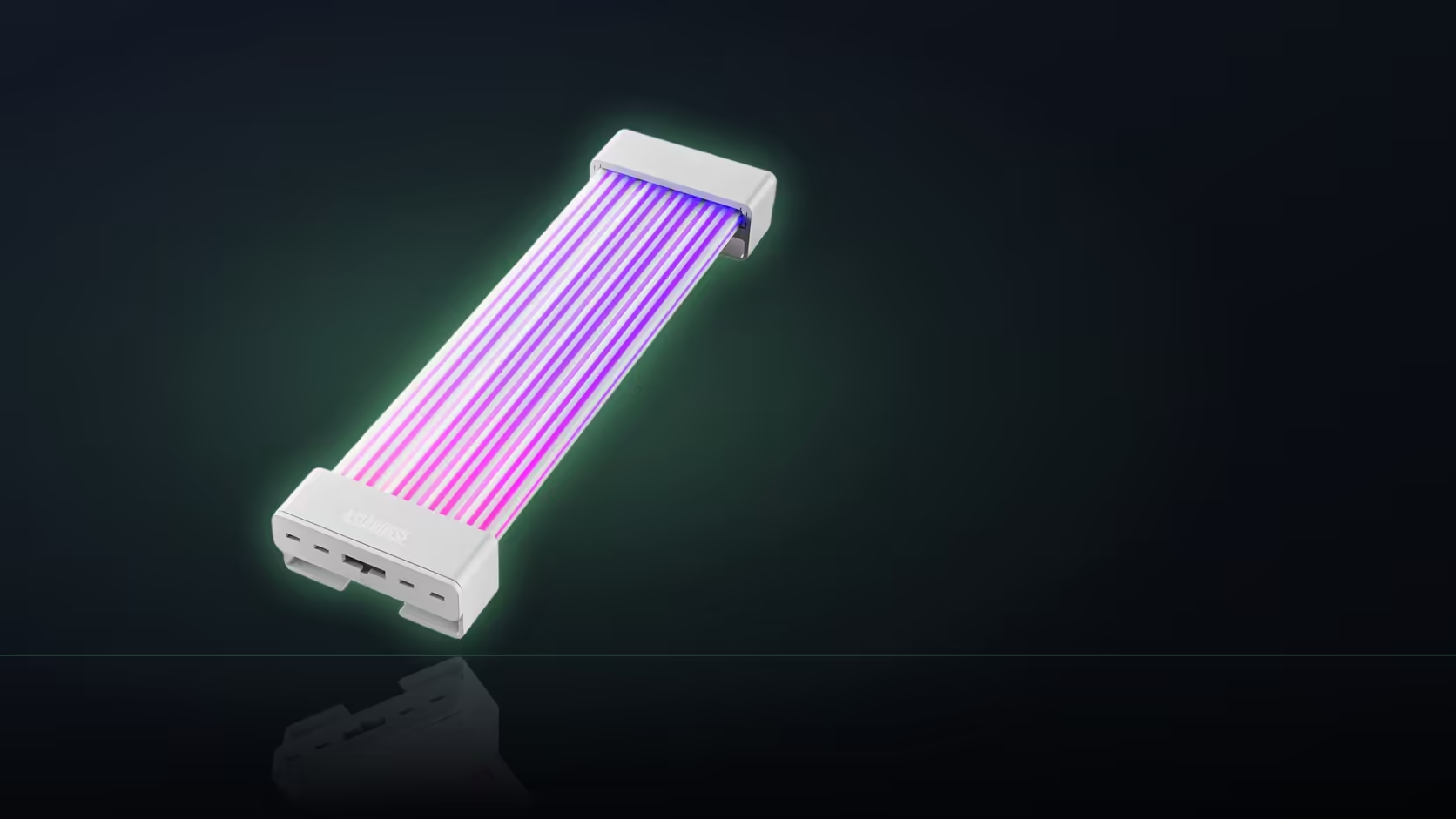
A fair number of lighting products still lean on a SATA connection somewhere - a controller box tucked behind the motherboard tray, or a lead run all the way back to the power supply just to keep a small board of LEDs alive. AsiaHorse's Aurora ARGB cover kit skips that arrangement entirely, and it's one of the simpler wiring jobs in this whole category as a result.
Quick Answer
No - the Aurora ARGB Cover Kit doesn't need a SATA power connection. It draws both power and sync from a single 5V 3-pin motherboard header, with no controller box involved anywhere in the R699 kit. That's one fewer cable to route through the case and one fewer component to find space for behind the tray.
⚡ Where the lighting actually draws power from
The motherboard header itself supplies everything the shells need - power for the LEDs and the sync signal that lets the board's own software control them, both riding on the same 5V 3-pin connection. There's nothing else in the chain: no separate power lead, no SATA tap, no intermediate box.
📦 No controller box in the kit
The description states this plainly - no controller box ships in the box and no SATA lead is needed at all. That's part of what keeps the install simple: a single thin lead runs from the shells to a free header, and that's the entire wiring job for both covers combined.
Does skipping a controller limit the control options?
Control comes from whatever lighting software the motherboard already runs, rather than a dedicated app or a physical remote tied to the product itself. That means the options available are whatever the board's own software provides - which, on most modern boards, still covers colour, brightness, and a range of effects, just through the board's ecosystem rather than a separate one.
What if a remote is genuinely preferred?
A different product in the wider Aurora range ships with its own controller and remote, powered over SATA, for buyers who specifically want that kind of standalone control rather than syncing through the motherboard. That's a different SKU to this one, worth knowing about if a remote matters more than board integration.
🔗 Does one header really cover both shells?
Yes - the kit is built to draw from a single header, so one connection serves the 24-pin cover and the eight-pin cover together rather than needing a header each. That's part of what keeps the header budget manageable on boards that only offer one or two addressable connections.
Is header current worth worrying about?
Addressable headers carry their own current limits, and a build already running several lit devices off one header is worth checking against the motherboard's specification before adding the Aurora kit to the same connection. It's a quick check and avoids any risk of an overloaded header producing dim or inconsistent lighting.
🧵 Why this makes routing noticeably easier
One thin lead heading to a board header is a far smaller job to hide than a controller box plus a SATA cable running back to the power supply. For anyone tidying the rest of the build at the same time, Evetech's cable management accessories cover the parts of the job the Aurora kit itself doesn't touch, and the case lighting selection shows how other addressable products compare on wiring simplicity.
Frequently Asked Questions
Where does the lighting draw its power from?
The motherboard header itself, which supplies both power and the sync signal over the same 5V 3-pin connection.
Is a controller box included in the kit?
No - the description states clearly there's no controller box or SATA lead, which is part of what keeps installation simple.
Does skipping a controller limit what the lighting can do?
Control comes from the board's own lighting software rather than a dedicated remote, so the available options depend on what that software offers.
What if I'd prefer a physical remote for control?
A different product in the Aurora range includes a controller and remote powered over SATA, for buyers who want that route instead.
Does one header genuinely power both shells?
Yes - the kit draws from a single header, so one connection serves both the 24-pin and eight-pin covers together.
Is the current draw on that header worth checking?
Worth a look if several other lit devices already share the same header - addressable headers have limits worth confirming against the board's specification.
Does skipping SATA actually simplify the install?
Considerably - a single thin lead to a board header is far less to hide than a controller box plus a SATA connection would be.
Want lighting that skips the SATA lead entirely?
Browse Evetech's cable management accessories to tidy the single header lead once it's plugged in.