A delayed turn in a fast game does not identify its own cause. A wireless controller delay can emerge from the local connection, controller reporting, game processing, frame delivery, display timing, or an online path, so troubleshooting works best when those stages are separated.
Quick Answer
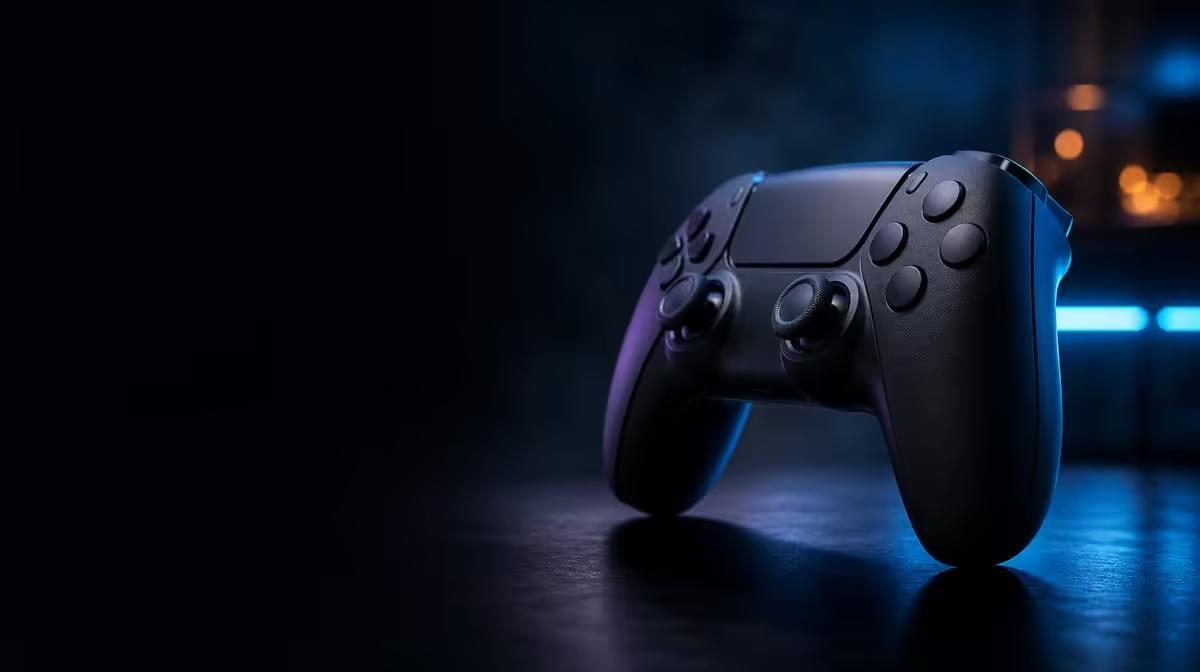
Test delay with a repeatable local scene before changing profiles or blaming wireless input. The R729 GameSir Nova 2 Lite offers tri-mode connectivity and 1000Hz polling, giving you connection routes and a high report rate to assess while the game, platform, and display remain fixed.
🧪 Reproduce the delay locally
Choose an offline action with a clear visual result, such as a menu move or fixed camera turn. Perform it several times using a neutral profile. If the response feels consistent locally but slow in an online match, network travel may be contributing to the second experience rather than the controller creating the whole delay.
Keep the display mode and game settings unchanged. Frame timing can influence when input becomes visible, so altering visual options during the controller test muddies the result. A good diagnosis changes one stage, repeats the same action, and records what improved.
The Nova 2 Lite lists 1000Hz polling, with a nominal report interval around one millisecond on a supported path. That figure covers controller reporting rather than end-to-end response. Evetech's gaming controller category provides current comparison options when report rates and connection features are priorities.
🔌 Compare connection routes one by one
Tri-mode gives the controller three connection routes across compatible devices. Test the active route until it is stable, then repeat the local scene through another supported option if your platform allows it. Do not switch midway through an attempt or carry unexplained app changes into the comparison.
Confirm recognition before opening the game, and then verify input inside the title. A host can detect a pad while the game selects another input method or uses an unexpected layout. Note which route, platform, and profile produced each result.
Hall sticks can support a clean directional baseline because they sense position magnetically. Still, a poor sensitivity setting may feel sluggish even when the report path is fast. Return to default sensitivity before investigating subtle timing.
🖥️ Inspect the stages after the controller
If both connection routes behave similarly, look farther down the chain. Game processing and frame delivery decide when the action appears. The display then presents the frame. A high controller polling rate cannot remove time spent in those stages.
Strong vibration can also change the perception of precision. The Nova 2 Lite's dual asymmetric motors may add useful cues, but reduce intensity while testing fast input so feedback does not tense your grip or distract from a repeated motion. Restore a suitable level once the delay check is complete.
Browse Evetech's gaming accessory range when reviewing the complete local setup, and use the accessory best sellers for another view of current options. The goal is not to clear the controller automatically; it is to identify the first stage where the delay appears.
Create a short fault table if the issue persists. Record whether the delay occurs in menus, an offline scene, online play, one connection route, or every supported path. A problem visible before a game begins points somewhere different from one that appears only during networked action. This evidence also keeps a temporary improvement from being mistaken for a permanent fix.
After finding a stable local result, save the profile and stop adjusting it during later network checks. Preserving a known controller baseline lets you evaluate the next stage honestly and gives you a dependable configuration to restore after experiments.
Finish with a restart test. Close the game, reconnect through the documented route, and replay the local action. A fix that survives this reset is more convincing than one observed immediately after several changes. Keep the successful details beside the profile so future troubleshooting begins from evidence.
Frequently Asked Questions
Can 1000Hz polling eliminate online lag?
It changes local report frequency, not the time data takes to reach an online server.
Why reset sensitivity before testing?
An unusually slow or aggressive curve can feel like timing trouble. A known baseline removes that confusion.
What proves that a connection route is stable?
Recognition and repeated in-game inputs should behave consistently across the same local test scene.
Should vibration stay at normal strength?
Lower it temporarily if feedback affects grip or concentration, then tune it again after response is understood.
Ready to trace delay instead of guessing at it?
Compare Evetech's gaming controllers and choose current connection and response features that suit the platform where fast input matters most.