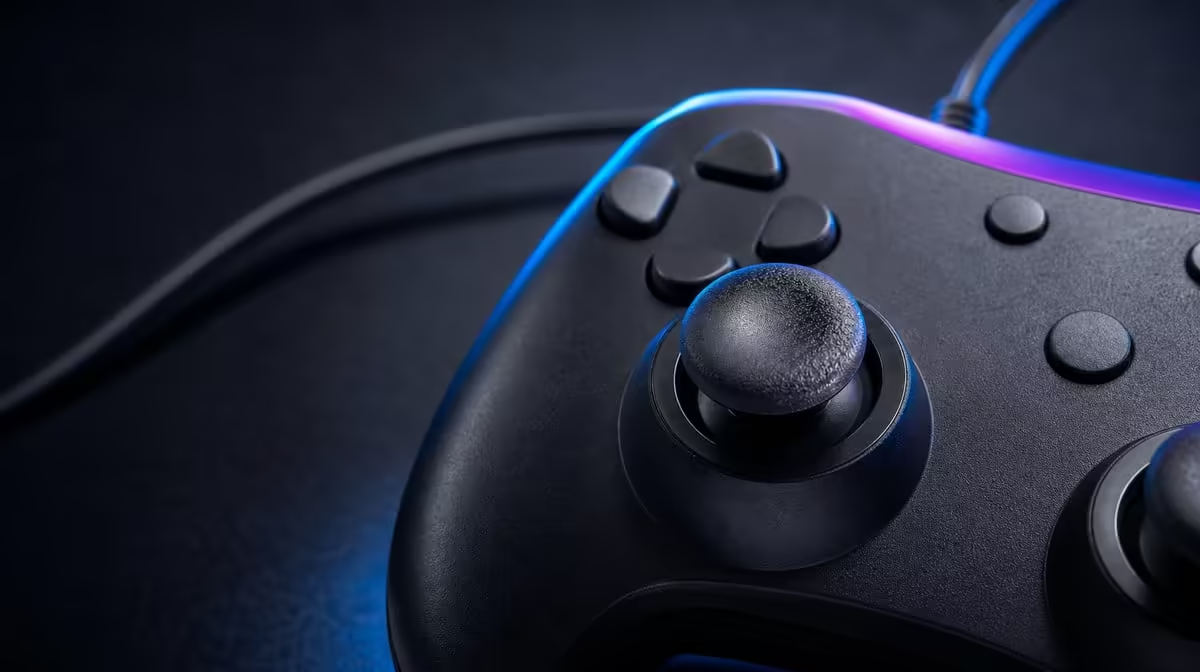
Stick drift is unwanted movement reported while the player expects neutral. Xbox controller stick drift can come from worn contacts, calibration, debris or physical damage, so the first useful step is reproducing the direction instead of hiding it.
Quick Answer
Xbox controllers can develop drift through contact wear, calibration errors, contamination or damage. The R899 GameSir G7 HE uses Hall sensing, avoiding one common potentiometer wear path, while clean storage and a repeatable centre test remain important.
🔍 Confirm the symptom
Release the stick in an input display and note the direction and amount of movement.
Test another screen to separate game settings from a broader centre result.
Compare Hall-equipped options in Evetech's gaming controller range.
🧲 Understand the wear path
Common potentiometers use rubbing contacts that can wear. Hall sensing measures magnetic position instead.
This reduces one cause, not every mechanical or calibration problem.
⚙️ Protect the baseline
Record centre and axes before increasing dead zones. A large setting can hide movement and reduce fine aim.
Retest after software changes or an impact.
🧹 Store the pad carefully
Keep dust and moisture away, and do not place weight on stick caps.
Evetech's controller setup accessories and current favourites can support any room need identified by the centre test.
The R899 G7 HE offers a different sensing foundation, not freedom from ordinary care.
Create a monthly centre card for both sticks. Note the game profile, dead zone, direction and whether movement appears in a system-level test as well as the title.
Use a flat surface and relaxed cable during the check. Hand pressure and wire pull can make fine movement look less stable.
If debris is visible, clean only exposed surfaces gently. Moisture or forced tools can create a new problem around the mechanism.
Test after a faceplate swap or impact. These events should not alter Hall sensing, but the observation confirms the physical state.
Compare aim with the same sensitivity and target task. A different game curve cannot establish whether centre changed.
Keep the conclusion narrow: Hall sensing avoids one common contact-wear route, while careful records distinguish drift from settings and technique.
Add a left-versus-right comparison. The movement stick and aim stick may show different player habits even when both sensors use the same technology.
Test after a normal restart with the saved profile. A centre result that cannot be reproduced may involve settings.
Include small corrections, full movement and return. Drift diagnosis should not depend on neutral alone.
Record any dead-zone change and test the fine-control cost. Hiding movement can remove useful range.
Store the monthly card beside the cable and faceplate notes. Complete ownership helps explain physical changes.
Review trends rather than single frames. A repeated direction across screens is stronger evidence than one moment in a game.
Build the diagnosis in layers. Begin with the Xbox input view or another neutral display, continue with an unchanged game profile, and finish with the exact scene where unwanted movement became noticeable. Label each layer so a game-specific curve does not become a hardware conclusion.
Use the same physical routine every time: place the controller securely, centre the hands, move each stick through its normal range, release without flicking, and wait. Repeat both sides because a clean left stick says nothing about the right.
If the neutral position looks different after a settings change, restore the recorded baseline and retest before adding more dead zone. Several adjustments made together can hide the original symptom while making fine control feel less direct.
Hall sensing is relevant because it removes the rubbing electrical contact used by common potentiometer position sensing. It does not remove springs, moving stick parts, software calibration or the possibility of impact, so the ownership record still matters.
Include the cable and grip in the observation. A lead pulling towards the console or a thumb resting against the cap can produce movement during an otherwise clean test. Remove those forces before recording the centre.
Do not turn routine repetitions into a durability estimate. The useful evidence is whether the same direction appears, under which profile and on what date. That history supports troubleshooting without borrowing an unsupported click-life claim.
The R899 G7 HE is best assessed against its own early baseline. Save the first clean centre card, repeat it monthly and compare like with like. This method gives the Hall sticks a fair test while preserving the player's fine-control settings.
Frequently Asked Questions
What is stick drift?
It is directional input reported while the player expects the stick to rest at neutral.
Why can potentiometers wear?
Their position measurement commonly uses rubbing electrical contacts.
Are Hall sticks immune?
No. They avoid that contact path, but calibration, debris or damage can still matter.
Should dead zones be raised immediately?
Observe and record the centre first so the cause is not hidden.
What does the G7 HE cost?
The wired Xbox controller costs R899.
Ready to replace a vague drift complaint with a centre record?
Explore Evetech's controller range and test the G7 HE Hall baseline before changing aim settings.