DQHD and 4K distribute pixels in very different shapes. 5120 x 1440 vs 4K is mainly a choice between expansive horizontal workspace and a denser conventional frame, with both asking more from graphics hardware than smaller resolutions. Dahua's 49-inch LM49 provides the DQHD route for R14,999.
Quick Answer
Choose the R14,999 LM49's 5120 x 1440 canvas for wide timelines, side-by-side applications and supported panoramic gaming. Choose 4K when vertical detail, conventional proportions or dense single-window work matters more. Compare application layout and graphics workload, not pixel totals alone.
📊 Compare the pixel shapes
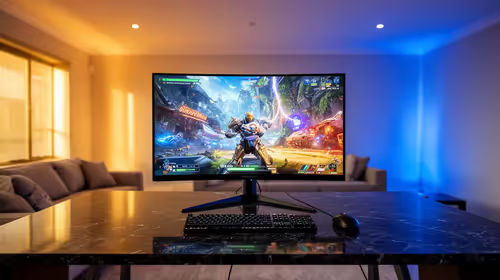
DQHD places 5,120 pixels across and 1,440 vertically, creating a very wide desktop. A 4K screen uses a more conventional wide-screen shape with greater vertical resolution. The DQHD layout behaves like a continuous horizontal work surface rather than a taller page.
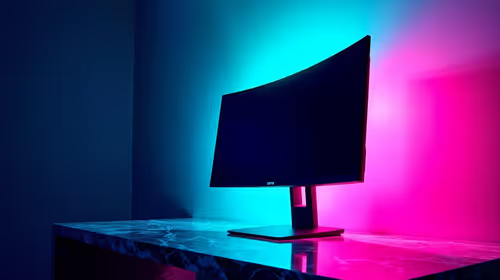
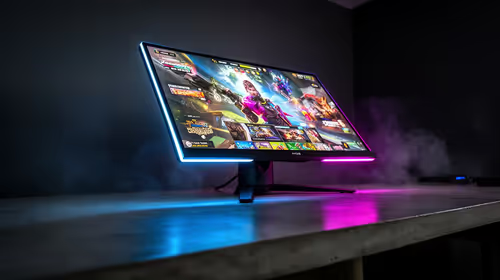
Evetech's curved monitor selection helps buyers visualise how the wraparound format changes desk use.
🪟 Match resolution to applications
Timelines, spreadsheets, monitoring dashboards and several simultaneous windows benefit from DQHD width. Photo detail, long documents and vertically arranged development tools may value the extra height available from a 4K layout.
The LM49's ergonomic tilt and swivel stand helps centre its curved panel on one seated position. Window zones should keep the primary task near that centre, with references placed at the edges.
🎮 Plan the graphics workload
Both resolutions require substantial pixel output. Game performance depends on the graphics system, title and settings, so test the intended software at native resolution and reduce costly effects methodically when necessary. Ultrawide game support and interface placement also affect the DQHD experience.
Browse Evetech's gaming monitor range to compare the R14,999 LM49 with other resolution and screen-shape combinations.
🔌 Include the wider workstation
The Dahua supports Picture-By-Picture for two sources, USB-C with up to 65W charging pass-through and built-in RJ-45 Ethernet. Those features can make the wide canvas the centre of a laptop and desktop desk rather than merely a different pixel shape.
Its 99% sRGB coverage and Delta-E under 2 accuracy support colour-conscious sRGB work. Explore the Dahua monitor page when those connections and colour specifications are part of the choice.
Test scaling before buying around a resolution. Comfortable text at the normal viewing distance matters more than fitting the greatest possible number of tiny windows. Draw the intended zones and calculate whether the primary application receives enough width and height.
Test the same project in both shapes
Open a representative document, game or editing project and note which information needs constant scrolling. On DQHD, measure whether the added width keeps useful panels visible. On 4K, check whether the taller workspace reduces vertical movement. This reveals a workflow difference that a specification table cannot show.
Scaling changes the comparison again. A dense screen may use enlarged interface elements, while the 49-inch DQHD panel spreads its native pixels over a broad physical area. Compare readable working space after scaling, not the smallest text either screen can technically display.
For gaming, note where menus and status elements appear. Useful ultrawide support keeps essential information within a comfortable gaze and renders the scene cleanly at the edges. If a game uses a narrower view, decide whether black side areas are acceptable for that title.
Plan window recovery and sharing
Saved zones make the wide desktop much faster to restore after restart. Create named layouts for focused work, comparison and communication. When screen sharing, choose one application or a deliberate region so viewers do not receive an unreadably wide full desktop.
Finally, compare ports and desk functions alongside resolution. A 4K display with different connectivity may suit one laptop better, while the LM49's USB-C, Ethernet and PBP can simplify a two-device routine. Resolution shape is only one layer of the workstation.
Frequently Asked Questions
Is DQHD the same shape as 4K?
No. DQHD 5120 x 1440 is much wider relative to its height, while 4K uses a conventional screen proportion.
Which is better for timelines?
DQHD's horizontal space can show more timeline length and leave side regions for tools or previews.
Does DQHD need a capable graphics system?
Yes. Native gaming at 5120 x 1440 renders many pixels, so the complete hardware and game settings matter.
Can the LM49 display two sources?
Yes. Picture-By-Picture can divide its wide panel between two connected devices.
What does the DQHD Dahua cost?
The LM49 is priced at R14,999.
Ready to choose whether your pixels should stretch wider or stack taller?
Compare Evetech gaming displays, map the applications you use, and match the resolution shape to the work that occupies most of your day.