Quick Answer
Under R8,000 in South Africa, the standout pick is the best card that fits the cap with current Evetech stock, and value flips between AMD and NVIDIA at each price step. Match the GPU to your monitor: 1080p, 1440p or 4K, then buy the most VRAM you can afford within R8,000.
How to read the gaming CPU comparison
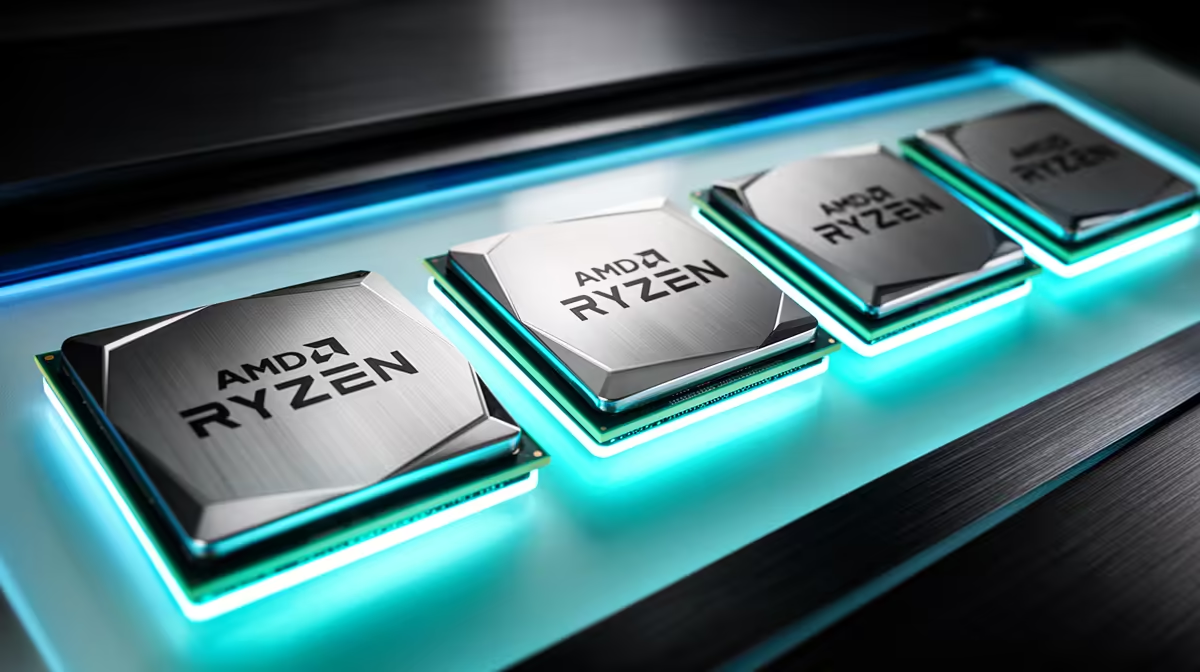
Rank the cards by the resolution you actually game at, then by VRAM and price. Under R8,000, Ryzen and Core i5 chips trade blows; pick by platform cost and the GPU you will pair. A higher model number is only worth it if you will use the extra performance: a 4K 144 Hz panel justifies a flagship, while a 1080p or 1440p screen rarely does. For South African buyers the live question is local stock and price, so compare the in-stock cards at Evetech rather than overseas MSRP charts that do not reflect rand pricing.
Matching the card to your setup
For 1080p 144 Hz, an entry-to-mid card with 8GB to 12GB of VRAM is plenty and holds well above 60 fps. For 1440p 144 Hz, step up to 12GB to 16GB for headroom in newer titles. For 4K 60 fps and above, the top tier with 16GB or more is the honest requirement. Whatever you pick, pair it with 32GB DDR5-6000 and a 1TB NVMe SSD so the GPU never waits on the rest of the system, and buy locally to keep the warranty in South Africa.
FAQ
Which gaming CPU card is the best value?
The mid-stack cards give the best rand-per-frame at 1440p. Flagships only justify their price at 4K above 100 fps, so match the tier to your monitor.
How much VRAM do I need from the gaming CPU range?
8GB to 12GB covers 1080p, 12GB to 16GB suits 1440p, and 16GB or more is the safe choice for 4K. Buy as much VRAM as your budget allows for longevity.
Should I buy locally or import a gaming CPU GPU?
Buy locally at Evetech. The warranty and any RMA stay in South Africa, which is worth more than a small saving on a grey import with no local support.
Compare in-stock gaming CPU cards at Evetech by resolution and rand-per-frame, then pick the tier that matches your monitor.