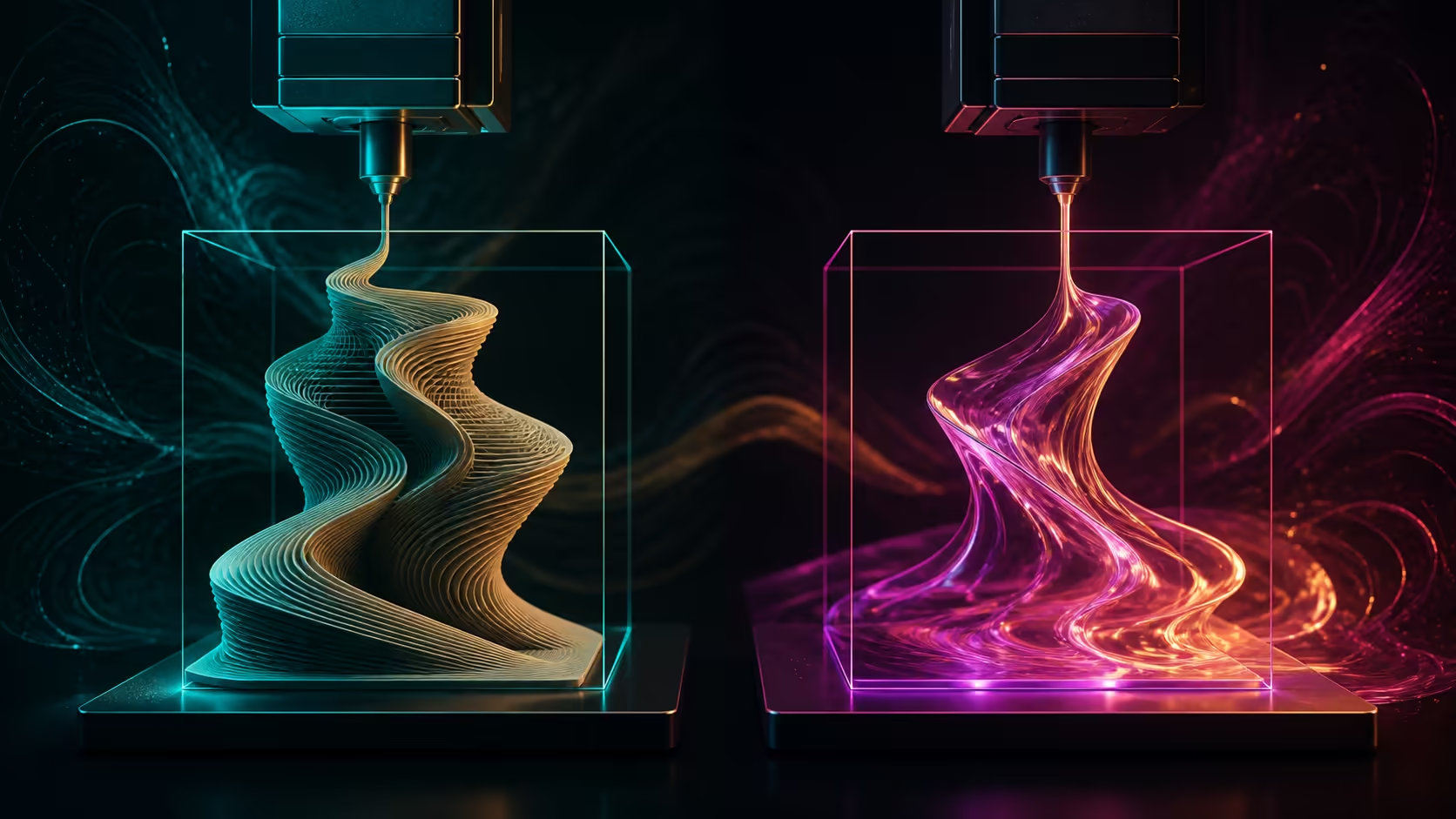
FDM and resin turn digital geometry into physical parts through different material paths. A useful FDM vs resin 3D printing comparison begins with part size, required detail, handling steps and the finished object's purpose.
Quick Answer
The Neptune 4 Max represents large-format FDM with a 420x420x480mm volume, 300C nozzle and support for PLA, PETG, ABS and nylon.
Choose FDM when filament deposition, larger build planning or practical part workflows fit the project; choose resin when its liquid-material process and post-processing route better suit the required result. The R9,399 Neptune 4 Max is the FDM reference, providing a 420 x 420 x 480mm envelope. Process choice alone cannot guarantee surface finish, dimensional accuracy or material performance.

📦 Compare the Actual Part Envelope
Measure the part on all three axes and test several orientations in the relevant preparation software. A large single piece may fit the Neptune's 420mm width, 420mm depth and 480mm height, while another shape may need splitting despite having a smaller overall volume.
Resin equipment has its own defined build limits, so compare exact machines rather than assuming one process is always small. The large-format printer category at Evetech provides FDM candidates once the largest routine part is known.
🧪 Account for the Material Workflow
FDM feeds filament through a heated nozzle and places material in paths. Resin systems form parts from liquid photopolymer and require the handling and post-processing appropriate to that material. Those different routes affect workspace planning, consumables and operator tasks.
The Neptune 4 Max has a high-temperature nozzle rated to 300C, but this limit does not identify every compatible filament. Match the complete material requirements to the whole printer, plate and environment. Browse 3D printing filament at Evetech with a specific material brief rather than choosing from nozzle temperature alone.
✨ Define Surface Finish Before Comparing
Layer height, orientation, support strategy, geometry and post-processing can change a visible surface. Resin is often discussed for fine detail and FDM for practical scale, but those broad tendencies are not guarantees for a named model or part.
Prepare a small sample containing the curves, text, edges and contact surfaces that matter. Review it at normal viewing distance and against the intended fit. A process wins only when its complete result meets the written acceptance line.
Use the broader Evetech 3D printer collection to compare exact envelopes and workflows after the finish test has been defined.
🧰 Price the Whole Production Route
The R9,399 FDM example includes a large build envelope, Klipper high-speed motherboard, 300C nozzle and upgraded dual-sided build plate. Its motion system can operate at rates reaching 500mm/s, yet that boundary promises neither finished quality nor total job time.
For either process, list preparation, material handling, supports, cleaning, curing or finishing steps that actually apply. Add safe workspace requirements from equipment and material guidance. Avoid assigning generic costs or ventilation needs to the Neptune without exact evidence.
Run one complete part from file preparation to usable output. The winning process is the one that delivers the required object through an acceptable repeatable workflow, not the one with the stronger isolated headline. Keep labour, rejected pieces and post-processing visible in the result, because the printer's active minutes tell only part of the production story.
That material range and size favour functional parts, props and batches that would exceed many resin machines, while the dual-gear direct drive handles filament close to the hotend. Resin remains a separate choice for its own fine-detail and post-processing workflow. Compare the actual object's size, surface requirement, material behaviour and safe workspace rather than treating one printing method as universally superior.
Frequently Asked Questions
Which process is better for a large single-piece model?
The process whose exact machine can contain the oriented part and meet its finish and material requirements. Measure every axis before choosing.
What FDM size does the Neptune 4 Max provide?
It offers a 420 x 420 x 480mm build volume, which should be compared with the model's prepared orientation and support space.
Can the 300C nozzle define every compatible filament?
No. Temperature is one condition. The material may also impose printer, surface, handling and environmental requirements that need confirmation.
Does process type alone determine surface finish?
It does not. Geometry, settings, orientation, support contact and finishing work influence the observed result on the chosen machine.
How should material workflow affect the decision?
Count every preparation, handling and post-processing stage needed to reach a usable part. The operator must be able to repeat that complete route.
What price applies to the FDM example?
The ELEGOO Neptune 4 Max costs R9,399. Evaluate that amount against recurring project needs rather than against one exceptional print.
Ready to choose a printing process from the finished part backwards?
Explore FDM printers and filament at Evetech after fixing the size, surface and handling requirements your project must satisfy.