Pick the wrong printer and you either get a brittle figurine that snaps in your hand or a working bracket with visible ridges where you wanted a smooth shell. FDM vs resin 3D printing is really a choice between two ways of forming plastic: one squeezes melted filament into stacked beads, the other hardens liquid with light. Knowing which does what saves you a frustrating first project.
Quick Answer
FDM (fused deposition modelling) works by feeding a plastic strand through a hot nozzle and stacking it bead by bead, giving you cheap, tough, larger parts. Resin printing cures liquid photopolymer with UV light for far finer detail, ideal for miniatures and jewellery. For functional brackets and big prints, choose FDM. For crisp detail under 0.05mm, choose resin.
How Each Process Actually Builds a Layer
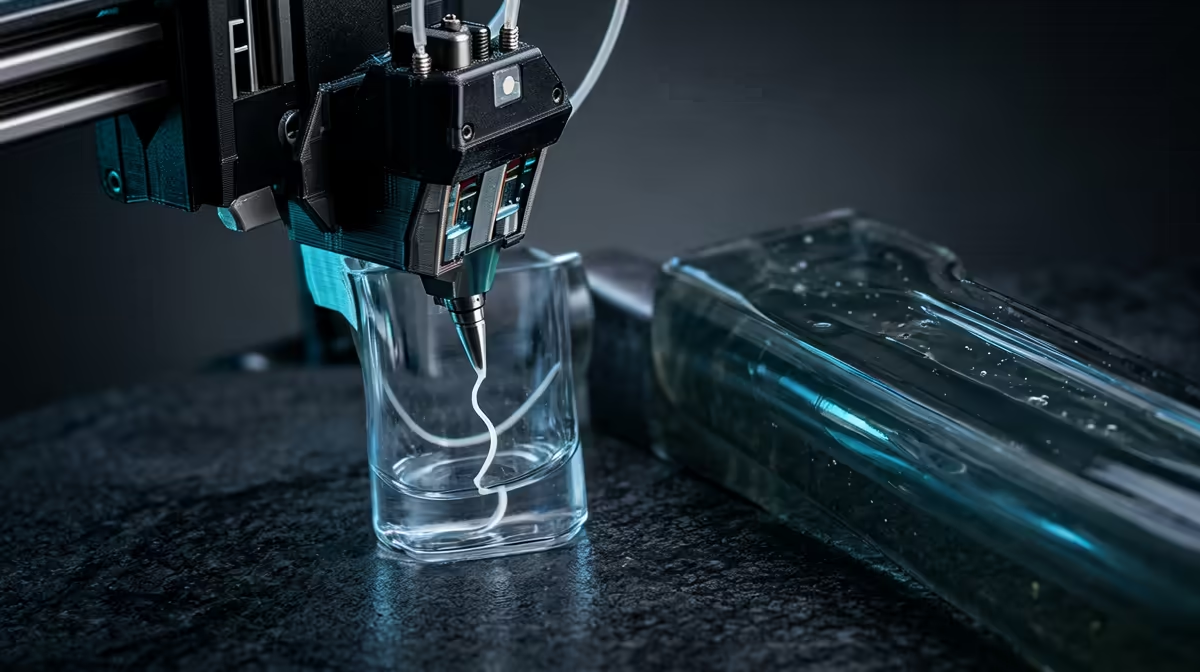
An FDM machine pushes a thermoplastic strand through a heated nozzle, usually around 200 to 230 degrees Celsius for common PLA. The molten line bonds to the layer below as it cools. Because the nozzle has a physical width, fine edges show a faint ribbing, and overhangs need support structures.
Resin printers work the opposite way. A vat holds liquid photopolymer, and a UV light source (an LCD mask on most affordable units) flashes a cross-section onto the bottom of the tank. That thin slice solidifies, the build plate lifts a fraction, and the next slice cures. There is no nozzle width to limit detail, so the resolution is set by the screen pixels and the light, not by a moving tip.
Strength, Detail and Mess: Where They Split
FDM parts handle stress well along the print plane and shrug off knocks, which is why people print phone stands, tool holders and enclosures with it. Resin prints look stunning but tend to be more rigid and can crack under sharp impact, though tough and ABS-like resins narrow that gap.
The trade-off is handling. Resin is liquid chemistry: you wear gloves, wash finished prints in isopropyl alcohol, then cure them under UV. FDM filament is dry and forgiving, with no post-wash step. If you want a clean desk setup with minimal fuss, FDM wins on convenience while resin wins on finish.
Running Cost and Footprint
FDM filament spools stretch a long way and the printers themselves come in larger build volumes, so the cost per gram of finished object is generally lower. Resin and the consumables around it (alcohol, FEP film, replacement screens) add up faster, and the build area is smaller. If you plan to keep printing, keeping a stock of replacement nozzles and basic tools from the 3D printing accessories range stops an FDM rig sitting idle when something wears out.
Frequently Asked Questions
Which is better for beginners?
FDM is the gentler start. There is no liquid resin to handle, cleanup is minimal, and a clogged or skipped layer is easy to diagnose. Most people learn the basics on filament before adding a resin printer for detail work.
Can one printer do both jobs?
No. The two use entirely different mechanisms, so you buy one of each if you need both large tough parts and fine detail. Many hobbyists end up owning both for exactly that reason.
Is resin printing toxic?
Uncured resin is an irritant, so you work in a ventilated space with gloves. Once a print is washed and fully UV-cured it is stable and safe to handle. Treat the liquid stage with the same care you would any solvent.
What detail can resin reach that FDM cannot?
Resin resolves features well under 0.05mm, capturing tiny faces, text and textures that an FDM nozzle smears into ridges. That is why tabletop miniatures and dental models are almost always resin.
Ready to start? Browse the full Evetech 3D printer range to match an FDM or resin machine to your next project, with stock held locally and priced in Rand.