An editor can be free and still be serious, provided it reads your footage, gives you clean exports and does not obstruct the workflow with surprises at the final step. Free video editing software is best judged on a small real project, not a feature chart. For South African creators, offline work, proxy files and 25 or 50 fps choices can be more useful than cloud-heavy promises.
Quick Answer
Free video editing software can produce strong work when it supports your camera files, audio needs and required delivery format without adding a watermark. Check those basics before committing to a long edit. A modest computer can remain usable when you organise media carefully and create proxies for demanding footage.
🧩 Begin with the footage you actually shoot
Import a few clips from the camera or phone you use, then try trimming, audio adjustment, captions and a short export. This quickly shows whether the editor recognises the codec and whether its timeline feels understandable. A clean first test is more valuable than an editor that offers specialist effects you will never use.
Pay attention to the export screen before you build a complete project. Resolution, frame rate, audio settings and watermark rules can differ by application or plan, so the last step should not be a surprise on a deadline.
📶 Use proxies to keep editing local
Proxies are lighter versions of original clips used for cutting and review. The editor reconnects the full-quality media for final export, which can make playback more responsive on an ordinary machine. They also reduce the need to pass huge camera files around a limited LTE allowance or busy res Wi-Fi connection.
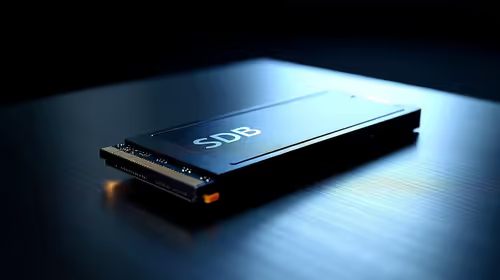
Keep originals, proxies, project files and exports in clearly named folders. A fast solid-state drive can help when the current media disk is the bottleneck, but it is still wise to leave space for cache files and duplicate project saves.
✅ Choose the frame rate before the timeline grows
Footage made under lighting linked to South Africa's 50 Hz electrical supply may behave better at 25 or 50 fps when capture and shutter choices align. That does not mean every project must use those rates. The delivery destination and source clips should guide the timeline decision.
Mixing unlike frame rates late in an edit can produce awkward motion or require conversion. Decide the project setting early, then test a short export on the device or platform where people will watch it.
🛡 Upgrade the part that the project exposes
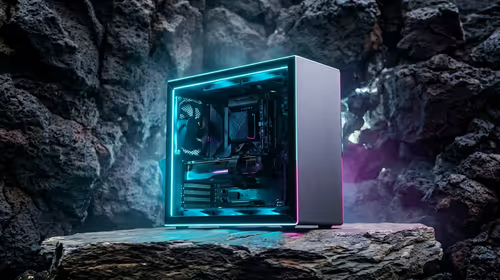
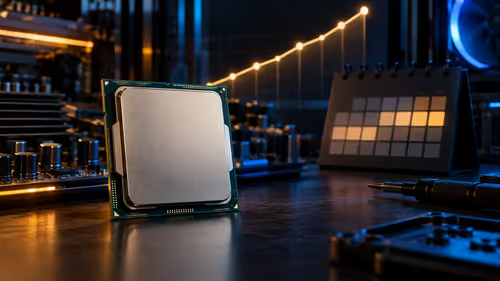
A graphics card can assist when the editor and selected effects support acceleration, but it is not the only part that matters. Codec decoding, processor speed, RAM and storage behaviour often decide whether ordinary cuts remain smooth. The workstation PC range is a useful starting point for assessing the whole editing setup, while workstation graphics cards deserve attention when your own effects test points specifically to GPU work.
Measure the delay in your own project before changing hardware. A timeline with simple cuts has different needs from colour work, layered effects or high-bitrate camera media.
Frequently Asked Questions
Can a free editor export without a watermark?
Some can, while others restrict clean exports or features. Confirm the exact export behaviour with a short test before investing hours in an edit.
What should a beginner check first?
Start with footage support, a clear timeline, usable audio tools and the format needed for delivery. Those basics matter more than a huge effects library.
Does a graphics card always speed up free editing?
No. It helps only where the editor and chosen operations support acceleration. Storage, RAM and codec decoding may be the larger constraint.
Ready to make room for bigger video projects?
Compare workstation components around the media, effects and exports that shape your own editing work.