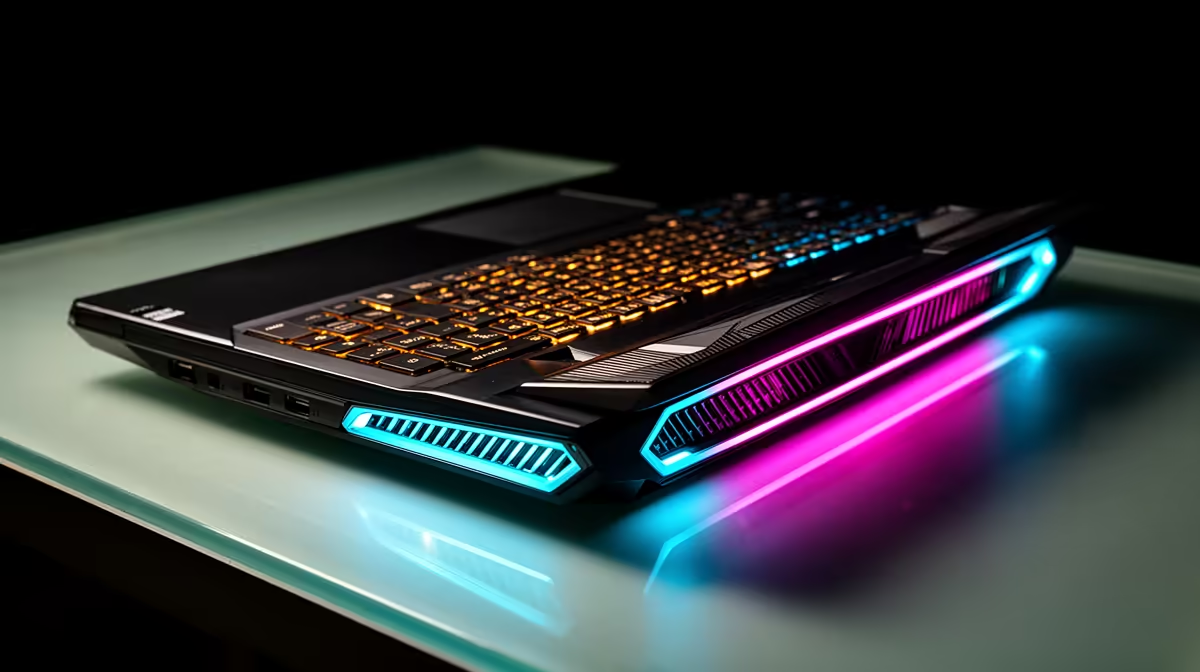
The GPU name on a gaming laptop tells you the chip family, not the whole performance story. The maker chooses a graphics power range that the chassis and cooling system can sustain. Memory configuration, CPU, MUX path and firmware then shape the result around that power budget.
Quick Answer
Compare the exact GPU name, listed graphics power or TGP, memory capacity, processor and display route for each laptop. A higher supported TGP can hold higher clocks when cooling and workload allow it, but it is not a guarantee that one machine wins every game. Use reviews tested at the laptop's shipping profile.
Evetech's laptop best-seller range helps compare full configurations rather than isolated GPU labels. Its gaming laptop deals are the place to inspect model-level power and panel details before choosing.
What TGP Describes
Total Graphics Power is the power budget associated with the laptop GPU subsystem under the maker's supported configuration. Dynamic power-sharing features can move some budget between CPU and GPU, so one number may not describe every moment of a game.
Look for the base graphics power, supported boost or Dynamic Boost allowance, and the performance profile used. Product pages use labels differently, which makes a full model specification important.
A high limit in a thin chassis has value only when the cooling system can sustain it without repeated clock loss.
Why the Same Name Produces Different Results
A higher-power version can maintain higher GPU clocks in a graphics-heavy game. A lower-power model may be quieter, lighter and more efficient. The gap changes across games because CPU demand and memory use differ.
GPU memory capacity and bus design matter at high texture settings. A faster processor can help high-frame-rate play. A direct dGPU display path can remove hybrid overhead on supported models.
Cooling profile and adapter size also change the test. Compare on mains with the vendor mode the laptop ships for gaming.
Do Not Rank by TGP Alone
Two different GPU tiers can overlap at some power levels, but architecture, core configuration and memory remain relevant. TGP is not a cross-generation performance score.
Panel quality, battery, keyboard, noise and service access may matter more than a small frame gap. A laptop is a complete fixed platform.
Use sustained game benchmarks from the exact model, not a desktop card or another chassis carrying the same GPU name.
Check noise and temperature beside the frame result. A laptop that holds its power with a harsh fan pitch may be the wrong trade for a shared room, while a cooler profile can suit long sessions.
FAQ
Where can I find a laptop's GPU power?
Check the exact model specification, manufacturer support material and independent tests that log graphics power under load.
Does higher TGP always mean more FPS?
No. It can create clock headroom, while CPU limits, cooling, memory and the game determine the result.
Does a thin laptop always use lower GPU power?
No. Chassis design varies. Confirm the supported value and sustained performance for the exact machine.
Compare the complete model, verify its sustained graphics power and use exact-laptop game tests before treating a shared GPU name as equal performance.