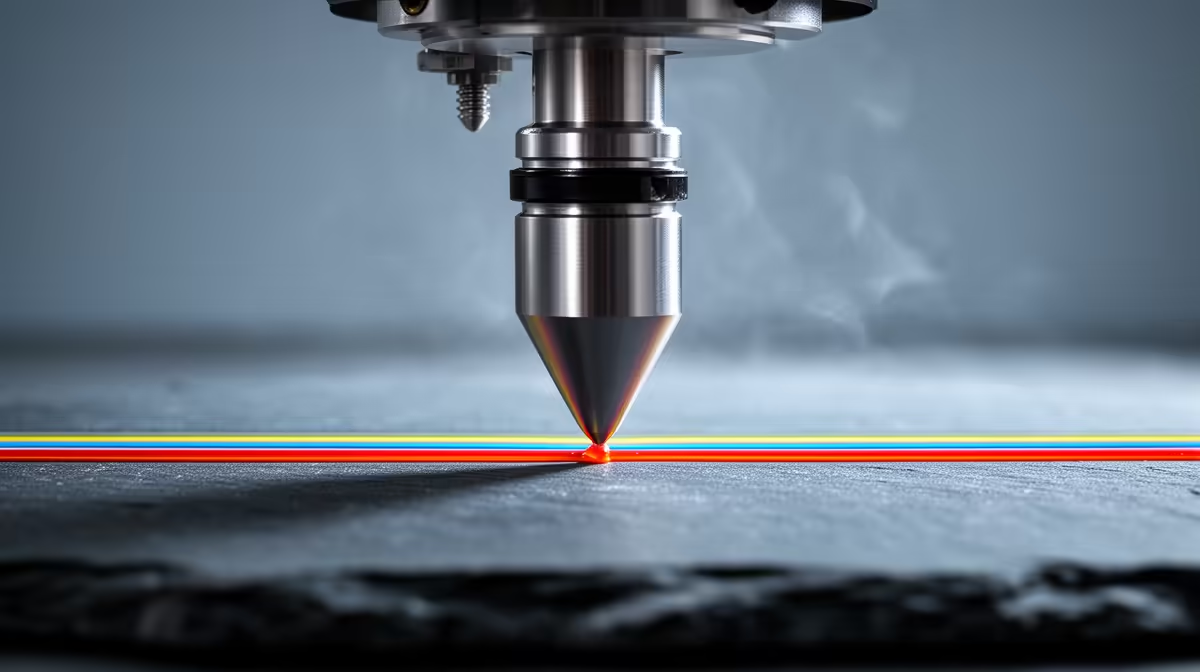
Getting Better First-Layer Adhesion Fully Automated 3D deserves attention when it improves desk fit in a way you can actually feel. Picture high-detail models, then check whether standard filament diameter, diameter tolerance check and 600 mm print-speed planning hold up.
Quick Answer
For most local buyers, getting Better First-Layer Adhesion with Fully Automated 3D 3D printing choice comes down to standard filament diameter, diameter tolerance check and 600 mm print-speed planning. Step up only when the stronger option clearly reduces clogs in high-detail models.
Buying Checks For Getting Better First-layer Adhesion with Fully Automated 3D 3D Printing Choice
The first check for getting Better First-Layer Adhesion with Fully Automated 3D 3D printing choice is not colour or packaging; it is behaviour during high-detail models. Use standard filament diameter as the baseline, then confirm diameter tolerance check before assuming the feature works everywhere. 600 mm print-speed planning should be simple to verify from the listing. If clogs is your main annoyance, avoid any model that makes that weakness harder to diagnose.
Match The Specs To High-detail Models For Getting Better First-layer Adhesion with Fully
Small details around getting Better First-Layer Adhesion with Fully Automated 3D 3D printing choice become more important after the unboxing. Cable strain, app support, desk space, storage and controls can all change how small workshop use feels. Check diameter tolerance check again in that context, because compatibility problems are easier to prevent early. If two options look close, choose the one that keeps more predictable curing steady with fewer daily workarounds.
Warning Signs Before Checkout For Getting Better First-layer Adhesion with Fully
If two products remain close, choose the one with fewer hidden compromises for getting Better First-Layer Adhesion with Fully Automated 3D 3D printing choice. Clear support for standard filament diameter, honest wording around diameter tolerance check and a sensible approach to 600 mm print-speed planning are better than a dramatic claim. In high-detail models, the winning 3D printer should reduce clogs.
Shortlist getting Better First-Layer Adhesion with Fully Automated 3D 3D printing choice by the problem it solves first, then use standard filament diameter, diameter tolerance check and 600 mm print-speed planning to separate Getting Better First options.
FAQ
What should I confirm first for Getting Better First-layer Adhesion with Fully Automated 3D 3D Printing Choice during High-detail Models in Compatibility use?
Test getting better first 3D printer in high-detail models during the setup pass. That gives getting Better First-Layer Adhesion with Fully Automated 3D 3D printing choice a practical test before style.
When is Getting Better First-layer Adhesion with Fully Automated 3D 3D Printing Choice worth stepping up for Day-one Setup in Compatibility use?
Step up when the stronger option improves stronger parts or reduces clogs. The useful sign for getting better first 3D printer is repeatable stronger parts after the comfort pass.
What is the easiest mistake with Getting Better First-layer Adhesion with Fully Automated 3D 3D Printing Choice in Small Workshop Use for Compatibility buyers?
Use diameter tolerance check as the layout pass tie-breaker for getting better first 3D printer. Getting Better First-Layer Adhesion with Fully Automated 3D 3D printing choice should fit small workshop use as well as the main use case.