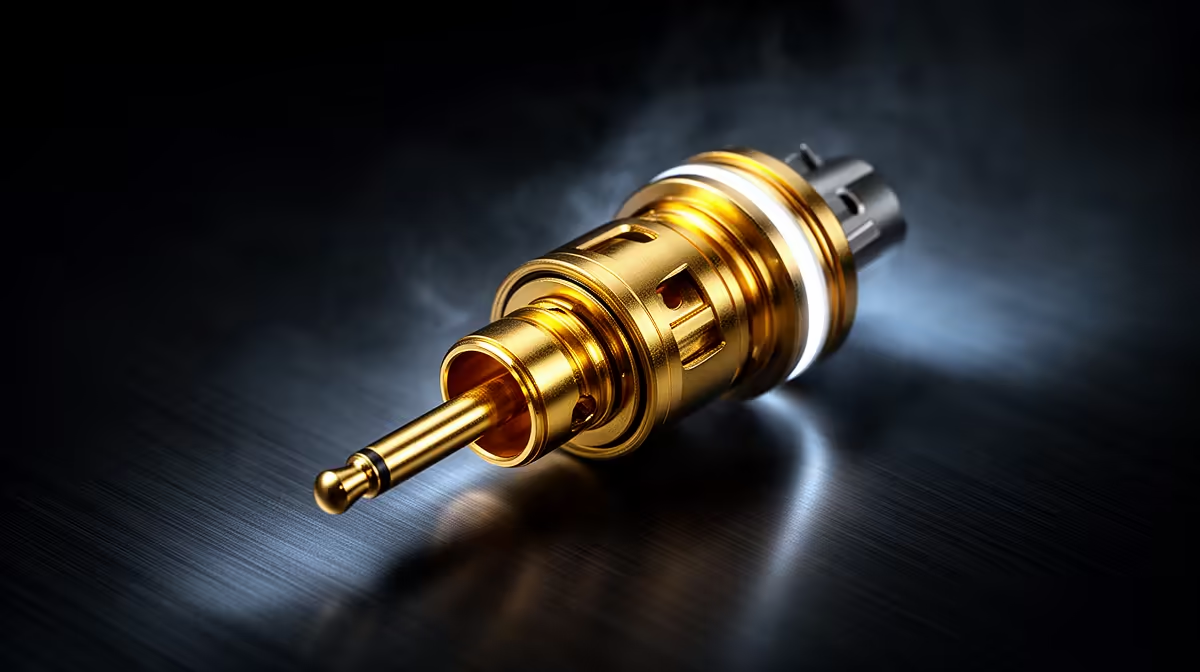
Pull a two-year-old cable out from behind a desk and the connector pins often tell a story the outer jacket never does: dull, sometimes greenish, sometimes just harder to seat firmly. Connector plating is the part of an 8k displayport cable that quietly decides whether a signal stays clean years down the line, which is exactly the detail UGreen focused on with the DP114's gold-plated ends.
Quick Answer
Gold-plated connectors do improve reliability over standard contacts because gold resists oxidation far better than bare metal, keeping electrical contact consistent as a cable ages. The UGreen DP114 uses gold plating on both connector ends and sells for R299, putting that corrosion resistance within reach of a typical desk setup.
⚡ Why Corrosion Is the Real Enemy
Most connector failures are not dramatic. A pin does not simply stop working; contact resistance creeps up gradually as a thin layer of oxidation builds on unprotected metal. That slow build-up is what eventually shows up as flickering, dropped signal, or a display that needs the cable wiggled to reconnect.
Gold does not react with air and moisture the way base metals do, so a gold-plated pin keeps a lower, more stable contact resistance across thousands of plug cycles. This matters more in humid climates and in setups near a window or bathroom-adjacent office, where standard contacts corrode faster.
The Plug-and-Unplug Factor
A monitor that gets connected to a laptop most days, or a desk shared between two machines, puts a connector through far more insertions than a cable left untouched for years. Gold plating is built specifically for that kind of repeated use.
🔍 What Standard Connectors Get Right
Standard nickel or tin-plated connectors are not automatically bad. They are cheaper to produce, and for a cable that gets plugged in once and left alone, the corrosion risk is genuinely low. The gap widens with age, humidity, and how often the plug gets disturbed, not on day one out the box.
🧩 Reliability Is a Whole-Cable Question
Connector plating works alongside the rest of the DP114's build rather than in isolation. Foil-and-braid shielding limits interference reaching the signal path, and oxygen-free copper conductors keep resistance low along the full 1.5m run. A gold-plated end on a poorly shielded cable would still be vulnerable to noise, so the DP114's reliability comes from combining these elements rather than any single spec.
Full specifications for this build sit on the DP114's listing, and shoppers comparing connector types across brands can browse the broader cable catalogue for alternatives. Anyone upgrading a whole desk setup at once may also want to check Evetech's gaming accessories while they are at it.
Frequently Asked Questions
Do gold-plated connectors actually carry the signal better than other metals?
Gold is a slightly worse conductor than copper, but its real value is resisting corrosion at the contact surface, which keeps the underlying copper connection reliable over time.
How long do gold-plated connectors typically last?
There is no fixed lifespan, but resistance to oxidation means gold-plated pins tend to maintain stable contact for far longer than unplated or lower-grade plated connectors under normal desk use.
Will gold plating wear off with frequent plugging?
Repeated insertions can gradually wear thin plating over years of heavy use, though quality control on connectors like the DP114's aims to minimise this under normal handling.
Is R299 reasonable for a cable with gold-plated connectors?
At R299, the DP114 includes gold plating alongside 8K support, Dynamic HDR and foil-and-braid shielding, putting several upgrades in one cable rather than charging separately for each.
Ready to find out whether gold-plated connectors are worth paying for?
Gold plating on the UGreen DP114's connectors resists corrosion far longer than bare metal contacts. Evetech has it for R299 in the DisplayPort cable range.