


1000W PSU Planning for RTX 5090 Builds in SA
1000W for RTX 5090 needs a full-build check, not a simple yes. Review GPU guidance, CPU draw, transient load, connectors, PSU quality, and upgrade plans before deciding.
Read moreA fightstick key lock prevents accidental inputs by restricting selected control activity after setup. The GameSir C2 includes a dedicated lock button at R1,799; test every locked and active input before play rather than relying on the switch position alone.
A lock control reduces mistakes only when its active state is understood. The useful arcade fightstick key lock principle is simple: establish which inputs work, engage the control, repeat the same actions and preserve the verified result for play.
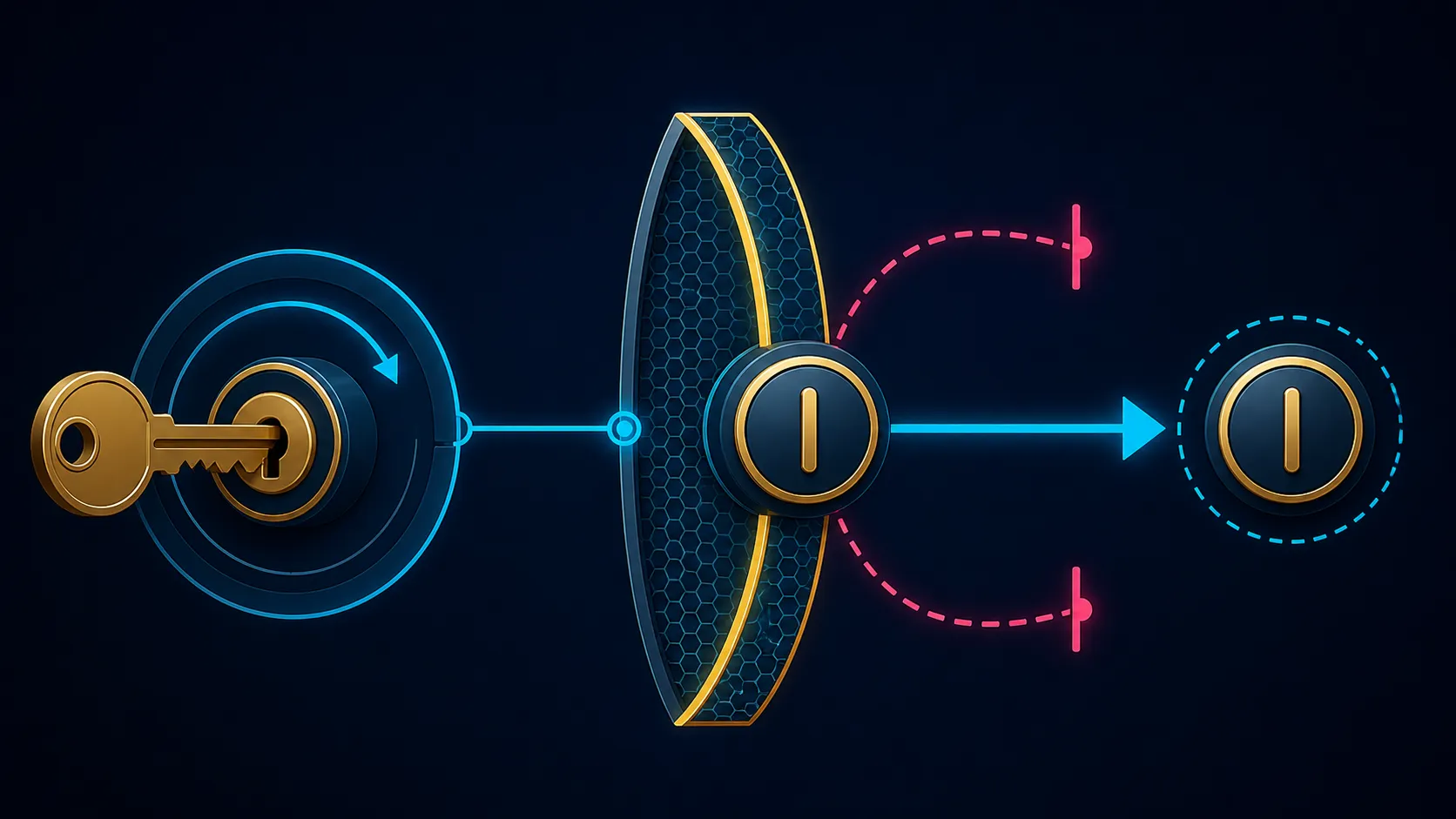
The C2 key lock prevents accidental configuration changes by disabling function controls after the desired setup is chosen.
Fightstick key locks prevent certain unintended inputs by restricting control activity after configuration. The GameSir C2 has a dedicated key lock button and costs R1,799. Confirm its exact scope through the correct instructions and a matched before-and-after test.
A key lock does not improve the player's commands or repair a mapping. It changes whether defined control activity is allowed through once the controller is set up. The specific functions behind that gate can differ between products, which is why a generic restricted-key list should not be assigned to the C2.
Start on PS4, Xbox One or PC, the systems named for this fightstick. Complete ordinary recognition and mapping checks first. If the controller is not behaving normally in the open state, locking it adds another variable without solving the original problem.
Evetech's gaming-controller selection helps compare products by platform and control arrangement before setup begins.
Choose a short list containing each required action and any control likely to be pressed accidentally. Run it once with the lock disengaged and log the responses. Activate the C2 button according to its guidance, then perform the list in the same order.
The difference between those two observations is the useful answer. If it does not match the intended behaviour, return to the open baseline. Avoid remapping the game or moving the directional toggle until the lock question is resolved.
Once the gate behaves correctly, practise at normal pace and watch where hands travel during direction changes and action sequences. The lock can restrict the controls within its designed scope, but it cannot stop a player from pressing an active action button unintentionally.
Surface stability, hand placement and a rehearsed warm-up still reduce errors. Event acceptance is another independent issue; no key lock proves tournament approval or guarantees a competitive outcome.
Use the gaming-accessories category for station organisation after the controller passes its behavioural check.
Write down the platform, mapping, directional selection and lock state that passed. The C2's multi-functional toggle should be documented using its confirmed option rather than a guessed mode name. A concise note matters when the unit moves between supported systems or is shared.
At the next session, repeat a smaller version of the test. Verification should take moments and protect the configuration, not become an excuse to alter controls continually.
For handover, state the controller condition in plain language instead of saying only "locked". Name the platform, whether the baseline passed and whether the engaged-state sample matched the intended restriction. The next player can then decide whether to preserve or reset that state without reverse-engineering the previous session.
This is especially useful in a club environment where several people share the C2. A concise state note reduces accidental changes while keeping the key lock subordinate to the actual game controls.
Remove obsolete notes promptly so a former lock configuration is not mistaken for the current baseline.
That protection matters while the 3.5kg stick is carried or moved on a lap, where a stray press could otherwise alter direction or another function. Engage it only after setup, confirm the protected controls and release it before intentional configuration changes.
Record the unlocked state needed for future setup changes so the next session does not begin with an apparently unresponsive function panel.
Platform recognition, intended directions and required action inputs should pass first. That baseline lets the lock effect stand out clearly.
Lock implementations are model-specific. Use C2 guidance and observed behaviour instead of transferring a list from another arcade controller.
Only within the functions it controls. Active gameplay buttons still depend on deliberate hand placement and practice.
No. Check the confirmed directional-toggle selection and game mapping separately before adding the locked state.
No. The organiser's current rules decide acceptance; the C2 simply includes a dedicated lock button.
The C2 is R1,799. The price covers its wider arcade and multi-platform package, not an isolated lock accessory.
Ready to make controller state part of your warm-up? Compare Evetech's gaming controllers and organise the surrounding setup around a repeatable lock-and-input check.
Platform recognition, intended directions and required action inputs should pass first. That baseline lets the lock effect stand out clearly.
Lock implementations are model-specific. Use C2 guidance and observed behaviour instead of transferring a list from another arcade controller.
Only within the functions it controls. Active gameplay buttons still depend on deliberate hand placement and practice.
No. Check the confirmed directional-toggle selection and game mapping separately before adding the locked state.
No. The organiser's current rules decide acceptance; the C2 simply includes a dedicated lock button.
The C2 is R1,799. The price covers its wider arcade and multi-platform package, not an isolated lock accessory.
1000W for RTX 5090 needs a full-build check, not a simple yes. Review GPU guidance, CPU draw, transient load, connectors, PSU quality, and upgrade plans before deciding.
Read more
RTX 5080 Super with a 750W PSU is more comfortable than lower wattage if the unit is quality. SA builders should still confirm GPU guidance, CPU draw, connector type, airflow, and upgrade room.
Read more
How to fix FPS drops after a RX 9070 XT starts with driver cleanup, chipset updates, thermals, and power checks. For SA gaming PCs, confirm PCIe seating, monitor refresh, frame caps, and per-game graphics settings before replacing parts.
Read more
How to fix low FPS Windows 11 Wi-Fi 7 issues starts by checking whether the problem is frame rate or network lag. Test ping, drivers, power settings, Ethernet, and game FPS before adjusting visuals.
Read more
AM5 is smart for SA builders because it supports newer Ryzen CPUs, DDR5 memory, and a longer upgrade path. Compare board cost, cooling, gaming needs, and local part availability before choosing your next PC platform.
Read more
AM5 gives Randburg gaming builders a longer upgrade path. For SA buyers, DDR5 support, newer board features, and future CPU options can justify the platform. Weigh board cost, cooler support, BIOS maturity, and upgrade timing before choosing.
Read more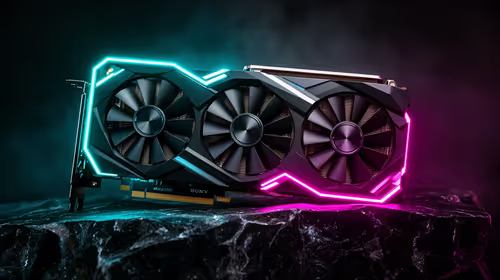
RTX 5090 on a 550W PSU leaves almost no practical room for OC plans. Treat the setup as constrained, with CPU draw, power spikes, cable quality, thermals, and stability checks more important than chasing extra clocks.
FPS drops on a Ryzen 9 9950X3D build often have a fixable cause. Check settings, drivers, thermals, background tasks, network conditions, and bottlenecks before assuming a part must be replaced.

The difference between PCIe 5.0 and PCIe 4.0 for SA gamers is mostly bandwidth headroom. Compare GPU slot needs, NVMe speed, motherboard support, and upgrade timing before paying extra for a newer platform.

Gaming PC stuck pixel checks in South Africa should confirm the monitor fault first. Use colour tests, screenshot comparison, cable swaps, display menu checks, and clear photos before deciding on support.

AMD's current driver now lists a Radeon RX 9050 4GB, while product coverage details a narrowed memory system. SA buyers should weigh the low VRAM ceiling against current local Radeon options.

Samsung Display has demonstrated a 16-inch 2.5K OLED laptop panel running at 300Hz. SA buyers should wait for a named notebook, full panel specifications and a local price before planning an upgrade.

Microsoft says some Windows 11 game crashes after recent updates are linked to RGB-related drivers. Affected SA gamers should confirm the update and driver before using the published registry workaround.
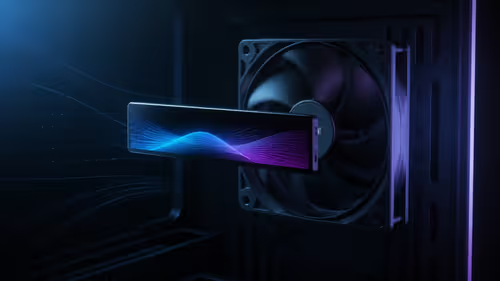
Thermalright's Fan Frame Vision-1 adds a 640x172 status screen to a standard 120mm fan. SA builders should check clearance, USB routing and local support before treating it as an easy upgrade.

Shokz OpenFit Air 2 earbuds weigh 7.2g each and use a redesigned dual-driver open-ear layout. SA buyers should choose them for comfort and awareness, not maximum isolation.

A fake 113GB GTA VI ISO reportedly used empty padding around a small malware payload. SA gamers should delete unofficial builds, keep Windows security active and wait for official channels.
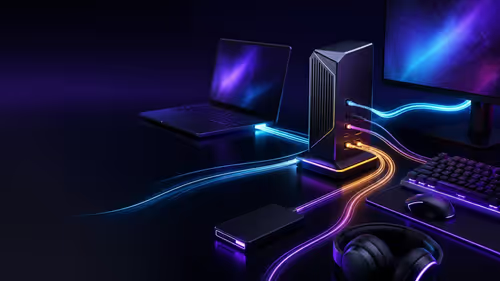
The ROG Flux Charger Dock combines 260W total output, 140W laptop charging and HDMI 2.1. SA buyers should check laptop USB-C limits, display needs and local warranty first.

ASRock's Rock 360 Digital AIO adds a 1.05-inch CPU temperature display, 360mm radiator and simplified wiring. SA builders should check case fit, socket support and local warranty.