


1000W PSU Planning for RTX 5090 Builds in SA
1000W for RTX 5090 needs a full-build check, not a simple yes. Review GPU guidance, CPU draw, transient load, connectors, PSU quality, and upgrade plans before deciding.
Read moreDual-sided plates improve workflow by providing another prepared face for controlled selection and documented use. The Neptune 4 Max includes an upgraded dual-sided build plate across a 420 x 420mm build area.
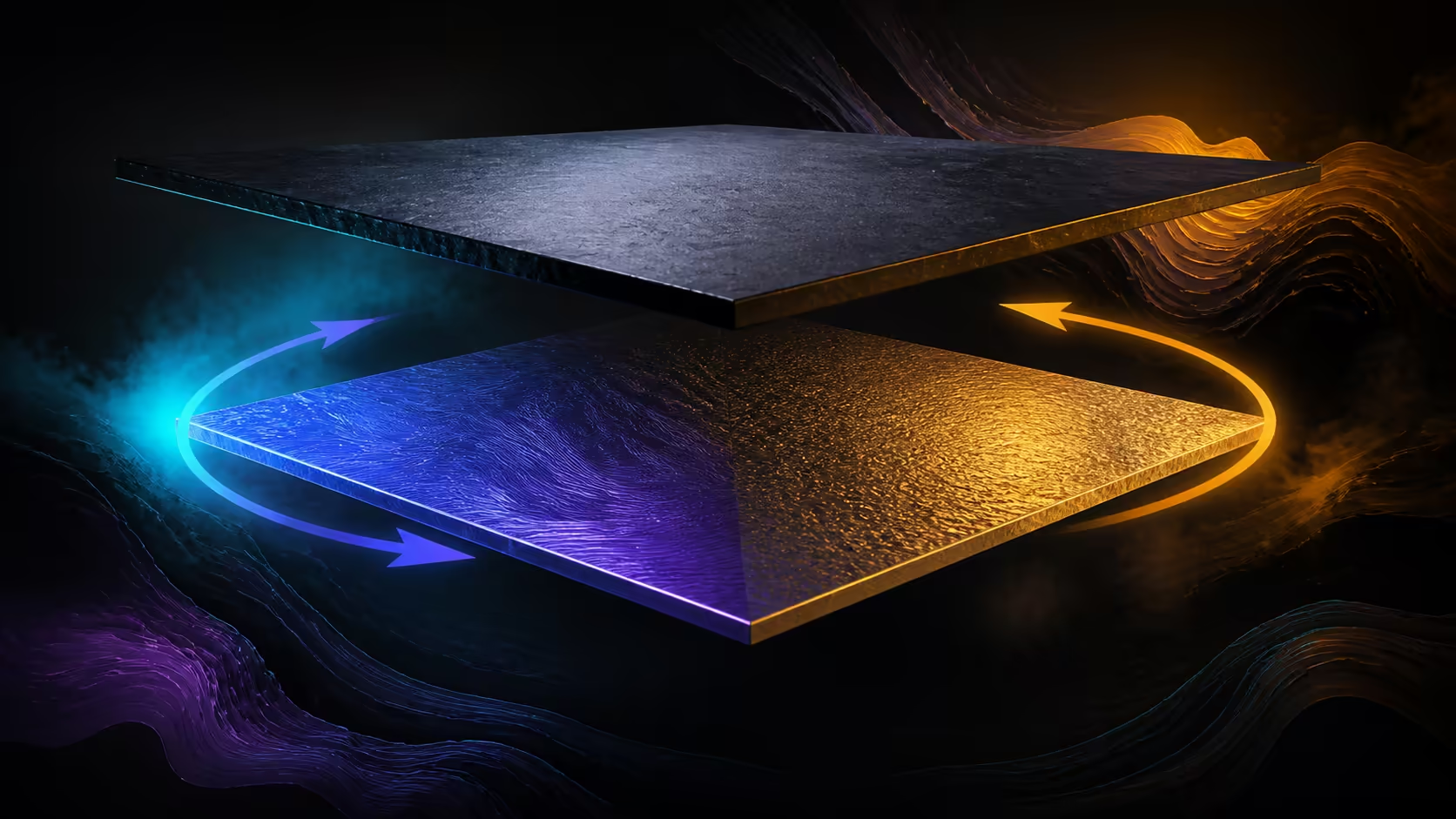
Two usable plate faces can reduce interruptions only when each has a known role and care routine. Improving large 3D printing workflows with a dual-sided build plate means turning, cleaning and release become controlled handoffs rather than improvised actions.
The dual-sided plate improves workflow by offering two working faces across the Neptune 4 Max's broad 420x420mm build area.
Assign each face a documented purpose, prepare only the selected side and record its first-layer and removal results. The Neptune 4 Max costs R9,399 and gives its 420 x 420mm bed a plate usable on both sides. Workflow improves when another clean or separately tested face is ready, not when users flip it without knowing construction or condition.
Mark side A and side B outside the printable area, then keep a short card for each. The card should identify confirmed surface construction, permitted cleaning, last material, preparation and any release instruction. This avoids relying on appearance.
Dual-sided does not mean both faces are identical. It also does not establish coating, texture, flexibility or attachment method. Compare large-format 3D printer options with surface documentation treated as part of usability.
Use a changeover rule: the outgoing operator records the active face and returns it in a clean known condition. Shared workshops gain more from a clear handoff than from an extra surface nobody can identify.
The broad 420mm plate needs support during cleaning, turning and inspection. Clear debris, protect the underside and avoid dragging either surface across a bench. Use only care methods approved for the exact face.
Inspect under useful light before placing the plate back. Damage or residue should pause the normal workflow until the appropriate next action is known. A second face can keep planned testing separate, but it should not be used to conceal an unresolved problem on the first.
Run the same small contact and release test on both sides, with filament, orientation and profile fixed. Give each face a dedicated role only after repeated evidence shows a useful difference. The role might be routine production, another named material or a protected backup.
Select candidates through Evetech's filament range, then verify the full printer and surface route. The Neptune's 300C nozzle cannot create a material list or prescribe plate treatment.
Track waiting, preparation, first-layer outcome and removal effort. A second face earns value when it reduces a real changeover or preserves an accepted baseline.
Before a large job, reserve the face, material and profile in the workshop note. That reservation stops an unplanned surface change or treatment midway through preparation. After removal, close the entry with result and condition.
Review alternative 3D printers at Evetech by asking how plate access, cleaning and storage fit the same schedule. The Neptune's up-to-500mm/s motion capability does not reduce the need for a dependable surface handover.
Keep one printed first-layer reference for each proven face. A future operator can compare new contact against the known sample before committing a bed-wide project. Review the face cards after several changeovers and remove any role that lacks repeated evidence; fewer trusted routes can outperform many vague options. Date every workflow change and preserve the former role carefully for traceability during later scheduled surface reviews.
One side can remain assigned to a proven material or surface goal while the other handles a different established routine, reducing unnecessary plate changes. After any flip, the 121-point levelling system should confirm the new orientation. Cleanliness, cooling and first-layer setup still determine release. Label both faces and retain a small successful sample so later large jobs begin from an understood surface choice.
They can hold separate proven routines or keep one protected baseline available while the other supports a different named process.
No. Identify each material, coating and care route independently, then use controlled tests to establish any shared behaviour.
Use clear face labels, separate cards and a changeover entry naming preparation, material, profile and result.
Its 420 x 420mm area needs a stable clean support during inspection, turning and model release so both surfaces remain protected.
Choose it for an assigned verified job or when it provides the appropriate clean baseline, not simply because the first run failed.
The ELEGOO Neptune 4 Max has an upgraded plate with two usable faces and costs R9,399.
Ready to give each plate face a controlled workshop role? Compare FDM printers and filament at Evetech with surface labels, handover notes and release tests already planned.
They can hold separate proven routines or keep one protected baseline available while the other supports a different named process.
No. Identify each material, coating and care route independently, then use controlled tests to establish any shared behaviour.
Use clear face labels, separate cards and a changeover entry naming preparation, material, profile and result.
Its 420 x 420mm area needs a stable clean support during inspection, turning and model release so both surfaces remain protected.
Choose it for an assigned verified job or when it provides the appropriate clean baseline, not simply because the first run failed.
The ELEGOO Neptune 4 Max has an upgraded plate with two usable faces and costs R9,399.
1000W for RTX 5090 needs a full-build check, not a simple yes. Review GPU guidance, CPU draw, transient load, connectors, PSU quality, and upgrade plans before deciding.
Read more
RTX 5080 Super with a 750W PSU is more comfortable than lower wattage if the unit is quality. SA builders should still confirm GPU guidance, CPU draw, connector type, airflow, and upgrade room.
Read more
How to fix FPS drops after a RX 9070 XT starts with driver cleanup, chipset updates, thermals, and power checks. For SA gaming PCs, confirm PCIe seating, monitor refresh, frame caps, and per-game graphics settings before replacing parts.
Read more
How to fix low FPS Windows 11 Wi-Fi 7 issues starts by checking whether the problem is frame rate or network lag. Test ping, drivers, power settings, Ethernet, and game FPS before adjusting visuals.
Read more
AM5 is smart for SA builders because it supports newer Ryzen CPUs, DDR5 memory, and a longer upgrade path. Compare board cost, cooling, gaming needs, and local part availability before choosing your next PC platform.
Read more
AM5 gives Randburg gaming builders a longer upgrade path. For SA buyers, DDR5 support, newer board features, and future CPU options can justify the platform. Weigh board cost, cooler support, BIOS maturity, and upgrade timing before choosing.
Read more
RTX 5090 on a 550W PSU leaves almost no practical room for OC plans. Treat the setup as constrained, with CPU draw, power spikes, cable quality, thermals, and stability checks more important than chasing extra clocks.
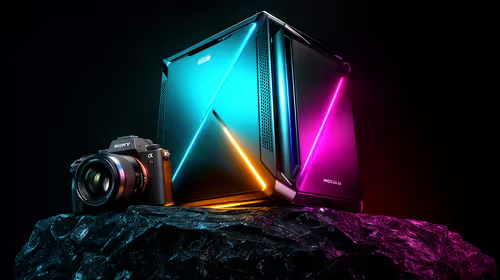
FPS drops on a Ryzen 9 9950X3D build often have a fixable cause. Check settings, drivers, thermals, background tasks, network conditions, and bottlenecks before assuming a part must be replaced.

The difference between PCIe 5.0 and PCIe 4.0 for SA gamers is mostly bandwidth headroom. Compare GPU slot needs, NVMe speed, motherboard support, and upgrade timing before paying extra for a newer platform.

Gaming PC stuck pixel checks in South Africa should confirm the monitor fault first. Use colour tests, screenshot comparison, cable swaps, display menu checks, and clear photos before deciding on support.

AMD's current driver now lists a Radeon RX 9050 4GB, while product coverage details a narrowed memory system. SA buyers should weigh the low VRAM ceiling against current local Radeon options.

Samsung Display has demonstrated a 16-inch 2.5K OLED laptop panel running at 300Hz. SA buyers should wait for a named notebook, full panel specifications and a local price before planning an upgrade.

Microsoft says some Windows 11 game crashes after recent updates are linked to RGB-related drivers. Affected SA gamers should confirm the update and driver before using the published registry workaround.
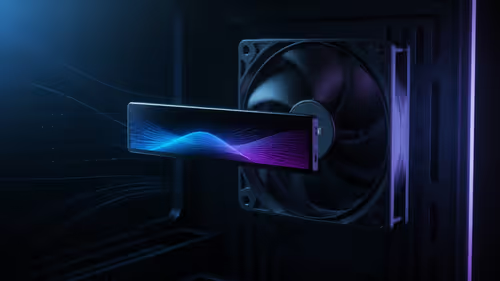
Thermalright's Fan Frame Vision-1 adds a 640x172 status screen to a standard 120mm fan. SA builders should check clearance, USB routing and local support before treating it as an easy upgrade.

Shokz OpenFit Air 2 earbuds weigh 7.2g each and use a redesigned dual-driver open-ear layout. SA buyers should choose them for comfort and awareness, not maximum isolation.

A fake 113GB GTA VI ISO reportedly used empty padding around a small malware payload. SA gamers should delete unofficial builds, keep Windows security active and wait for official channels.
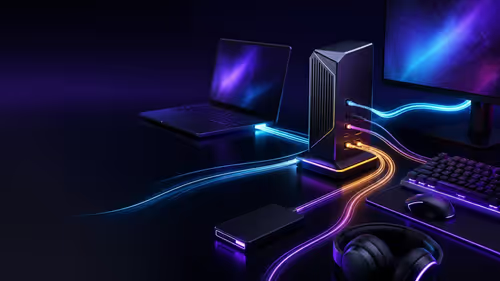
The ROG Flux Charger Dock combines 260W total output, 140W laptop charging and HDMI 2.1. SA buyers should check laptop USB-C limits, display needs and local warranty first.

ASRock's Rock 360 Digital AIO adds a 1.05-inch CPU temperature display, 360mm radiator and simplified wiring. SA builders should check case fit, socket support and local warranty.